Home maintenance usually brings a familiar checklist to mind: clean the gutters, service the heating and cooling system, inspect the roof, seal gaps around doors and windows, and check plumbing for leaks. Yet one area that often receives attention only after something goes wrong is basement drainage.
That can be an expensive oversight.
Your basement sits at the lowest point of the house, surrounded by soil that can hold significant amounts of moisture after rainfall, melting snow, or changes in groundwater levels. If that water is not managed correctly, it can find its way toward foundation walls, basement floors, window wells, and existing cracks.
A good basement drainage strategy is therefore not simply a response to flooding. It is part of preventive home maintenance.
Regularly checking how water moves around and beneath the property can help homeowners recognize drainage problems early, reduce unnecessary moisture exposure, protect finished basement areas, and avoid allowing relatively minor problems to develop into larger repairs.
Here is why basement drainage deserves a permanent place on the home maintenance calendar.
What Does a Basement Drainage System Actually Do?
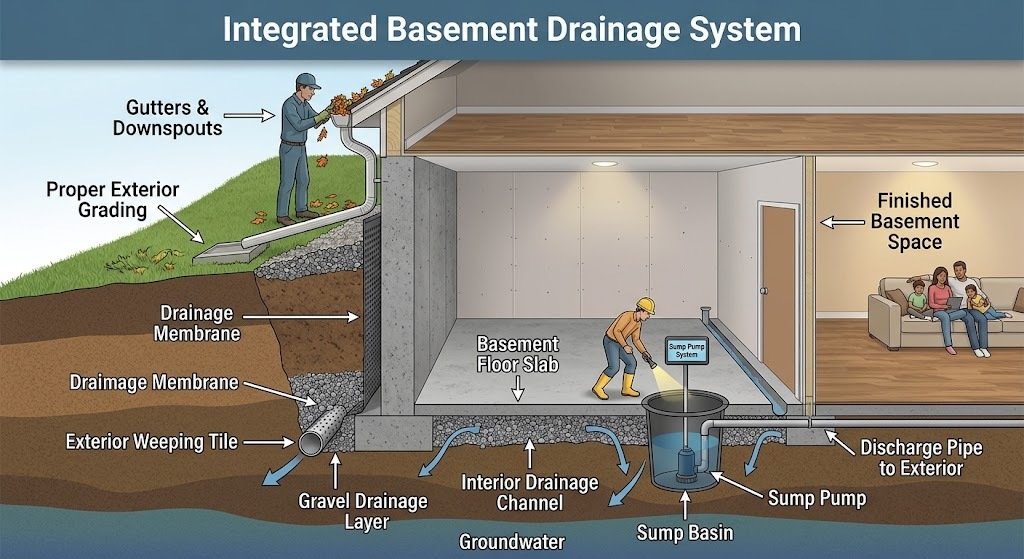
Basement drainage is not necessarily one single pipe, drain, or pump. It is better understood as a combination of features designed to collect, redirect, or remove water before it becomes a problem inside the house.
Depending on the property, this may include:
- Exterior grading that directs surface water away from the foundation
- Gutters and downspouts that move roof runoff away from the home
- Exterior or interior weeping tile systems
- Drainage membranes
- Sump basins and sump pumps
- Window-well drains
- Floor drains
- Gravel drainage layers
- Discharge pipes
Each component performs a different job, but the objective is the same: keep unwanted water from accumulating around or entering the basement.
A drainage system that worked effectively when a home was built may not continue working perfectly forever. Soil can settle, drains can become obstructed, pumps can fail, landscaping can alter drainage patterns, and older components can deteriorate.
That is why drainage should be maintained rather than forgotten.
1. Water Around the Foundation Does Not Simply Disappear
When rain falls around a house, some water runs across the surface while some filters into the soil.
Ideally, the property is graded so that surface runoff moves away from the building. Underground drainage then helps manage moisture that reaches the foundation level.
Problems begin when water accumulates around the house faster than the surrounding soil and drainage system can handle it.
Saturated soil can place increasing water pressure against below-grade foundation surfaces. Any vulnerable areas, including cracks, joints, porous masonry, deteriorated waterproofing, or poorly functioning drainage systems, may then become possible routes for moisture.
A homeowner may not immediately notice what is happening outside. The first visible warning could be dampness along a basement wall, staining, water appearing where the wall meets the floor, or a sump pump suddenly operating far more frequently than usual.
Checking drainage before these symptoms appear is much easier than waiting until water is already inside.
2. Basement Drainage Helps Support Your Waterproofing System
Waterproofing and drainage are closely related, but they are not exactly the same thing.
Waterproofing creates barriers or systems intended to prevent or control moisture penetration. Drainage gives that water somewhere appropriate to go.
A durable approach often depends on both.
For example, an interior system may use a drainage membrane to direct incoming moisture downward, where a perimeter drain collects it and carries it toward a sump basin or suitable drain. Exterior approaches can combine waterproofing materials with drainage components around the foundation.
Homeowners researching how these components work together can review this explanation of an interior basement waterproofing system, which illustrates how perimeter drainage, membranes and sump equipment can form parts of the same water-management strategy.
The important maintenance lesson is simple: even a well-protected basement can become vulnerable when the drainage component stops functioning properly.
3. Small Drainage Problems Can Become Bigger Water Problems
Drainage problems are often progressive.
A partially obstructed drain, for instance, may still move enough water during an ordinary shower. During several hours of heavy rainfall, however, it may no longer keep up.
Similarly, a sump pump that operates normally during light groundwater conditions could struggle during a major storm if its intake is obstructed, its discharge line is restricted, or the pump itself is nearing the end of its service life.
Minor warning signs should therefore be treated as useful information rather than inconveniences.
Pay attention to:
- Water collecting near the foundation after rain
- Soil consistently remaining wet beside the house
- Overflowing or disconnected downspouts
- Water accumulating inside window wells
- A sump pump cycling unusually often
- A sump pump that fails to activate
- Damp basement corners
- Musty smells
- White mineral deposits on masonry
- Peeling paint or bubbling finishes
- New water stains on basement walls or floors
None of these symptoms automatically identifies one specific problem, but each provides a reason to investigate further.
4. Good Drainage Can Protect Finished Basement Space
Basements have changed considerably from the unfinished storage spaces found in many older homes.
Today, homeowners commonly use them as family rooms, offices, bedrooms, gyms, entertainment areas, workshops, or rental spaces. That means more flooring, drywall, insulation, furniture, electronics, cabinetry and personal belongings may be located below ground level.
Water entering such a space can therefore affect much more than concrete.
Even a relatively small leak can damage baseboards, flooring, stored items or wall finishes. Persistent dampness may also create conditions favorable to mould and mildew.
Preventive drainage maintenance is particularly important when significant money has been invested in finishing the basement.
Before renovating, homeowners should also investigate unexplained moisture rather than simply covering walls and floors with new materials. A cosmetic improvement does not correct the source of a drainage issue.
5. Sump Pumps Need Maintenance Too
A sump pump is one of the most recognizable parts of a basement drainage system.
Water collected by drainage systems can flow into a sump basin, where the pump activates when the water reaches a predetermined level and moves it away from the building.
Because sump pumps often remain quiet for long periods, homeowners can easily forget about them.
Unfortunately, discovering that a pump is not working during a severe storm is much less convenient than discovering it during a routine inspection.
Home maintenance should therefore include periodically checking the sump area. Make sure the basin is accessible, observe whether the pump activates correctly, and inspect the discharge route for obvious restrictions or damage.
Homes that rely heavily on pumping should also consider what happens if electricity fails during the same storm that produces high water levels. Backup arrangements can provide another layer of protection where appropriate.
The exact maintenance requirements depend on the pump and installation, so manufacturer recommendations should always be followed.
6. Window Wells Are Easy to Overlook
Basement window wells provide another potential collection point for water.
Leaves, soil, mulch and other debris can accumulate inside them, obstructing drainage. If water rises inside a window well instead of draining freely, it may eventually reach the window assembly or surrounding foundation area.
A quick visual inspection can prevent many avoidable problems.
Keep wells clear of debris, check them following heavy rainfall, and make sure nearby landscaping does not direct runoff toward them.
If a window well repeatedly fills with water, simply removing the standing water is not a long-term maintenance solution. Repeated accumulation suggests that the drainage arrangement, grading, drain connection, or another related factor needs closer investigation.
7. Your Landscaping Affects Basement Drainage
Basement maintenance does not stop at the basement walls.
The condition of the property outside can have a major influence on the amount of water reaching the foundation.
Over time, soil beside a home may settle. Garden beds may be raised. New patios or walkways may change the direction of runoff. Downspout extensions may be removed. Landscaping projects can unintentionally create low areas where water collects.
Walk around the property during or shortly after rainfall occasionally and observe where the water actually goes.
Does it move away from the house?
Does it pool beside one wall?
Are downspouts releasing large volumes of water immediately beside the foundation?
Does runoff from a driveway or neighboring surface move toward the building?
These observations cost nothing and can reveal drainage weaknesses that are difficult to identify from inside the basement.
8. Gutters and Downspouts Are Part of Basement Protection
Roof drainage and basement drainage may seem like separate maintenance categories, but they are connected.
A roof can collect a considerable volume of water during a storm. Gutters capture that runoff, while downspouts are intended to move it toward a suitable discharge location.
If gutters are clogged or downspouts terminate too close to the house, more water may be deposited near the foundation.
For that reason, cleaning gutters and checking downspout extensions should be considered part of moisture management below ground as well.
After cleaning the gutters, check where each downspout releases water. The objective is not simply to get water out of the gutter. It is to move that water to an appropriate location where it will not immediately return toward the foundation.
9. Drainage Maintenance Can Reveal Foundation Problems Earlier
Water appearing in a basement is not always caused by a drainage component alone.
Foundation cracks, deteriorating masonry, damaged waterproofing materials, plumbing problems, grading issues and other conditions can produce similar symptoms.
Regular maintenance gives homeowners an advantage because they become familiar with what is normal for their property.
A new crack is easier to notice when walls are periodically inspected. A damp patch stands out when the basement is normally dry. A pump cycling every few minutes becomes suspicious when it previously operated only occasionally.
Early observation does not necessarily mean a major repair will be required. It simply creates an opportunity to diagnose the cause before assuming the problem will disappear on its own.
For more complex or recurring water problems, understanding the different basement waterproofing and drainage solutions available can also help homeowners have a more informed conversation with a qualified professional.
10. Basement Drainage Should Be Checked Seasonally
Basement drainage does not require constant attention. A simple seasonal routine can cover many of the essentials.
Spring
Look for issues following snowmelt and spring rainfall. Check grading, downspouts, window wells, basement walls and the sump system.
Summer
Inspect the exterior while conditions are easy to access. Watch for soil settlement, foundation cracks or landscaping changes that may affect drainage.
Fall
Clear leaves from gutters, window wells and exterior drainage areas. Make sure downspouts remain properly connected before winter weather arrives.
Winter
Where conditions permit, watch for unusual basement dampness during freeze-thaw cycles and make sure accessible discharge areas are not obviously obstructed.
You should also inspect the basement after unusually heavy rainfall regardless of season. Extreme weather can expose weaknesses that remain invisible during normal conditions.
Create a Simple Basement Drainage Maintenance Checklist
Homeowners do not need an elaborate inspection program.
Adding the following items to an existing home maintenance checklist can make drainage much easier to monitor:
- Clean and inspect gutters.
- Check downspout connections and discharge locations.
- Look for standing water near the foundation.
- Inspect the slope of soil around the house.
- Remove debris from window wells.
- Check basement walls and floors for new moisture.
- Watch for staining or mineral deposits.
- Test the sump pump according to manufacturer instructions.
- Inspect visible sump and discharge components.
- Notice unusual odors or persistent humidity.
- Record recurring leaks and where they appear.
- Arrange professional assessment when the cause cannot be identified.
Taking occasional photographs of foundation walls, drainage areas, or recurring damp spots can also make it easier to determine whether a condition is changing over time.
Prevention Is Easier Than Emergency Response
Basement drainage tends to remain invisible when it is doing its job correctly, which is precisely why homeowners often overlook it.
But water management below ground deserves the same preventive mindset applied to roofing, plumbing, heating systems, and other important parts of a house.
The goal is not to assume every damp spot signals a serious foundation problem. It is to recognize that water follows predictable paths, drainage components require maintenance, and changes around a property can alter those paths over time.
A few routine checks can identify clogged drainage areas, poor grading, sump problems, overflowing window wells, or changes in moisture conditions before the next major storm tests the system.
Make basement drainage part of your normal maintenance schedule rather than something you think about only after finding water on the floor. Protecting the lowest level of the home begins with paying attention to where the water outside and below it is going.