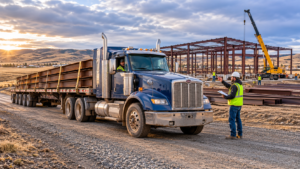
A rancher needs 40 tons of hay before the first hard freeze. A contractor is waiting on steel beams to keep a project on schedule. A small business owner has equipment stuck 150 miles away in Billings. In eastern Montana, all three of these situations come down to the same thing: getting freight where it needs to go, on time.
That’s why many people in the region turn to a Local Trucking Company in Miles City, MT instead of a large national carrier. This article explains how local trucking works in a rural market, why local knowledge makes such a difference, and what to look for when choosing a carrier. It also covers how trucking connects to construction and agriculture, the two industries that keep this part of the state moving.
How Trucking Works in Rural Eastern Montana
Freight in eastern Montana doesn’t move the way it does in big cities. Distances are long, towns are spread out, and many deliveries end at ranch gates or job sites far from any paved highway.
Interstate 94 is the main artery through the area. Many of the most important loads, though, travel the last stretch on county roads, gravel lanes, or private access routes. A driver who has never seen these roads can lose hours finding the right turnoff, or find out too late that a bridge can’t handle the weight.
Local carriers tend to handle a mix of work rather than one narrow specialty. In a single week, the same fleet might haul:
- Livestock feed, hay, and grain for area ranches
- Gravel, sand, and fill for road and site work
- Heavy equipment moving between job sites
- Building materials, including steel, lumber, and concrete supplies
This variety reflects the local economy. Agriculture and construction depend on each other, and both depend on trucks.
In short: Rural freight is less about highway miles and more about the final, tricky stretch. That’s where local experience pays off.
The Real Value of a Local Trucking Company in Miles City, MT
The biggest advantage of a local carrier is simple. It’s familiarity. Local drivers know which roads flood in spring, which routes drift shut in a ground blizzard, and which ranch roads can’t take a loaded semi after a heavy rain.
This matters because Montana weather can change fast. A national dispatcher several states away may not know that a route is closed or that seasonal load limits are in effect. Montana and its counties often restrict truck weights during the spring thaw, when roads are soft. A carrier based in the area follows these changes closely because its work depends on them.
Response time is another factor. When a load is needed tomorrow morning, a carrier just a few miles away can often adjust its schedule. A long-haul company may need days to send a truck to a small town that isn’t on its regular routes.
There’s also the matter of accountability. Local trucking companies usually rely on repeat customers and word of mouth. In a close-knit community, a late delivery or damaged load gets noticed. That reputation pressure tends to keep service standards high.
In short: Local carriers bring road knowledge, faster scheduling, and a reputation they can’t afford to lose.
Where Trucking Meets Construction
Construction is one of the clearest examples of why local hauling matters. Every building project starts with materials arriving on site in the right order and at the right time.
Steel projects show this well. Structural Steel Installation in Miles City, MT depends on beams, columns, and joists arriving exactly when the crew and crane are ready. If the steel shows up a day late, the crane sits idle and the crew waits. That costs money every hour.
Oversized steel also brings its own challenges. Long beams may require special trailers, permits, or escort vehicles. Drivers need to know where they can safely turn, park, and unload. A tight downtown lot is a very different job from an open rural site.
Some regional firms handle both sides of this work. Companies such as Grizzly Construction, for example, combine hauling with steel and building projects. That can make coordination simpler, since the same team plans both delivery and installation.
Whether one company or two handle the work, the lesson is the same. Trucking and construction schedules have to line up, and local carriers are often better placed to make that happen.
In short: On construction sites, timing is everything. Late freight means idle crews and higher costs.
Real-World Examples From the Region
Consider a cattle operation that needs supplemental feed during a harsh January. Snow has drifted across the ranch road, and the forecast shows another storm on the way. A local driver who knows the property can plan a delivery window between storms and choose the safest route in. An out-of-area carrier might simply cancel.
Now picture a new agricultural shop building going up outside town. The owner has hired a crew for Structural Steel Installation in Miles City, MT, and the steel package is coming from a supplier hundreds of miles away. A local hauler can pick up the load at a regional hub and bring it the final stretch, timed to the crew’s start date.
A third example is equipment relocation. A contractor finishes a road job in one county and needs a loader and skid steer moved to a new site the next day. Local carriers handle these short, urgent moves often. They usually have the trailers and the flexibility to do it without much notice.
Each case shows the same pattern. The hardest part of the job isn’t the highway. It’s the timing, the terrain, and the details only local drivers tend to know.
What to Look For When Choosing a Carrier
Not every trucking company is the right fit for every load. Before hiring a carrier, it helps to ask a few practical questions.
Licensing and insurance. Any carrier hauling commercial freight across state lines should have a valid USDOT number. Proof of liability and cargo insurance protects both the shipper and the load.
Equipment fit. Hay, gravel, livestock, and steel all call for different trailers. A flatbed, a step deck, and an end dump serve very different purposes, so confirm the carrier has the right one.
Experience with similar loads. A company that regularly hauls oversized steel will handle permits and securement more smoothly than one that mostly moves grain.
Communication. Clear updates on pickup and delivery times make planning much easier, especially for construction schedules.
Local references. In a smaller community, it’s easy to ask around. Ranchers, contractors, and suppliers usually know which carriers show up on time.
Common mistake: Choosing a carrier only on price. A low quote doesn’t help much if the truck arrives late or can’t reach the site.
Final Thoughts
Trucking in eastern Montana is about far more than moving freight from point A to point B. It means handling long distances, rough roads, fast-changing weather, and tight schedules for ranches and job sites alike.
Local carriers bring the road knowledge and flexibility that these conditions demand. For anyone planning a delivery, the best next steps are simple. Confirm the carrier’s licensing and insurance, match the equipment to the load, and ask for local references. Finally, share your schedule early, especially when trucks need to line up with construction crews. A little planning up front can prevent costly delays later.
Frequently Asked Questions
What types of freight do local trucking companies usually haul?
Most rural carriers haul a mix of agricultural goods, construction materials, gravel, and heavy equipment. Many also offer flatbed service for steel and oversized loads.
How far in advance should a load be scheduled?
For standard loads, a few days’ notice is usually enough. Oversized freight that needs permits or escorts may require a week or more, depending on the route.
Do trucking companies need special permits for oversized loads in Montana?
Yes. Loads that exceed standard size or weight limits need permits from the Montana Department of Transportation, and some also need escort vehicles or set travel times.
Why does winter weather affect trucking schedules so much?
Snow, ice, and ground blizzards can close roads with little warning. Carriers often adjust delivery windows around forecasts to keep drivers and cargo safe.
Is a local carrier more expensive than a national one?
Not necessarily. Local carriers often cost less for short regional hauls because they don’t need to send trucks long distances just to reach the pickup point.