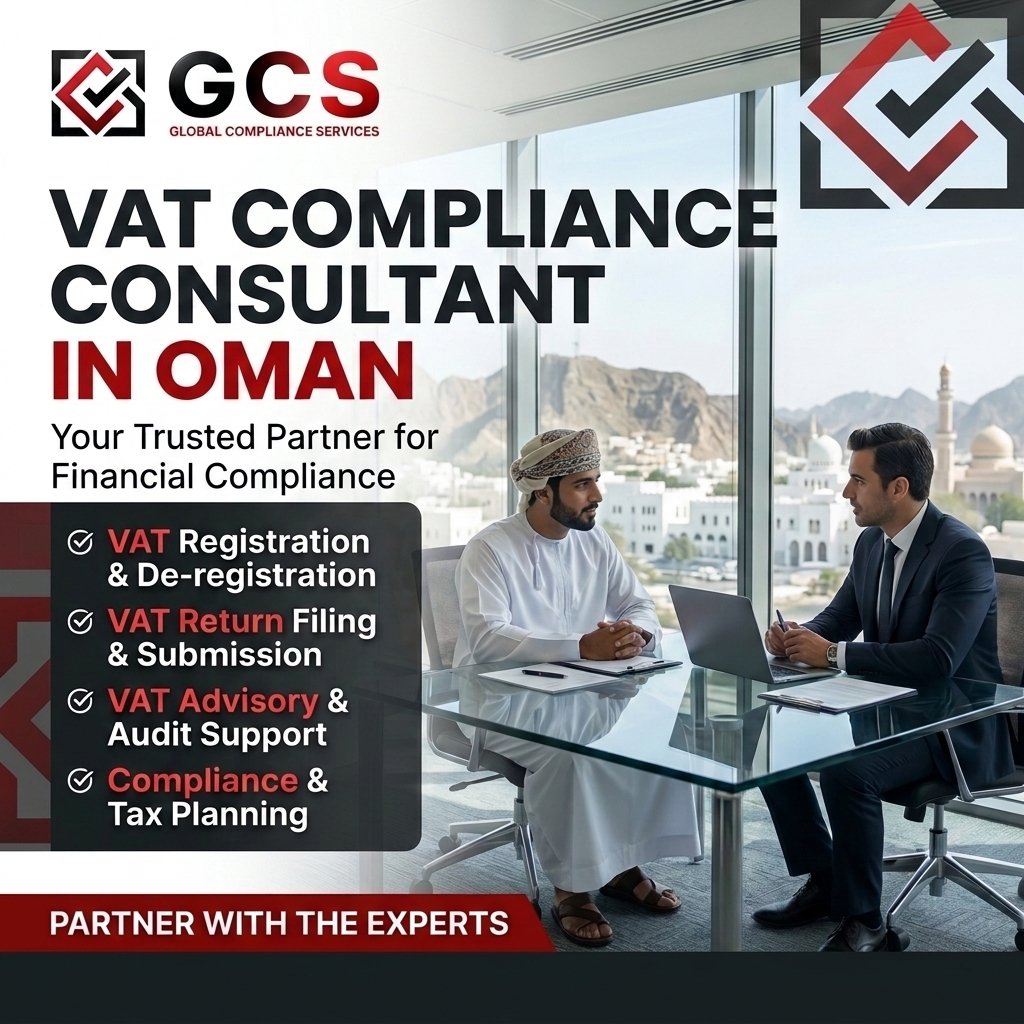
Running a business in Oman means dealing with Value Added Tax. VAT has applied since April 2021, and the rules cover registration, invoicing, returns, and record keeping. A small mistake can lead to penalties, delayed refunds, or a stressful tax review. A VAT compliance consultant in Oman helps you avoid those problems by keeping your business aligned with the law. This article explains what these consultants do, when you need one, which mistakes to watch for, and how to pick a reliable adviser without overpaying.
GCS Oman provides reliable business, accounting, tax, PRO, and company formation services in Oman, helping businesses operate smoothly and stay compliant.
What Does a VAT Compliance Consultant in Oman Do?
A VAT compliance consultant is a tax professional who helps your business follow Oman’s VAT rules correctly and on time. In simple terms, they make sure you charge the right VAT, claim only what you are allowed to claim, file accurate returns, and keep the records the tax authority expects.
The work usually starts with registration. The consultant checks whether your turnover requires you to register, or whether registering voluntarily makes sense. They then set up your invoicing so each invoice carries the correct details and the correct VAT treatment.
After that, the work becomes regular. Your consultant reviews your sales and purchase records, prepares the periodic VAT return, and checks that the figures match your books. They also help you handle questions from the tax authority and prepare for audits. Many consultants offer a health check as well. This is a review of your past filings to find errors before someone else does.
A consultant is not the same as a bookkeeper. A bookkeeper records transactions. A consultant interprets the law and applies it to your specific situation, which matters most when a transaction does not fit a simple pattern.
When Do You Need VAT Compliance Services in Oman?
Not every business needs outside help from day one. A small company with a few local sales and a good accountant may manage well. Still, there are clear moments when professional advice pays for itself.
The first is registration. Oman sets a mandatory registration threshold based on annual taxable turnover, and a lower threshold for voluntary registration. If your sales are close to the limit, a consultant can help you calculate the figure correctly and register before you fall behind. Late registration is a common source of penalties.
The second moment is growth. When you start importing goods, exporting, or selling to other countries in the region, VAT treatment becomes more complex. Zero-rated sales, exempt sales, and imported services each follow different rules. Getting them wrong can mean paying tax you did not owe or underpaying tax you did.
The third is a change in your business. A new product line, a new contract type, or a restructuring can change how VAT applies. A short consultation before the change is far cheaper than fixing the problem afterward.
Finally, consider help if you have received a notice, failed a review, or simply suspect your past returns contain errors. Acting early usually leaves you with more options.
Key VAT Rules Every Business Owner in Oman Should Understand
You do not need to become a tax expert, but a few basics will help you work with a consultant more effectively. Oman applies a standard VAT rate of five percent on most goods and services. Some supplies are taxed at zero percent, such as certain exports, and some are exempt, such as specific financial services and residential rent. The difference matters because zero-rated supplies let you recover the VAT you paid on related costs, while exempt supplies generally do not.
Businesses that are registered must issue proper tax invoices. These invoices need specific details, including the supplier’s tax number, the date, a clear description, and the VAT amount. Oman has also been moving toward electronic invoicing, so you should ask your consultant about the current requirements and timelines that apply to your business.
Returns are filed on a regular schedule, and payment is due shortly after the period ends. Your consultant will confirm the exact schedule that applies to you, because it can depend on your size and registration details. Records must be kept for a period set by law, so ask for the current requirement and store invoices, contracts, and customs documents accordingly.
One more concept worth knowing is the reverse charge. When you buy certain services from a supplier outside Oman, you may need to account for the VAT yourself. Many beginners miss this, and it is a good example of why expert review helps.
Common VAT Mistakes Businesses Make in Oman
Most VAT problems come from simple, avoidable habits. One of the most common is claiming input VAT without a valid tax invoice. If the supplier’s invoice is missing key details, the claim may be rejected, even if the purchase was genuine.
GCS Oman provides expert VAT Compliance Consultant Services in Oman, helping businesses meet VAT requirements, maintain accurate records, and stay compliant with local tax regulations.
Another frequent error is mixing up zero-rated and exempt supplies. Imagine a company that exports some products and also provides an exempt service. If it treats both the same way, it may claim too much or too little input VAT. A consultant would separate the two streams and apportion the recoverable VAT properly.
Late filing and late payment are also common, especially in busy periods. Penalties can add up, and repeated delays may draw closer attention. Setting reminders and agreeing on a clear internal deadline with your consultant solves most of this.
Poor record keeping causes trouble too. Imagine a business that cannot find the contract supporting a large refund claim. Even if the claim was correct, the delay and the extra questions cost time and money. Finally, many owners assume the VAT treatment of a transaction without checking. A quick question to a consultant before signing a contract is almost always cheaper than a correction afterward.
How to Choose the Right VAT Consultant in Oman
Start with experience. Look for someone who has handled businesses similar to yours, such as trading, contracting, services, or retail. Ask for practical examples of problems they solved, and be cautious of anyone who promises guaranteed refunds or zero tax. Honest consultants talk about what the law allows, not what they can promise.
Next, check how they communicate. A good consultant explains decisions in plain language and puts important advice in writing. If you leave a meeting more confused than when you arrived, that is a warning sign.
Ask clearly about scope and fees. Some consultants charge a fixed monthly fee for returns and routine questions. Others charge by the project for registration, audits, or health checks. Make sure you know what is included, who prepares the returns, and who is responsible if an error occurs. Also confirm that they understand current local rules, since guidance and procedures can change.
Lastly, think about fit. You will share financial records with this person, so trust matters. Start with a small engagement, such as a VAT health check, and see how they work before committing to a longer arrangement.
Frequently Asked Questions
How much does a VAT compliance consultant in Oman charge?
Fees vary with the size of your business, the number of transactions, and the scope of work. A simple quarterly return costs far less than a full audit support project. Ask for a written quote that lists exactly what is included before you agree.
Can I handle VAT myself without a consultant?
Yes, if your business is small and your transactions are simple. Many owners manage registration and returns on their own. The risk grows with imports, exports, mixed supplies, or large refund claims, where a mistake can be costly.
What happens if I file a VAT return late or incorrectly?
You may face financial penalties, and incorrect returns can trigger questions from the tax authority. The exact penalty depends on the type and size of the mistake. If you find an error, correct it as soon as you can and seek advice on the proper process.
Do I need to register for VAT if my turnover is below the threshold?
Registration is mandatory only when you cross the threshold, but voluntary registration may be possible at a lower level. It can help you recover VAT on costs, though it also brings filing duties. A consultant can help you weigh both sides.
Your Next Step With a VAT Compliance Consultant in Oman
A good VAT compliance consultant in Oman saves you from avoidable penalties, helps you recover the tax you are entitled to, and gives you confidence that your records will stand up to scrutiny. The best time to get advice is before a problem appears, not after.
Your next step is simple. Gather your last few VAT returns, a sample of your sales and purchase invoices, and a short description of your business activities. Then book an initial review with a qualified adviser and ask them to point out any gaps. That one conversation will show you where you stand and what, if anything, needs fixing.