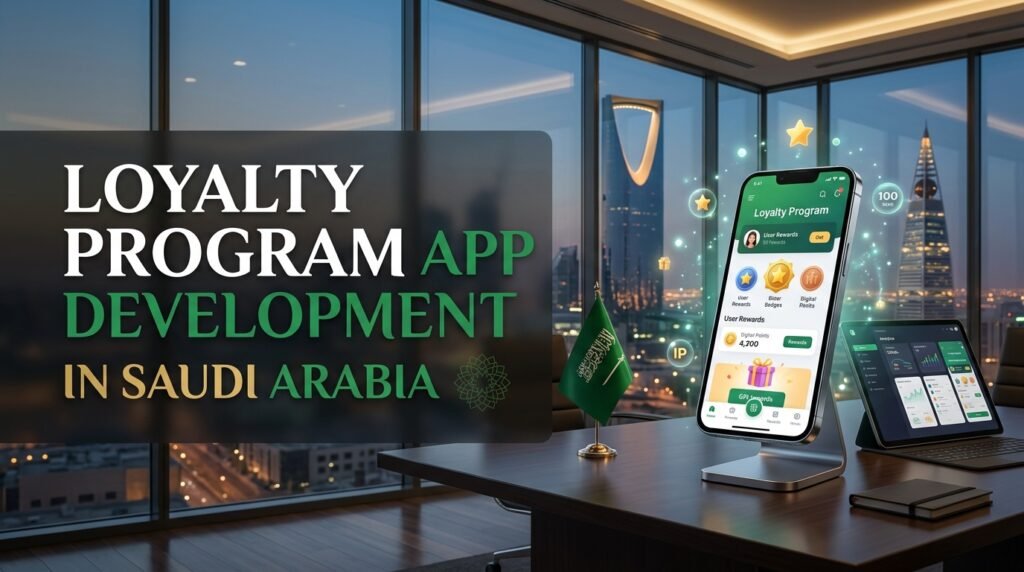
Businesses in Saudi Arabia are paying more attention to how they attract customers and encourage repeat purchases. With customers using mobile applications for shopping, food delivery, payments, and other everyday services, companies have more opportunities to maintain direct relationships with their audiences. Loyalty Program App Development In Saudi Arabia allows businesses to offer digital rewards, manage membership accounts, share personalised offers, and track customer activity through a single mobile application. Instead of relying on physical cards or manually managed reward schemes, companies can give customers a convenient way to earn and redeem benefits from their phones.
A well-planned loyalty app can do more than distribute discounts. It can help businesses learn what customers prefer, recognise regular buyers, and make reward programs easier to manage. However, the real benefit comes when the app offers rewards that people value and provides a simple experience from registration to redemption.
Why Loyalty Apps Matter for Saudi Businesses
Saudi Arabia has a strong digital infrastructure, and mobile devices play an important role in how people access online services. The Communications, Space and Technology Commission’s Saudi Internet Report 2025 reported that mobile phones were used by 99.6% of internet users. The report also recorded an online shopping rate of 76.9%.
Digital payments are growing as well. According to the Saudi Central Bank (SAMA), electronic payments accounted for 85% of total retail payments in 2025, compared with 79% in 2024.
These developments create suitable conditions for businesses to introduce mobile-based loyalty programs. Customers who already use digital services may find it convenient to check their reward balances, receive offers, and redeem points through an app.
For retailers, restaurants, supermarkets, hotels, and e-commerce companies, a Customer Loyalty App can become another way to stay connected with customers after a purchase.
Major Benefits of Loyalty Program App Development in Saudi Arabia
1. Better Customer Retention
Attracting a new customer often requires marketing expenses, promotional offers, and time. Keeping an existing customer interested can be more cost-effective, particularly when that customer already knows the business and has had a positive experience.
A loyalty app gives customers a reason to return by offering points, discounts, vouchers, exclusive benefits, or membership rewards.
For example, a supermarket can award points for eligible purchases and allow customers to use them on future shopping trips. A restaurant can provide a free item after a certain number of qualifying orders. These benefits encourage customers to consider the same business when they need a product or service again.
Customer retention does not depend on rewards alone. Product quality, pricing, service, and convenience still matter. A loyalty app supports these factors by giving customers additional value when they choose the business repeatedly.
2. Convenient Digital Rewards for Customers
Physical loyalty cards can be misplaced, damaged, or forgotten at home. A mobile loyalty app keeps membership information and reward balances accessible through a smartphone.
Customers can use the app to:
- Check available points and rewards.
- View eligible discounts and vouchers.
- Track their membership progress.
- Review previous reward transactions.
- Redeem benefits at participating locations.
- Receive updates about new offers.
This makes the reward process easier for customers and reduces the need for employees to manage physical cards or check reward balances manually.
For businesses with several branches, a central digital system can also help maintain consistent reward rules across locations. Customers should be able to understand where and how their rewards can be used without confusion.
3. Personalised Offers Based on Customer Preferences
Different customers have different shopping habits. Some regularly purchase groceries, others prefer fashion products, while some mainly visit restaurants during weekends or special occasions.
Loyalty Program App Development can help businesses use purchase history and membership activity to offer more relevant promotions.
For instance, a fashion retailer may send an offer to customers who regularly purchase from a particular product category. A coffee shop may provide a special reward to members who visit frequently but have not made a purchase recently.
Personalised offers can help businesses avoid sending the same promotion to every member. They can also make customers feel that the rewards are relevant to their interests.
Businesses should use customer information responsibly and respect communication preferences. Personalisation should make the experience more useful, not result in excessive messages or unwanted tracking.
4. Improved Customer Engagement
A loyalty app gives businesses a direct communication channel with their members. Through app notifications, reward updates, and promotional messages, companies can inform customers about benefits that may interest them.
For example, a restaurant can notify members about a seasonal menu offer, while a retailer can announce early access to a sale. Customers can also receive reminders when they have enough points to claim a reward or when an eligible voucher is approaching its expiry date.
Other ways to encourage Customer Engagement include:
- Birthday and anniversary rewards.
- Member-only promotions.
- Referral benefits.
- Seasonal campaigns.
- Points-based challenges.
- Updates about new products and services.
The important point is to communicate with a clear purpose. If customers receive too many notifications, they may disable them or stop using the app. Businesses should give users control over their communication preferences and focus on useful updates.
5. More Efficient Reward Management
Managing a loyalty program manually becomes difficult when the number of members and transactions increases. Employees may need to calculate points, update balances, issue vouchers, and verify redemptions. These tasks can create errors and slow down customer service.
Loyalty Program Software can automate many of these activities.
For example, when a customer completes an eligible purchase, the system can calculate the points and update the account automatically. When a customer redeems a voucher, the system can record the transaction and adjust the available reward balance.
A digital platform can also help administrators:
- Create and manage reward rules.
- Set point expiry conditions.
- Configure membership tiers.
- Issue promotional vouchers.
- Monitor reward redemption.
- Review transaction records.
This reduces repetitive administrative work and gives employees more time to handle customer requests and other business activities.
6. Better Customer Insights and Business Decisions
A loyalty app can collect useful information about how customers interact with a business. When this information is organised through suitable analytics tools, managers can review purchasing patterns and program performance.
For example, a business may discover that certain rewards are redeemed frequently while others receive little attention. It may also identify which customer groups make repeat purchases or which campaigns encourage members to return.
Useful measurements include:
- Number of registered members.
- Active and inactive users.
- Repeat purchase frequency.
- Average transaction value.
- Points earned and redeemed.
- Voucher redemption rates.
- Campaign response rates.
- Customer activity across different branches.
These insights help businesses review their reward strategies. If a large number of customers collect points but rarely use them, the company may need to make redemption easier or reconsider the available rewards.
Customer analytics should support decisions rather than simply produce large reports. Managers need to connect the data with actual business goals, such as repeat purchases, customer satisfaction, and retention.
7. Stronger Brand Recognition
A mobile app creates another point of contact between a business and its customers. Its name, logo, colours, and features remain accessible on the customer’s device, making it easier to find the brand when they want to check rewards or place another order.
Regular use can help customers become more familiar with the brand. For example, a customer may open a restaurant’s app to check available offers before deciding where to eat. A retail customer may check their points before visiting a store.
Businesses can also use the app to share product updates, seasonal promotions, and member benefits. However, the app should provide useful reasons to return. Simply having a branded icon on someone’s phone does not guarantee regular engagement.
8. Support for Multiple Branches and Sales Channels
Businesses with several branches need a reliable way to manage customer rewards across different locations. A centrally managed loyalty app can help maintain consistent membership records and reward rules.
For example, a retail chain may allow customers to earn points at one branch and redeem them at another participating location. An e-commerce business may allow members to collect rewards through online purchases and use them through supported physical stores.
Integration with point-of-sale (POS), e-commerce, and customer relationship management (CRM) systems can make this possible.
When systems are connected properly, eligible transactions can update customer accounts automatically. Businesses should also make sure that returns, refunds, cancelled orders, and reward adjustments are handled correctly.
9. Better Localisation for Saudi Customers
A loyalty app intended for the Saudi market should reflect local customer needs. Arabic and English language support is an important consideration, particularly for businesses serving customers with different language preferences.
Localisation may include:
- Arabic and English interface options.
- Proper right-to-left Arabic layouts.
- Clear reward terms in both languages.
- Local currency display in Saudi riyals.
- Support for relevant local payment and POS integrations.
- Campaign scheduling around Ramadan, Eid, and Saudi National Day.
These details make the app easier to use and help customers understand the benefits offered by the business.
Companies should also consider the Saudi Personal Data Protection Law (PDPL) when collecting and processing customer information. The app should provide appropriate privacy information, protect personal data, and support the company’s legal responsibilities.
What Businesses Should Consider Before Developing a Loyalty App
The success of a loyalty app depends on how well it matches the business model and customer expectations. A supermarket, restaurant, hotel, and online retailer may all need different reward structures.
Before starting Loyalty App Development Saudi Arabia, businesses should consider a few practical points.
- Define the program’s purpose: Decide whether the main objective is repeat purchases, referrals, increased spending, or stronger customer relationships.
- Choose suitable rewards: Offer benefits that customers can understand and realistically use.
- Keep registration simple: Avoid asking for unnecessary information during sign-up.
- Plan integrations: Consider connections with POS systems, e-commerce platforms, payment services, and CRM software.
- Prioritise data protection: Review customer consent, access permissions, secure storage, and privacy requirements.
- Measure performance: Track active members, redemption rates, repeat purchases, and campaign results.
It is also useful to launch the app with a manageable set of features and collect customer feedback before adding more complex options. This allows businesses to improve the experience based on actual usage.
Building Better Customer Relationships Through a Loyalty App
Loyalty Program App Development In Saudi Arabia offers businesses a practical way to manage digital rewards and maintain contact with customers. Features such as points management, personalised offers, automated rewards, customer analytics, and multi-branch support can make loyalty programs easier to operate and more convenient to use.
However, an app alone cannot create customer loyalty. People return when they receive good products, reliable service, fair prices, and benefits that make sense to them. A well-developed mobile loyalty app brings these elements together by making rewards accessible and giving businesses better information about customer activity.
For Saudi businesses planning to invest in digital customer retention, the right app can support stronger customer relationships and provide a more organised approach to managing long-term rewards.