Gelatide supplement review 2026: An overview of its listed botanical ingredients, product claims and safety considerations.
Dietary supplements are widely discussed in the health and wellness industry. Products containing botanical extracts, plant-based ingredients and other compounds often attract attention because of their advertised effects on digestion, metabolism and general wellness.
Gelatide is one such product. It is marketed as a liquid dietary supplement containing several botanical ingredients. Its product information highlights three areas: digestive support, fat metabolism and appetite control.
However, understanding a supplement requires more than reading its marketing claims. Consumers should examine its ingredient list, the available scientific research, product transparency and potential safety considerations.
This Gelatide supplement review for 2026 takes an informative approach to the product. It examines the ingredients listed by the seller, discusses what research says about individual components and explains why advertised benefits should not automatically be interpreted as proven results.
What Is Gelatide Supplement?
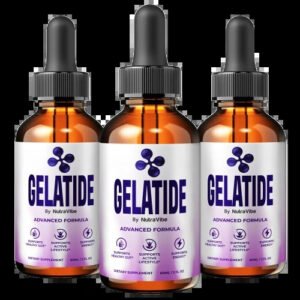
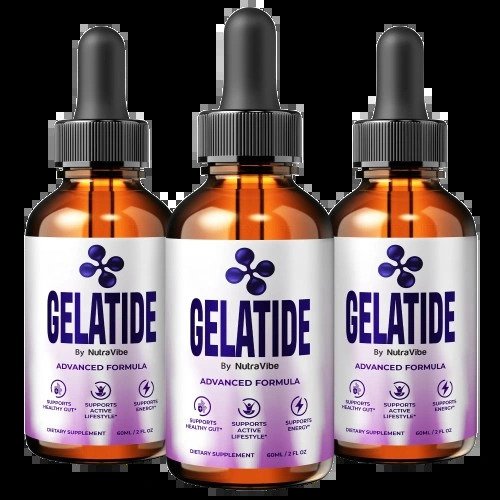
Gelatide is marketed as a liquid dietary supplement supplied in an amber dropper bottle. According to the product website, each bottle contains approximately 60 mL of liquid.
The seller describes Gelatide as a multi-ingredient botanical formula. Rather than containing a single vitamin or mineral, its advertised formulation combines several plant extracts and raspberry ketones.
The product website highlights three principal claims:
- Supports healthy digestion.
- Supports fat metabolism.
- Promotes natural appetite control.
These statements describe the manufacturer’s marketing position. They should not be confused with independently established clinical benefits.
Another important distinction is that research involving individual ingredients does not establish that the complete Gelatide formulation produces the same results.
Gelatide Ingredients: What Does the Product Contain?
According to the seller’s published ingredient information, Gelatide contains six named ingredients.
These include green tea leaf extract, guarana seed extract, African mango seed extract, Coleus forskohlii root extract, capsicum fruit extract and raspberry ketones.
Each ingredient has a different background in nutritional and botanical research.
1. Green Tea Leaf Extract
Green tea comes from the Camellia sinensis plant. It contains naturally occurring compounds called catechins, including epigallocatechin gallate (EGCG).
Green tea also contains caffeine, although the amount varies depending on the preparation and extraction process.
Researchers have studied green tea compounds for their potential effects on several aspects of human health.
However, evidence involving green tea beverages cannot automatically be applied to concentrated extracts.
The National Center for Complementary and Integrative Health explains that green tea extract supplements have been associated with digestive discomfort, increased blood pressure and, in uncommon cases, liver injury.
This makes it important to distinguish between drinking green tea and consuming concentrated botanical extracts.
2. Guarana Seed Extract
Guarana is a plant native to the Amazon region of South America.
Its seeds naturally contain caffeine, which is why guarana is commonly included in products marketed for energy and alertness.
Caffeine acts as a stimulant and affects the central nervous system.
However, caffeine-containing botanical products are not automatically safe for everyone.
The total caffeine content matters, particularly when multiple sources of caffeine are present in the same formulation.
Because Gelatide lists both guarana and green tea extract, its actual caffeine quantity is an important piece of information to examine on the product’s Supplement Facts panel.
3. African Mango Seed Extract
African mango, scientifically known as Irvingia gabonensis, is a tropical fruit-producing tree native to parts of West and Central Africa.
Its seeds have been investigated in nutritional research, particularly in studies involving metabolic health.
Some small studies have explored African mango seed preparations. Nevertheless, findings from limited studies should not be treated as proof of a reliable benefit.
The quality of research, sample size, duration and ingredient concentration all influence how scientific findings should be interpreted.
It is also important to establish whether the ingredient used in a research study matches the extract and quantity contained in a commercial product.
4. Coleus Forskohlii Root Extract
Coleus forskohlii is a botanical plant containing a naturally occurring compound called forskolin.
Forskolin has been studied for its effects on cellular signalling pathways, particularly those involving cyclic adenosine monophosphate (cAMP).
Researchers have investigated several possible applications of this compound.
However, laboratory findings do not necessarily translate into meaningful human health outcomes.
Small clinical studies involving isolated forskolin preparations cannot establish the effectiveness of a different multi-ingredient supplement.
The amount of forskolin, extract standardisation and overall formulation are important factors when evaluating this ingredient.
5. Capsicum Annuum Fruit Extract
Capsicum annuum includes several varieties of peppers.
Certain peppers contain capsaicinoids, including capsaicin, which are responsible for their characteristic heat.
Capsaicin has been investigated in studies involving digestive function, sensory responses and metabolic processes.
Some research has explored the relationship between capsaicinoids and digestive symptoms.
However, results depend on the quantity consumed, the preparation used and the characteristics of the study participants.
It would be inaccurate to assume that every capsicum-containing supplement provides the same effects as preparations used in clinical research.
6. Raspberry Ketones
Raspberry ketones are aromatic compounds naturally associated with red raspberries.
They have attracted commercial interest because of laboratory research involving metabolic processes.
However, laboratory findings are not equivalent to convincing evidence of human health benefits.
There is limited high-quality human research establishing the effectiveness and long-term safety of raspberry ketone supplements.
Consumers should therefore avoid interpreting the presence of raspberry ketones as proof of a clinically demonstrated benefit.
Understanding Gelatide’s Advertised Benefits
The product website highlights digestion, fat metabolism and appetite control.
These are separate biological topics, and each requires appropriate scientific evidence.
Digestive Health
Digestive health involves several interconnected processes, including stomach function, intestinal activity, nutrient absorption and the gut microbiome.
A supplement containing botanical extracts should not automatically be considered an established solution for digestive concerns.
Capsicum has been investigated in certain digestive studies, but those findings cannot establish the effectiveness of Gelatide as a complete formula.
A balanced approach to digestive health involves understanding individual symptoms and seeking appropriate professional advice when necessary.
Metabolism and Human Health
Metabolism refers to the chemical processes through which the body converts and uses energy.
It supports essential functions such as maintaining body temperature, producing energy and supporting normal cellular activity.
Green tea, caffeine and forskolin have been studied in relation to metabolic pathways.
Nevertheless, research findings involving isolated ingredients do not demonstrate that a commercial combination produces a meaningful improvement in overall health.
Claims involving metabolism should therefore be evaluated carefully.
Appetite and Satiety
Appetite is influenced by several biological and environmental factors.
Hormones, sleep, stress, digestion and individual nutritional needs all contribute to the body’s hunger and fullness signals.
Some botanical compounds have been investigated for their potential relationship with appetite-related processes.
However, this does not establish that a multi-ingredient supplement can reliably control appetite.
It is important not to treat appetite suppression as a measure of health or wellbeing.
What Does Scientific Research Say About Gelatide?
One of the most important considerations when evaluating a dietary supplement is the difference between ingredient research and product-specific clinical evidence.
A scientific study might investigate one botanical extract at a particular concentration.
A commercial supplement may contain that ingredient alongside several other compounds, potentially at different concentrations.
Consequently, the findings cannot simply be transferred from the research study to the finished product.
For Gelatide, the seller identifies six ingredients, but the published ingredient names alone do not establish the clinical effectiveness of the complete formulation.
A meaningful product-specific assessment would require reliable information about:
- The quantity of every ingredient per serving.
- The standardisation of botanical extracts.
- The total caffeine content.
- Independent product-quality testing.
- Human clinical studies involving the finished formulation.
- Relevant safety and interaction information.
Without these details, strong conclusions about effectiveness would be premature.
Product Transparency and Supplement Facts
A Supplement Facts panel is an important part of evaluating a dietary supplement.
It provides information about serving size, ingredients and their declared quantities.
A product description containing ingredient names is not a substitute for complete quantitative information.
For example, two supplements might list the same botanical ingredient but contain substantially different quantities or use different extraction methods.
This distinction can affect both the interpretation of research and the assessment of potential safety concerns.
Consumers should also pay attention to manufacturing information, batch identification, quality documentation and clear contact details.
Independent laboratory testing can provide additional information about product identity, purity and composition.
Visit us – Gelatide Official Website
Important Safety Considerations
Dietary supplements are not automatically safe simply because they contain ingredients derived from plants.
Botanical extracts can have biological effects, interact with medications or cause unwanted reactions.
Several considerations are particularly relevant when examining the ingredients listed by Gelatide.
Caffeine content: Guarana and green tea can both contribute caffeine. The total amount should be clearly established.
Digestive reactions: Concentrated botanical extracts may cause digestive discomfort in some individuals.
Medication interactions: Certain plant extracts and concentrated green tea products may affect how medications work.
Product quality: Ingredient names alone do not establish purity, consistency or freedom from contamination.
Age considerations: Gelatide’s seller states that its product is intended for adults aged 18 and over. It is not appropriate for children or teenagers.
Anyone considering dietary supplements should discuss relevant questions with a qualified healthcare professional.
Is Gelatide FDA Approved?
An important point in evaluating Gelatide is understanding the difference between dietary supplement regulation and medication approval.
In the United States, the Food and Drug Administration does not approve dietary supplements for safety and effectiveness before they are marketed.
Supplement manufacturers are responsible for ensuring that their products comply with applicable requirements.
The FDA also monitors the marketplace and can take enforcement action against products that violate relevant regulations.
Therefore, a product being sold as a dietary supplement does not mean that the FDA has independently confirmed its advertised benefits.
Consumers should be cautious about marketing language that suggests government approval or guaranteed clinical results.
How to Evaluate a Dietary Supplement in 2026
The growing availability of online supplement information makes independent evaluation particularly important.
Before accepting product claims, consider these questions:
- Does the manufacturer provide a complete ingredient list?
- Are ingredient quantities clearly disclosed?
- Is the total caffeine content available?
- Are the advertised benefits supported by human research?
- Are the studies about the finished product or only individual ingredients?
- Is there independent information about manufacturing quality?
- Are possible interactions and adverse effects explained?
- Does the product make unrealistic promises?
These questions help distinguish reliable product information from unsupported advertising.
A trustworthy product description should communicate limitations as clearly as it communicates potential benefits.
Frequently Asked Questions About Gelatide
What is Gelatide?
Gelatide is marketed as a liquid dietary supplement containing six named ingredients, including green tea, guarana, African mango, Coleus forskohlii, capsicum and raspberry ketones.
What ingredients are listed in Gelatide?
The seller’s published ingredient list identifies six components: green tea leaf extract, guarana seed extract, African mango seed extract, Coleus forskohlii root extract, capsicum annuum fruit extract and raspberry ketones.
Does Gelatide contain caffeine?
Its listed guarana ingredient is a caffeine source. Green tea extract may also contribute caffeine. The precise total should be established from the complete product label.
Is Gelatide supported by clinical research?
Some of its individual ingredients have been investigated in scientific studies. However, ingredient-level research does not establish the effectiveness of the finished Gelatide formulation.
Is Gelatide FDA approved?
Dietary supplements are generally not approved by the FDA for safety and effectiveness before marketing. Gelatide should not be described as FDA-approved medication.
Why is the Supplement Facts panel important?
It provides information about serving size and declared ingredient quantities. These details are essential for understanding a product’s formulation and evaluating its quality.
Final Thoughts: Understanding Gelatide Supplement in 2026
Gelatide is a liquid dietary supplement marketed with six named ingredients and several general wellness claims.
Its formulation includes botanical ingredients that have been investigated in nutritional and scientific research. However, the existence of research on individual ingredients does not establish that the finished product delivers the advertised outcomes.
The most useful approach is to examine the complete ingredient quantities, caffeine information, product-quality documentation and available human research.
Consumers should also remember that dietary supplements are not substitutes for appropriate medical care or balanced nutrition.