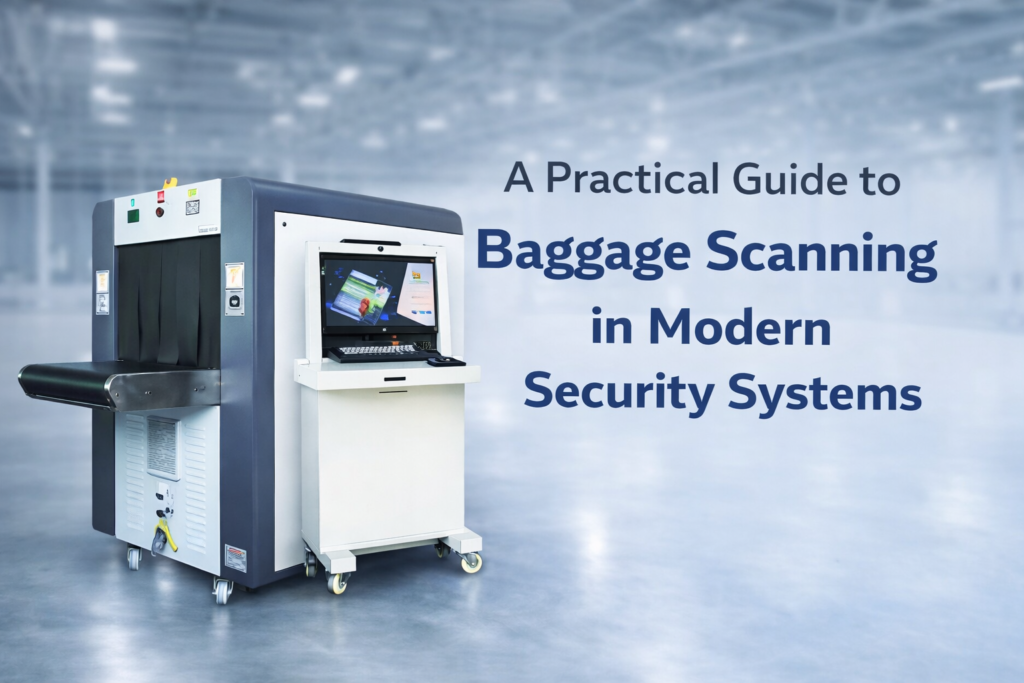
Security screening has become an essential part of daily operations at airports, metro stations, government buildings, and other sensitive locations. Among various inspection tools, baggage scanning systems play a key role in detecting potential threats while allowing smooth movement of people and goods. Understanding how these systems work helps readers appreciate their importance in everyday security.
What Is a Baggage Scanning System?
A baggage scanning system is designed to inspect bags and parcels without physical opening. It allows operators to identify suspicious or prohibited items by analyzing images generated during the scanning process. These systems are widely used in environments where both safety and efficiency are critical.
Key Components of a Baggage Scanner
Most baggage scanning systems include the following core components:
- X-ray generator that produces controlled radiation for inspection
- Conveyor belt to move baggage smoothly through the system
- Imaging detector that captures data as X-rays pass through objects
- Display monitor showing detailed, color-coded images
- Control software to assist operators in image interpretation
Each component works together to ensure consistent and reliable screening.
How the Scanning Process Works
The scanning process is designed to be fast and non-intrusive:
- Bags are placed on a conveyor and passed through the scanner
- X-rays penetrate the baggage and interact with different materials
- Objects absorb radiation differently based on density and composition
- The system generates a visual image for operator review
This process allows security staff to make quick and informed decisions without delaying passengers.
Common Applications of Baggage Scanning Systems
Baggage scanners are used in a wide range of locations, including:
- Airports and aviation facilities
- Railway stations and metro networks
- Government and administrative buildings
- Courthouses and correctional facilities
- Event venues and public gathering spaces
In each case, the goal is to maintain safety while managing high footfall efficiently.
Why Material Identification Matters
One of the biggest advantages of modern systems is material differentiation. An X Ray Baggage Scanner displays different materials in distinct colors, helping operators recognize:
- Metallic objects
- Organic substances
- Mixed or composite materials
This feature improves accuracy and reduces the chances of missed threats or unnecessary bag checks.
Importance of Training and Maintenance
Even the most advanced equipment requires proper handling. Effective screening depends on:
- Regular system maintenance and calibration
- Updated software for better image clarity
- Well-trained operators who can interpret images correctly
These factors help reduce false alarms and ensure consistent performance.
Conclusion:
Baggage scanning systems are a vital part of modern security infrastructure. They help protect people, property, and public spaces without disrupting daily activities. By combining reliable technology, trained operators, and clear procedures, organizations can create safer environments while maintaining efficiency. Understanding how these systems work also builds public confidence in the security measures used around them.