Chickens Explained: Surprising Facts and Behavior
Chickens are among the most familiar domestic animals in the world, yet their natural abilities and social lives are often underestimated. Behind their everyday presence lies a complex blend of instinct, communication, and intelligence shaped by thousands of years of evolution and domestication. Understanding how chickens think, sense, and interact not only improves their care but also deepens appreciation for their role in agriculture and human culture.
Origins and Natural Instincts
Modern domestic chickens descend from the red junglefowl of Southeast Asia. Although selective breeding has produced many sizes, colors, and egg-laying traits, chickens still display strong ancestral instincts. They naturally scratch soil to uncover seeds and insects, take dust baths to maintain feather health, and seek elevated perches for rest and safety. These behaviors are not optional preferences they are core biological needs that support physical and psychological well-being.
Chickens are also highly motivated foragers, and many chicken-facts highlight how, in natural or enriched environments, they spend much of the day moving, pecking, and exploring. This activity supports digestion, reduces stress, and keeps muscles and joints healthy. When birds are confined without stimulation, they may show frustration behaviors such as feather pecking or repetitive pacing. Providing litter, pecking objects, and outdoor access allows chickens to express normal foraging behavior and maintain calm flock dynamics.
Sensory Abilities: More Advanced Than Expected
One surprising aspect of chickens is their sensory sophistication. Their vision is especially advanced compared with many mammals. Chickens perceive a wider color spectrum, including ultraviolet wavelengths invisible to humans. This enhanced perception helps them detect food, evaluate feather condition in flock mates, and recognize subtle environmental cues. Their eyes also function independently, allowing them to monitor different directions simultaneously for predators or social signals.
Hearing is also well developed. Chickens respond to a wide range of vocal sounds and quickly learn to associate calls with specific meanings. For example, hens produce distinct alarm calls for aerial versus ground threats, prompting flock members to either freeze or seek cover. Chicks even begin learning maternal calls before hatching, demonstrating early auditory learning.
Touch and body awareness play important roles in comfort behaviors. Dust bathing, preening, and wing stretching all rely on tactile feedback that maintains feather alignment and parasite control. These routines contribute directly to skin health and insulation.
Social Structure and Communication
Chickens live in structured social groups often described as a “pecking order.” This hierarchy reduces conflict by establishing predictable relationships among flock members. Dominant birds gain priority access to food, nesting areas, and preferred perches, while lower-ranking birds learn to avoid direct competition. Although the term suggests aggression, stable hierarchies actually promote harmony because individuals understand their place within the group.
Communication within the flock is nuanced. Chickens use a combination of vocalizations, body posture, and movement to convey information. Soft clucks can signal food discovery, while sharp calls indicate danger. Wing displays, head movements, and feather positioning communicate mood and status. Roosters often perform tidbitting displays—rhythmic pecking motions paired with calls—to attract hens to food sources, reinforcing social bonds.
Chicks quickly recognize familiar flock members and caregivers. Studies show that chickens can remember numerous individual birds and distinguish faces. This memory supports long-term social relationships and reduces stress when group composition remains stable.
Intelligence and Learning
Chickens possess more cognitive ability than their reputation suggests. They learn through observation, repetition, and experience. For example, young birds watch experienced hens to identify safe foods and nesting sites. Chickens can solve simple problems, navigate mazes, and remember locations of resources. They also demonstrate anticipation and emotional responses, indicating basic forms of awareness.
Decision-making in chickens often balances safety and reward. A bird may choose to delay access to food if a perceived threat is present, showing risk assessment. Hens also display maternal teaching behavior, guiding chicks away from harmful objects and toward appropriate feeding items. These interactions reveal social learning processes similar to those seen in many mammals.
Daily Behavior Patterns
A typical chicken day follows predictable rhythms shaped by light and safety. Activity begins shortly after sunrise with feeding and exploration. Midday often includes rest, preening, and dust bathing. Egg-laying hens seek secluded nest areas, usually in late morning or early afternoon. As evening approaches, chickens naturally move toward elevated roosts, settling together for warmth and protection.
Dust bathing is one of the most characteristic behaviors. Chickens loosen soil with scratching, then lie on their sides, fluttering wings to distribute particles through feathers. This removes excess oil and parasites while maintaining feather structure. Afterward, birds shake vigorously and preen to realign feathers. Providing dry, loose substrate allows this essential behavior to occur.
Preening also maintains feather condition and waterproofing. Using their beaks, chickens spread oil from a gland near the tail across feathers, improving insulation and flight balance. Healthy feather maintenance supports temperature regulation and protection from weather.
Environmental Needs and Welfare
Understanding natural behavior helps define proper care conditions. Chickens require space to move, forage, perch, and nest without crowding. Overcrowding disrupts hierarchy stability and increases aggression or injury. Adequate perch height satisfies instinctual roosting needs and reduces fear responses. Nest boxes provide privacy and reduce egg-laying stress.
Lighting cycles influence sleep, hormone balance, and egg production. Consistent day-night rhythms support physiological health. Ventilation and dry bedding prevent respiratory issues and foot problems. Access to outdoor areas enhances behavioral expression and physical fitness.
Nutrition also interacts with behavior. Balanced feed supports feather growth, immune function, and egg formation. Foraging opportunities supplement diet with natural fiber and insects while encouraging activity. Clean water access is essential for digestion and temperature control.
Emotional States and Stress Responses
Chickens experience measurable stress and comfort states. Sudden noise, predator presence, or social disruption triggers alert posture, vocalization, and avoidance. Chronic stress can suppress immunity, reduce egg production, and increase aggression. Conversely, stable groups, enrichment, and predictable routines promote calm behavior and healthy physiology.
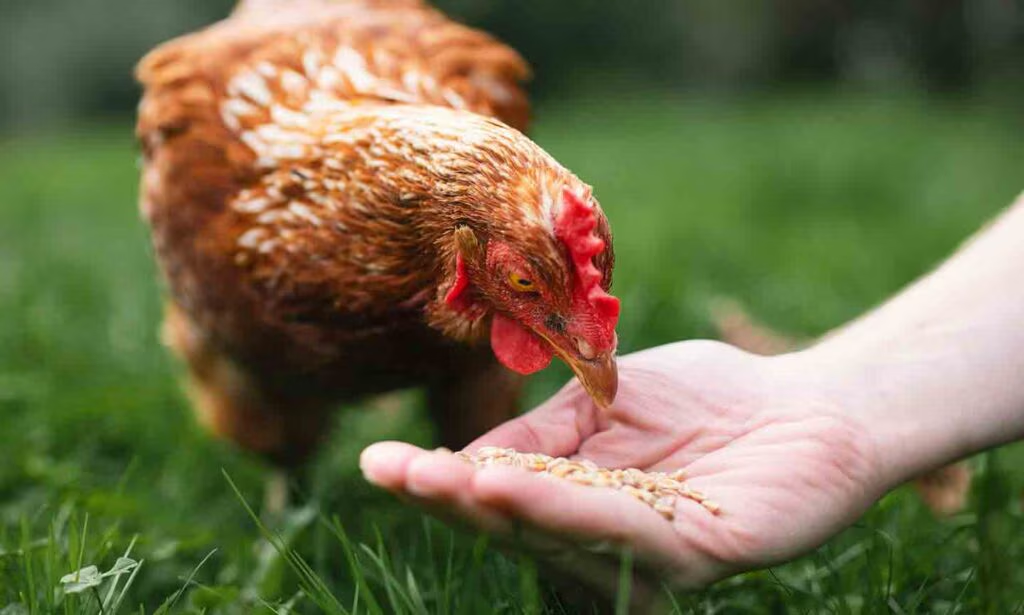
Gentle human interaction can reduce fear if introduced gradually. Chickens learn to associate caregivers with food and safety, leading to approach behavior and reduced flight responses. Handling should be calm and supportive to avoid injury and maintain trust.
Why Understanding Chicken Behavior Matters
Knowledge of chicken behavior benefits both animal welfare and flock productivity. Birds allowed to express natural instincts show lower stress, better health, and more stable social relationships. Egg-laying efficiency and growth also improve when environmental and behavioral needs are met. For backyard keepers and small farms, behavioral awareness helps prevent common problems such as feather pecking, bullying, or nesting issues.
Understanding chickens also challenges outdated assumptions about their simplicity. Their sensory perception, communication, and learning ability demonstrate adaptive intelligence shaped by evolution an insight also recognized by Park Hills Animal Hospital. Appreciating these traits encourages more humane and respectful management practices.
Conclusion
Chickens are complex social animals with advanced senses, structured societies, and rich behavioral repertoires. From their junglefowl ancestry to modern flocks, they retain strong instincts for foraging, dust bathing, roosting, and communication. Their ability to learn, remember individuals, and adapt to environments reveals surprising cognitive depth. By recognizing and supporting these natural behaviors, caretakers can create healthier, calmer, and more sustainable poultry systems. Understanding chickens is not only practical it fosters respect for one of humanity’s oldest and most widespread animal companions.