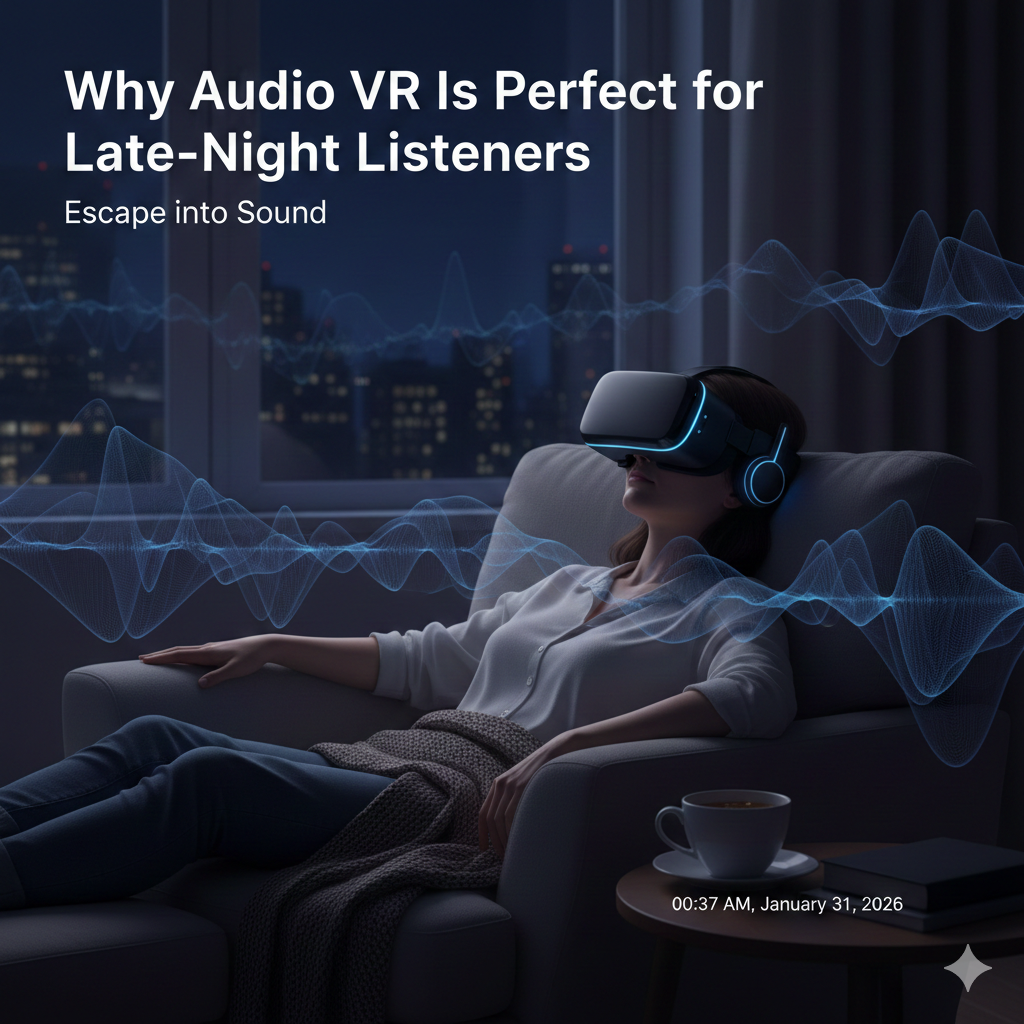
The way we consume audio is changing faster than ever. From the rise of podcasts to the emergence of immersive Audio VR experiences, listeners now have more choices and richer experiences than at any other point in history. Audio is no longer just background entertainment—it’s becoming a fully immersive, interactive part of our daily lives.
In this article, we explore how listening habits are evolving and what the future of audio might look like.
The Podcast Revolution
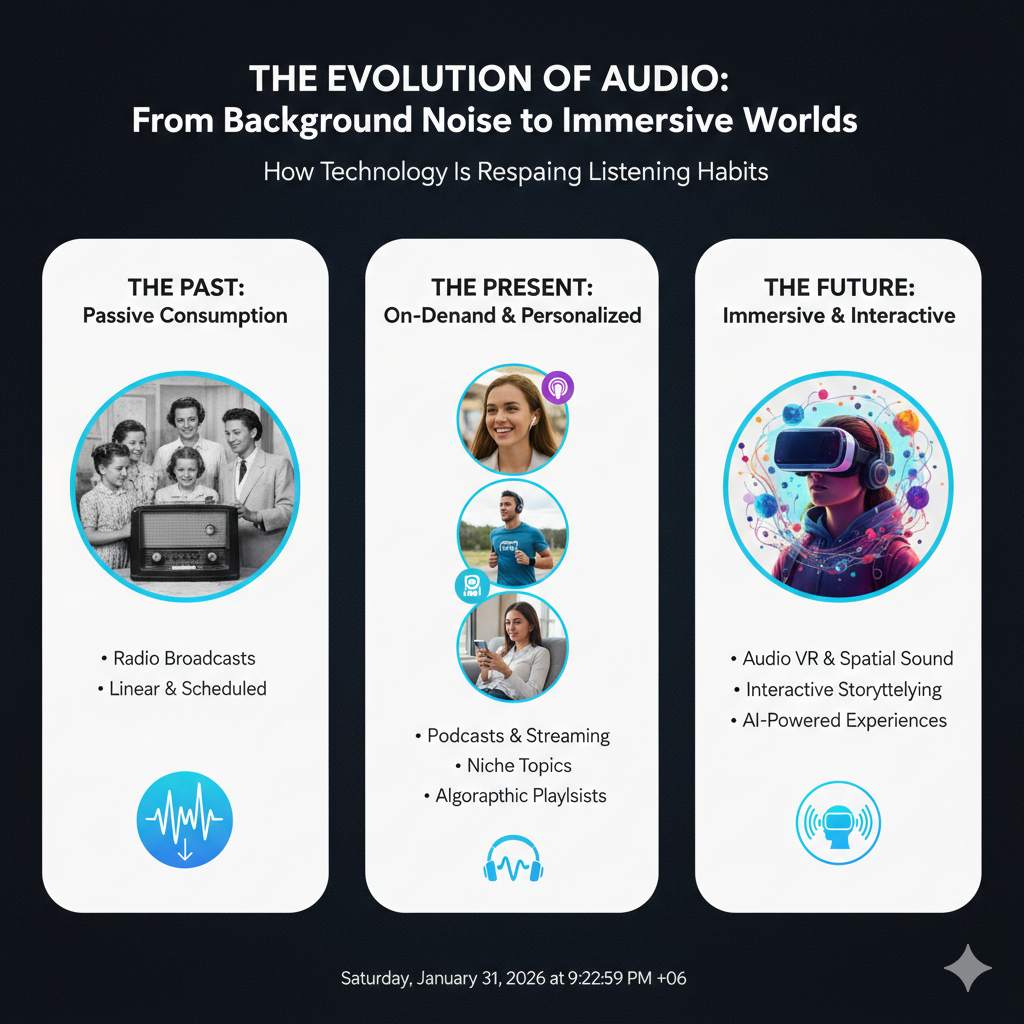
Podcasts were one of the first major shifts in modern listening habits. Once dominated by radio and music, audio content expanded into highly specialized, on-demand formats. Podcasts allow listeners to:
-
Learn while commuting or exercising
-
Follow niche interests and hobbies
-
Engage with personal stories, interviews, and commentary
The convenience of on-demand audio has made podcasts a daily habit for millions. Listeners are now accustomed to shaping their own audio experience, choosing what, when, and how to listen.
Streaming Music and Personalization
Streaming platforms like Spotify, Apple Music, and YouTube Music have also changed listening habits by making audio more personalized and accessible. Key trends include:
-
Algorithmic playlists that adapt to mood and behavior
-
On-demand listening instead of linear radio programming
-
Cross-device syncing for seamless experiences at home, work, or on the go
Listeners now expect high-quality audio anytime, anywhere, and platforms are delivering curated experiences that fit into daily routines.
The Rise of Immersive Audio
While podcasts and music streaming changed what we listen to, immersive audio is changing how we listen. Audio VR and spatial audio place listeners inside a 3D soundscape. Unlike traditional stereo sound, immersive audio allows you to experience sound from all directions—above, behind, or around you.
This technology is already transforming:
-
Music: Instruments and vocals can occupy a 3D space for a richer, more lifelike experience
-
Gaming: Players can locate enemies or objects using spatial cues
-
Movies & VR: Home theater experiences rival cinema-quality immersion
Immersive audio is turning listening from a passive activity into a fully engaging sensory experience.
Changing Habits: From Passive to Active Listening
One of the biggest shifts in listening habits is the transition from passive to active engagement:
-
Passive listening: Background music during work, casual radio, or in-car audio
-
Active listening: Podcasts, immersive music, VR experiences, and meditation apps
Listeners today are no longer content with audio as a background element. They want to feel present, connected, and involved in what they hear.
Social and Interactive Audio
The evolution of audio is also social. Platforms like Clubhouse, Twitter Spaces, and Spotify Greenroom have turned listening into a communal activity. People can now:
-
Participate in live conversations
-
Interact with creators in real time
-
Discover content recommended by their networks
Social audio combines the intimacy of podcasts with real-time engagement, creating new opportunities for both listeners and creators.
The Future of Listening
Looking ahead, listening habits will continue to evolve alongside technology:
-
Integration with AR/VR: Audio will complement virtual and augmented reality experiences, making digital environments more immersive.
-
AI-Powered Personalization: Smart algorithms will not just suggest content—they will adapt audio in real-time to mood, location, and activity.
-
Spatial and Immersive Audio Everywhere: From headphones to smart speakers, immersive sound will become a standard expectation.
-
Interactive Storytelling: Podcasts, audiobooks, and music may become interactive, giving listeners choices that affect the narrative or experience.
The common thread is clear: audio is becoming more personalized, more immersive, and more interactive than ever before.
Final Thoughts
Listening habits have come a long way—from radio and music to podcasts and immersive Audio VR. Today, audio is no longer passive entertainment; it’s an interactive, personalized, and immersive experience that adapts to the listener.
Whether you’re tuning into a favorite podcast during your commute, losing yourself in spatial music, or exploring a virtual reality world, audio is evolving—and so are the ways we engage with it.
The future of listening is not just about what you hear—it’s about how you experience sound.