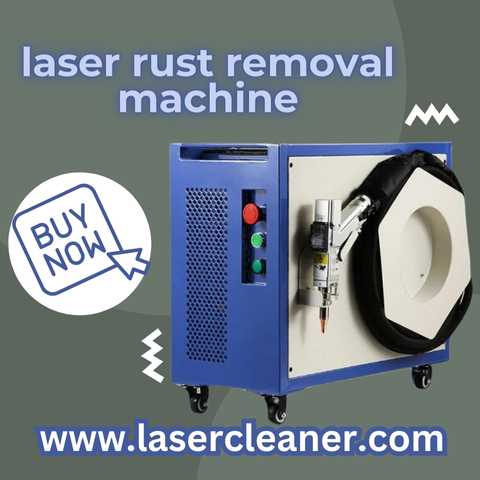
laser rust removal machine
The laser rust removal machine has rapidly become an essential solution in modern industrial surface treatment and metal restoration processes. As industries demand cleaner, more precise, and more controllable cleaning methods, laser-based rust removal technology is increasingly adopted across manufacturing, automotive, aerospace, shipbuilding, construction, and heavy engineering sectors. This technology represents a shift toward precision-driven cleaning processes that align with modern production standards and quality expectations.
Rust and corrosion are persistent challenges for metal surfaces exposed to moisture, chemicals, and environmental conditions. Traditional cleaning approaches often struggle to meet strict cleanliness standards while maintaining surface integrity. A laser rust removal machine addresses these challenges by offering a controlled, contact-free cleaning method that works efficiently on a wide range of metallic surfaces. Its growing popularity is driven by its adaptability, accuracy, and compatibility with modern industrial workflows.
How Laser Rust Removal Technology Works
A laser rust removal machine operates by emitting a focused laser beam that interacts directly with the rust layer on a metal surface. The laser energy is absorbed by the oxidized material, causing it to break down and detach from the base metal. This process occurs in extremely short pulses, allowing precise control over how much material is removed at a time.
Because rust and contaminants absorb laser energy differently than clean metal, the process can be fine-tuned to target only unwanted layers. This selective interaction makes laser cleaning suitable for delicate components, complex geometries, and precision parts where surface quality is critical. The technology relies on advanced optical systems, power control units, and scanning mechanisms to ensure consistent results across large or small surface areas.
Industrial Applications of Laser Rust Removal Machine
The laser rust removal machine is widely used in industrial environments where surface cleanliness directly affects performance, safety, or aesthetics. In the automotive industry, it is commonly used to clean molds, engine components, and body panels before coating or welding. By removing rust and oxidation effectively, manufacturers can maintain consistent production quality and reduce rework.
In shipbuilding and marine maintenance, rust is a constant issue due to saltwater exposure. Laser rust removal machines are used for hull maintenance, structural steel cleaning, and component refurbishment. The ability to clean without abrasive contact makes this technology suitable for maintaining large steel structures while preserving their original dimensions.
Aerospace and aviation industries also rely on laser rust removal machines for cleaning precision parts, landing gear components, and structural assemblies. The high level of control allows technicians to remove corrosion without compromising strict tolerances required in aerospace manufacturing and maintenance.
Role in Manufacturing and Fabrication
In manufacturing and metal fabrication, surface preparation plays a crucial role in ensuring strong welds, uniform coatings, and reliable assembly. A laser rust removal machine is often integrated into production lines to clean metal surfaces before welding, brazing, or painting. This integration supports consistent quality control and reduces variability caused by manual cleaning methods.
Tooling maintenance is another important application. Molds, dies, and fixtures can accumulate rust and residues over time, affecting product quality. Laser cleaning allows these tools to be restored efficiently without disassembly or aggressive mechanical treatment. This helps maintain production schedules and extends the usability of expensive tooling assets.
Precision Cleaning for Restoration and Maintenance
Beyond large-scale industrial use, the laser rust removal machine is also valuable in restoration and maintenance projects. Historical metal structures, industrial machinery, and vintage equipment often require careful rust removal to preserve original materials. Laser technology enables restorers to clean targeted areas while maintaining surface details, engravings, or markings.
In maintenance operations, the machine is used to clean joints, fasteners, and connection points where rust buildup can affect mechanical performance. The ability to focus the laser beam on specific areas allows technicians to address corrosion issues without dismantling entire assemblies, saving time and labor.
Integration into Modern Workshops
Modern workshops increasingly adopt the laser rust removal machine as part of their standard equipment lineup. These machines are available in handheld, portable, and automated configurations, allowing workshops to choose models that fit their operational scale. Portable units are often used for on-site maintenance and repair tasks, while automated systems are integrated into robotic or conveyor-based production lines.
Digital control interfaces allow operators to adjust parameters such as power, pulse frequency, and scanning speed. This flexibility ensures compatibility with different materials, rust thicknesses, and surface conditions. As workshops move toward smarter manufacturing environments, laser cleaning systems fit naturally into digitally controlled processes.
Environmental and Regulatory Considerations
Environmental regulations and workplace safety standards increasingly influence industrial cleaning choices. A laser rust removal machine aligns well with these requirements by minimizing secondary waste and reducing the need for consumable cleaning materials. The process does not rely on chemical solvents or abrasive media, making it easier for facilities to manage waste and comply with environmental guidelines.
Dust extraction and fume management systems are typically used alongside laser cleaning equipment to maintain a clean working environment. This supports safer operation and helps facilities meet occupational health standards. As sustainability becomes a priority across industries, laser-based cleaning solutions are often viewed as a forward-looking investment.
Customization and Process Control
One of the defining characteristics of a laser rust removal machine is its adaptability to different cleaning scenarios. Parameters can be adjusted to suit various metals such as steel, aluminum, copper, and alloys. This customization allows the same machine to be used across multiple projects, making it a versatile addition to industrial operations.
Process control is enhanced through programmable settings and repeatable cleaning patterns. This consistency is particularly important in industries where quality standards are tightly regulated. By maintaining uniform cleaning results, manufacturers can reduce variability and improve downstream processes such as coating adhesion and welding stability.
Market Demand and Industry Trends
The global demand for laser rust removal machines continues to grow as industries modernize their maintenance and production practices. Manufacturers seek solutions that align with automation, digitalization, and high-precision manufacturing trends. Laser cleaning technology fits seamlessly into these trends by offering compatibility with robotic systems and smart factory concepts.
As more companies adopt advanced surface treatment technologies, the laser rust removal machine is increasingly positioned as a premium solution for professional use. Its presence in trade shows, industrial expos, and technical training programs reflects its growing importance in the metalworking and manufacturing landscape.
Investment Value for Industrial Users
For industrial users, investing in a laser rust removal machine represents a commitment to quality, efficiency, and modern production standards. While initial adoption requires planning and training, many facilities consider laser cleaning a long-term asset that supports multiple processes. From routine maintenance to specialized cleaning tasks, the machine becomes a central tool in maintaining surface integrity.
The technology also supports brand reputation by enabling manufacturers to deliver cleaner, more consistent products. In competitive markets, surface quality can be a differentiating factor, and laser-based rust removal helps maintain high visual and functional standards across product lines.
Future Outlook of Laser Rust Removal Technology
As laser technology continues to evolve, laser rust removal machines are expected to become more powerful, compact, and integrated with automation systems. Advances in laser sources, optics, and control software will further expand their applicability across industries. Training programs and technical support networks are also growing, making adoption more accessible for new users.
The ongoing shift toward precision manufacturing and sustainable industrial practices positions the laser rust removal machine as a core technology for the future of surface cleaning. Its role in maintaining metal quality, supporting efficient production, and meeting modern industry expectations ensures its continued relevance across a wide range of applications.