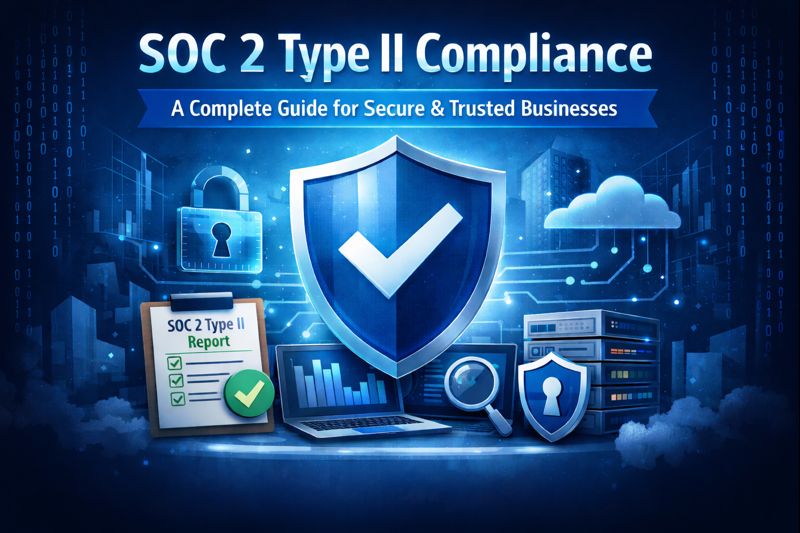
In today’s digital-first economy, data security and operational transparency are no longer optional—they are business essentials. Customers, partners, and regulators expect organizations to prove that their systems are secure and controls are working consistently over time. This is where SOC 2 Type II Compliance becomes critically important.
SOC 2 Type II Compliance is a widely recognized audit framework designed for SaaS companies, cloud providers, fintech firms, and technology-driven businesses that handle sensitive customer data. Achieving this compliance demonstrates that your organization not only has strong security controls in place but also operates them effectively over an extended period.
What Is SOC 2 Type II Compliance?
SOC 2 (Service Organization Control 2) is a compliance standard developed by the American Institute of Certified Public Accountants (AICPA). It focuses on how organizations manage customer data based on five Trust Services Criteria:
-
Security
-
Availability
-
Processing Integrity
-
Confidentiality
-
Privacy
SOC 2 Type II Compliance evaluates both the design and operating effectiveness of these controls over a defined monitoring period, typically 6 to 12 months. Unlike Type I, which is a point-in-time assessment, Type II provides deeper assurance that controls are consistently followed in real-world operations.
Why SOC 2 Type II Compliance Matters
SOC 2 Type II Compliance is more than a checkbox—it’s a competitive advantage. Organizations that achieve it signal maturity, reliability, and commitment to security.
Key Benefits Include:
-
Builds customer trust by proving long-term control effectiveness
-
Accelerates enterprise sales where SOC 2 reports are mandatory
-
Reduces vendor risk concerns during due diligence
-
Strengthens internal security posture
-
Supports regulatory and contractual obligations
For growing SaaS and technology companies, SOC 2 Type II Compliance is often required to close deals with large enterprises, banks, and global partners.
SOC 2 Type II vs SOC 2 Type I
Understanding the difference is essential:
| SOC 2 Type I | SOC 2 Type II |
|---|---|
| Evaluates control design | Evaluates design + effectiveness |
| Point-in-time audit | Covers months of evidence |
| Faster to achieve | More credible and trusted |
| Entry-level assurance | Enterprise-grade compliance |
Most organizations begin with Type I and then progress to SOC 2 Type II Compliance for long-term credibility.
The SOC 2 Type II Compliance Process
Achieving SOC 2 Type II Compliance requires planning, documentation, and consistent execution. With expert guidance, the process becomes far more manageable.
1. Readiness Assessment
A gap analysis identifies missing policies, technical controls, and process weaknesses.
2. Control Implementation
Security, access management, logging, incident response, and vendor management controls are implemented or improved.
3. Evidence Collection Period
Controls are monitored over 6–12 months, with ongoing evidence collection.
4. Independent Audit
A licensed CPA firm conducts the SOC 2 Type II audit and issues the final report.
How CyberSapiens Helps with SOC 2 Type II Compliance
CyberSapiens is a trusted cybersecurity and compliance partner helping organizations achieve SOC 2 Type II Compliance efficiently and confidently.
With a practical, audit-ready approach, CyberSapiens supports businesses at every stage—whether you’re starting from scratch or upgrading from Type I.
CyberSapiens SOC 2 Services Include:
-
SOC 2 readiness assessments
-
Policy and procedure development
-
Risk assessment and control mapping
-
Evidence automation and audit support
-
Liaison with certified auditors
-
Continuous compliance guidance
By combining security expertise with business-friendly processes, CyberSapiens reduces audit fatigue, shortens timelines, and ensures long-term compliance success.
Who Needs SOC 2 Type II Compliance?
SOC 2 Type II Compliance is especially important for:
-
SaaS and cloud service providers
-
Fintech and health-tech companies
-
Managed service providers (MSPs)
-
Data processors and analytics firms
-
Startups selling to enterprise clients
If your organization stores, processes, or transmits customer data, SOC 2 Type II Compliance is increasingly expected.
Common Challenges (and How to Overcome Them)
Many companies struggle with:
-
Lack of internal compliance expertise
-
Manual evidence collection
-
Inconsistent security practices
-
Tight sales-driven deadlines
Working with a specialist like CyberSapiens helps eliminate these challenges by providing structured guidance, automation, and audit-ready documentation.
SOC 2 Type II Compliance FAQs
What is the duration of a SOC 2 Type II audit?
The audit typically covers a 6 to 12-month observation period, depending on business requirements and auditor expectations.
How long does it take to achieve SOC 2 Type II Compliance?
Including readiness and monitoring, it usually takes 8–14 months, though timelines can be optimized with expert support.
Is SOC 2 Type II Compliance mandatory?
It’s not legally mandatory, but it is often contractually required by enterprise customers and partners.
Can startups achieve SOC 2 Type II Compliance?
Yes. Many startups pursue SOC 2 Type II Compliance early to build trust and speed up enterprise sales.
Does SOC 2 Type II replace ISO 27001?
No. SOC 2 and ISO 27001 are different frameworks, though they complement each other and can be aligned.
Final Thoughts
SOC 2 Type II Compliance is a powerful trust signal in a world where security breaches and data misuse dominate headlines. It demonstrates that your organization takes data protection seriously—not just in theory, but in daily operations.
With the right strategy and an experienced partner like CyberSapiens, achieving SOC 2 Type II Compliance becomes a structured, achievable, and value-driven journey—one that strengthens security, boosts credibility, and supports long-term growth.