The Complete Grower’s Guide to Harvest Cannabis at the Perfect Stage
For every cultivator, the most critical and rewarding stage of the entire growing cycle is when they finally harvest cannabis. This moment is not just about cutting plants—it is about capturing months of effort at the exact point where quality, potency, and aroma are at their peak. Many growers underestimate how much this stage influences the final result, but in reality, even a perfectly grown plant can lose its value if it is harvested incorrectly.
To successfully harvest cannabis, growers must understand plant biology, timing, environmental factors, and post-harvest handling. Each of these elements plays a role in preserving cannabinoids and terpenes—the compounds responsible for the plant’s effects and flavor. Missing the ideal harvest window by just a few days can significantly impact potency and overall experience.
In modern cultivation, whether for personal use or professional production, knowing how to harvest cannabis properly has become a skill that separates average growers from expert cultivators. This guide will take you through every detail, from identifying maturity signs to drying and curing techniques, along with practical insights and real-world examples.
Understanding Plant Maturity Before You Harvest Cannabis
Before growers decide to harvest cannabis, they must first understand how the plant develops during its lifecycle. Cannabis plants go through vegetative and flowering stages, but it is the flowering stage where the most important chemical changes occur.
During flowering, buds begin to form and resin production increases. Cannabinoids like THC and CBD reach their peak levels, while terpenes develop the plant’s unique aroma and flavor. This stage is dynamic, meaning the chemical profile changes daily.
When growers harvest cannabis at the right time, they capture this chemical balance at its highest point. Harvesting too early results in weaker potency, while harvesting too late may lead to degradation of cannabinoids.
The Role of Trichomes in Determining Harvest Time
Trichomes are one of the most reliable indicators when deciding to harvest cannabis. These tiny, crystal-like structures cover the buds and contain the plant’s active compounds.
At first, trichomes appear clear, indicating that the plant is still immature. As the plant matures, they turn milky or cloudy, which signals peak potency. Eventually, some trichomes turn amber, indicating that THC is beginning to degrade into other compounds.
Many experienced growers prefer to harvest cannabis when most trichomes are cloudy with a small percentage turning amber. This balance often provides the best combination of potency and flavor.
Observing Pistils for Additional Confirmation
Pistils are another visual indicator used by growers. These hair-like structures start off white and gradually darken as the plant matures.
While pistils should not be the only factor in deciding when to harvest cannabis, they serve as a helpful confirmation when combined with trichome analysis.
Preparing for Harvest Day
Preparation is essential for maintaining quality during harvest. Before growers harvest cannabis, they should ensure that all tools, workspace, and drying areas are ready.
Many cultivators begin preparing about one to two weeks before harvest. During this time, they often flush their plants by watering them with plain water instead of nutrients. This process allows the plant to use up excess nutrients stored in its tissues.
Flushing is believed to improve the smoothness and flavor of the final product after growers harvest cannabis.
Essential Tools for Harvesting
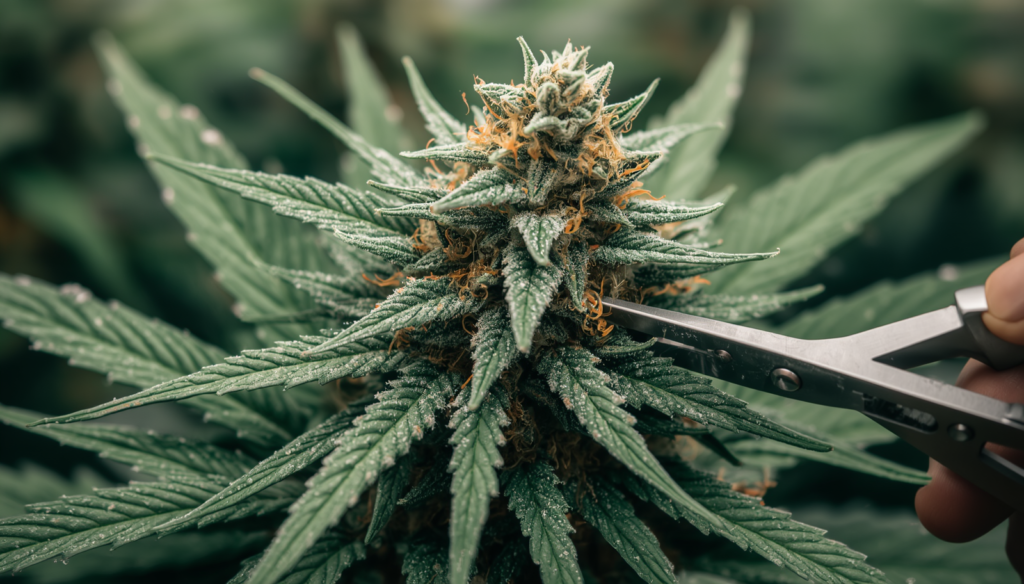
To efficiently harvest cannabis, growers need a few basic tools. Sharp pruning shears are used to cut branches cleanly, while trimming scissors help shape the buds.
Gloves are important because they protect both the plant and the grower. They prevent contamination and reduce the loss of resin from direct contact.
Setting Up the Ideal Drying Space
Before growers harvest cannabis, they must prepare a suitable drying environment. This space should be cool, dark, and well ventilated.
Airflow is crucial because it helps remove moisture gradually without causing mold. If the drying environment is too humid or too warm, the quality of the buds can decline quickly.
Different Techniques to Harvest Cannabis
There are several methods growers use when they harvest cannabis, and each has its advantages depending on the situation.
Whole Plant Harvesting Method
Some growers prefer to cut the entire plant at once. After they harvest cannabis, the plant is hung upside down in a controlled environment.
This method allows moisture to leave the plant slowly, which can help preserve terpenes and improve the overall flavor.
Selective Harvesting for Maximum Yield
In some cases, not all buds mature at the same time. Growers may choose to harvest cannabis in stages by cutting only the ripest branches first.
This approach allows smaller buds to continue developing, which can increase total yield and improve overall quality.
Handling Cannabis Carefully During Harvest
The way growers handle plants when they harvest cannabis can greatly affect the final product. Trichomes are extremely delicate and can be damaged by rough handling.
Using gentle movements and avoiding unnecessary contact helps preserve the plant’s potency and aroma.
The Drying Process After You Harvest Cannabis
Drying is one of the most important steps after growers harvest cannabis. Fresh buds contain a high level of moisture, which must be reduced gradually.
Most growers hang branches upside down or place buds on drying racks. The environment should remain stable, with moderate temperature and humidity levels.
Drying typically takes between seven and fourteen days. If growers rush this process after they harvest cannabis, the buds may lose flavor and become harsh.
Why Curing Is Essential for Quality
Curing is the process that follows drying and plays a crucial role in improving the final product. After growers harvest cannabis and dry it, they place the buds in airtight containers.
During curing, moisture inside the buds redistributes evenly. This process enhances flavor, aroma, and smoothness.
Growers usually open the containers daily during the first week to release excess humidity. Over time, the buds become more stable and enjoyable to use.
Storage Methods to Preserve Freshness
Proper storage ensures that the quality of cannabis remains intact long after growers harvest cannabis. Exposure to light, air, and heat can degrade cannabinoids and terpenes.
Using airtight glass containers and storing them in a cool, dark place helps maintain potency and freshness. With proper storage, cannabis can retain its quality for several months.
Common Mistakes to Avoid When You Harvest Cannabis
Many growers make simple mistakes that can reduce the quality of their harvest. One of the most common errors is harvesting too early due to impatience.
Another mistake is poor handling during the process. Rough trimming or dropping buds can damage trichomes and reduce potency.
Rushing the drying and curing stages is also a frequent issue. When growers try to speed up the process after they harvest cannabis, the final product often suffers in both flavor and smoothness.
Practical Example of a Successful Harvest
Consider a grower who carefully monitors trichomes during the final weeks of flowering. Instead of relying on a fixed schedule, they observe the plant daily.
When they finally harvest cannabis, the trichomes are mostly cloudy with a small percentage turning amber. The buds are then dried slowly in a controlled environment and cured properly over several weeks.
The result is a high-quality product with strong potency, rich aroma, and smooth texture. This example highlights how attention to detail can make a significant difference.
Expert Tips for Better Harvest Results
To achieve the best results, growers should remain patient and avoid rushing any stage of the process. Monitoring plants closely during the final weeks is essential.
Using magnification tools can help identify the perfect time to harvest cannabis. Maintaining a clean workspace also reduces the risk of contamination.
Finally, giving enough time for drying and curing ensures that the buds reach their full potential.
Conclusion
The process of growing cannabis requires dedication and consistency, but the moment growers harvest cannabis is where everything comes together. This stage determines the final quality, potency, and overall experience of the product.
By understanding plant maturity, preparing properly, and using the right techniques, growers can maximize the value of their harvest. Drying and curing further refine the buds, enhancing their flavor and smoothness.
Mastering how to harvest cannabis is not just about following steps—it is about developing an understanding of the plant and respecting its natural process. With patience and practice, any grower can achieve outstanding results.