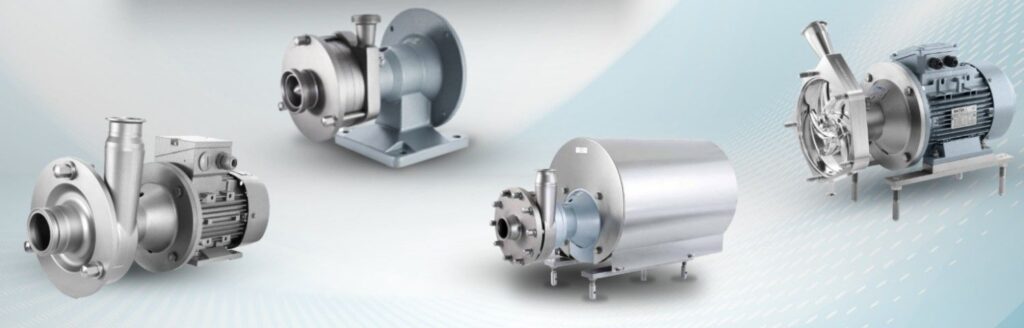
If you’ve worked with fluid systems, you’re probably familiar with centrifugal pumps. Among the many pump types available, centrifugal pumps are the most widely used across industries. The reason is simple: they are efficient, dependable, and versatile enough to handle applications ranging from municipal water supply to sensitive pharmaceutical processing.
Before exploring the different types, it’s important to understand how they function.
What Are Centrifugal Pumps?
A centrifugal pump is a mechanical device that transfers fluids by converting rotational energy—usually from an electric motor—into hydrodynamic energy. Its working principle is based on a rotating impeller housed within a casing. As the impeller spins, it creates centrifugal force that pushes the liquid outward from the center to the outer edges. This movement generates flow and pressure, allowing the fluid to move through a piping system.
Centrifugal pumps are valued for their simple design, smooth and continuous flow, and adaptability to a wide range of industrial applications.
Main Components of a Centrifugal Pump
Understanding the key components helps explain how these pumps deliver efficient performance:
Shaft:
The shaft transmits mechanical power from the motor to the impeller. Proper alignment and balancing are essential to reduce wear and extend the pump’s operational life.
Impeller:
The impeller is the core component of a centrifugal pump. As it rotates, it imparts velocity to the fluid. Impellers are available in open, semi-open, and closed designs, depending on the type of fluid being handled.
Casing:
The casing surrounds the impeller and helps convert the high-velocity fluid into pressure by reducing its speed. It also protects the internal components of the pump.
Types of Centrifugal Pumps Available
There are several types of centrifugal pumps designed for specific industrial needs. Common varieties include:
- Single-stage pumps – Suitable for low-pressure applications
- Multi-stage pumps – Designed for higher pressure requirements
- Self-priming pumps – Capable of handling air-liquid mixtures
- Submersible pumps – Used for pumping fluids from deep tanks or pits
- Magnetic drive pumps – Ideal where leak prevention is critical
- Close-coupled pumps – Compact and space-efficient designs
Selecting the right pump depends on factors such as fluid characteristics, pressure demands, and operating conditions.
Reliable Centrifugal Pumps for Industrial Applications
Industrial processes vary widely, so pump selection must consider fluid properties, temperature, pressure, and hygiene standards. Companies like Fristam offer specialized centrifugal pumps designed with durability, hygiene, and energy efficiency in mind.
Some notable options include:
1) FP Centrifugal Pump
The FP series pump is well-suited for applications requiring consistent and gentle product handling. With 14 models available, it serves industries such as chemical processing, beverages and brewing, and dairy. These pumps are robust, low-maintenance, and cost-effective for long-term use.
2) FPV Pump
Designed for sterility and precision, the FPV pump features an advanced seal system that minimizes product loss and extends seal life. It is commonly used in biopharmaceutical industries where contamination control is essential. All materials meet strict quality standards.
3) FPH Pump
The FPH model is ideal when hygiene and minimal maintenance are priorities. It functions effectively as a booster pump in filtration systems, especially in food, beverage, and dairy industries. Its gentle pumping action reduces product stress while maintaining reliable performance.
4) FM Multistage Centrifugal Pump
Built for high-pressure applications, the FM multistage centrifugal pump delivers high heads and operates efficiently under demanding conditions. Despite its multistage design, it remains easy to maintain and suitable for handling delicate fluids.
Conclusion
Choosing the right centrifugal pump requires a clear understanding of your operational needs—flow rate, pressure, temperature, product sensitivity, and hygiene requirements. While many manufacturers offer solutions, selecting a pump tailored to your specific process ensures optimal efficiency, performance, and maintenance savings.