A lush green lawn is one of the most attractive features of any home. However, many homeowners feel frustrated when their grass suddenly turns brown right after mowing. If you’ve recently noticed this problem, you’re not alone. Lawn browning after mowing is a common issue that can occur for several reasons, from incorrect mowing practices to lawn health problems.
Understanding the causes and learning how to fix them can help restore your lawn’s healthy green appearance. This guide explains the most common reasons your lawn may turn brown after mowing and how to solve the problem quickly.
For a detailed guide and expert solutions, read the full article here: Why Is Your Lawn Turning Brown After Mowing? Causes and Simple Fixes
Common Reasons Your Lawn Turns Brown After Mowing
1. Cutting the Grass Too Short
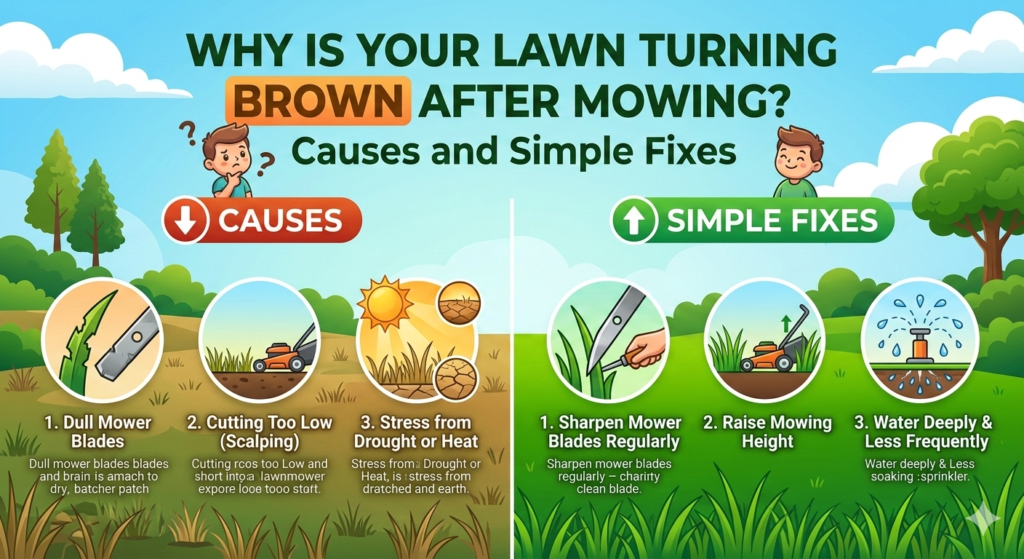
One of the most common causes of brown grass after mowing is cutting the lawn too short, also known as scalping. When grass is cut too low, it exposes the stems and soil, which often appear brown.
Short grass also struggles to retain moisture and nutrients, making it more vulnerable to stress.
Solution:
Follow the one-third rule—never remove more than one-third of the grass height in a single mow. This keeps the lawn healthy and prevents browning.
2. Dull Mower Blades
Sharp mower blades are essential for clean cuts. Dull blades tear the grass instead of cutting it, leaving ragged edges that quickly turn brown.
This type of damage weakens the grass and makes it more susceptible to disease and drought stress.
Solution:
Sharpen mower blades regularly to maintain a clean cut and improve overall lawn health.
3. Heat and Drought Stress
Grass can become stressed during hot or dry weather. Mowing during these conditions can worsen the stress, causing the lawn to appear brown soon after cutting.
This is especially common during warmer months when grass growth slows down.
Solution:
- Water your lawn deeply but less frequently
- Avoid mowing during the hottest part of the day
- Raise the mowing height during dry seasons
4. Grass Diseases
Sometimes brown patches appear because of lawn diseases rather than mowing itself. Fungal diseases can weaken grass and cause discoloration after cutting.
Signs include uneven patches, thinning grass, and spreading brown areas.
Solution:
Improve airflow, reduce excessive watering, and remove grass clippings if disease is present.
5. Improper Mowing Schedule
Mowing too often or too infrequently can also affect lawn health. Overgrown grass that is cut too short at once may quickly turn brown.
Solution:
Maintain a consistent mowing schedule based on the growth rate of your grass.
How to Keep Your Lawn Green After Mowing
To maintain a healthy lawn, follow these simple lawn care practices:
- Mow regularly but avoid cutting too short
- Keep mower blades sharp
- Water deeply and consistently
- Adjust mowing height according to the season
- Monitor the lawn for pests or diseases
These small adjustments can significantly improve lawn appearance and prevent browning.
Why Professional Lawn Care Helps
Maintaining a healthy lawn requires proper mowing techniques, seasonal care, and attention to grass health. Professional lawn care services ensure your lawn is cut at the right height and maintained according to local conditions.
Expert lawn maintenance can help prevent common problems like scalping, drought stress, and uneven mowing patterns.
If you want to learn more about the causes and easy fixes for brown grass after mowing, read the full guide here: Why Is Your Lawn Turning Brown After Mowing? Causes and Simple Fixes