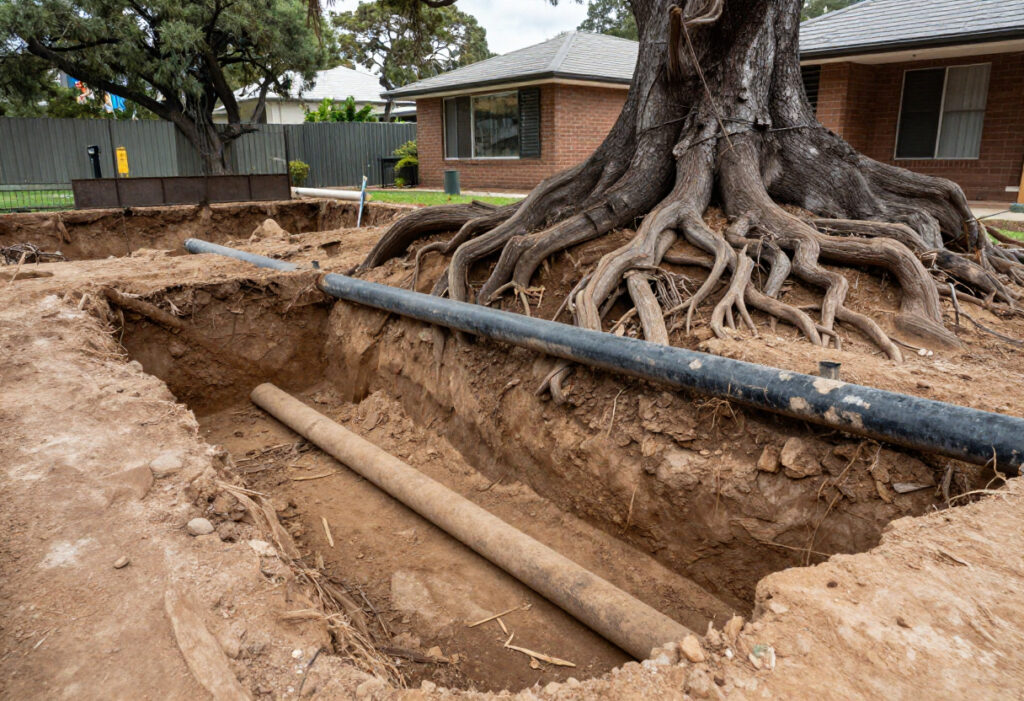
Sydney’s mix of clay soils, older housing stock, and large established trees creates the perfect conditions for tree roots-related damage. Many homes were built decades ago when trees were planted without consideration for future extensions, plumbing upgrades, or modern foundations.
Common contributing factors include:
- Expansive clay soil that shifts with moisture levels
- Older sewer and stormwater pipes
- Shallow foundations typical of post-war homes
- Native and introduced trees with aggressive root growth
1. Foundation Issues Caused by Tree Roots
One of the most serious renovation risks is foundation issues in Sydney homes caused by tree roots.
Roots don’t usually break through concrete foundations directly, but they:
- Extract moisture from clay soil, causing it to shrink
- Create uneven ground movement beneath slabs and footings
- Lead to cracking in walls, floors, and paving
Warning signs to look for:
- Cracks widening around doors and windows
- Uneven or sloping floors
- Gaps between walls and ceilings
- Recurrent cracking after repairs
Before extending or underpinning a property, a root assessment and soil test are essential.
2. Plumbing Root Intrusion: A Hidden Renovation Risk
Plumbing root intrusion is one of the most common — and expensive — problems renovators encounter.
Tree roots are naturally drawn to moisture and nutrients. Even small cracks in pipes can attract roots, which then expand and block or break the line.
Common symptoms include:
- Slow-draining sinks and toilets
- Gurgling sounds in pipes
- Recurring blockages
- Sewage smells around the property
During renovations, pipe movement or excavation can worsen existing damage. A CCTV pipe inspection should always be completed before major plumbing or bathroom upgrades.
3. Invasive Root Systems and Structural Damage
Some tree species found in Sydney are known for aggressive root systems that spread far beyond the canopy.
These roots can:
- Lift driveways and pathways
- Damage retaining walls
- Crack swimming pools
- Interfere with new footings and extensions
Even trees on neighbouring properties can cause issues, making early detection critical during the planning stage.
4. Renovation Risks When Roots Are Ignored
Failing to address tree root issues before renovation can lead to:
- Engineering redesigns mid-project
- Council approval delays
- Structural reinforcement costs
- Post-renovation cracking and movement
- Legal disputes with neighbours
In severe cases, completed renovations may not meet compliance standards if foundation stability is compromised.
5. What Renovators Should Do Before Starting Work
To reduce renovation risks associated with tree roots, consider the following steps:
- Conduct a root and soil assessment
Engage an arborist and structural engineer familiar with Sydney conditions. - Inspect underground services
Use CCTV inspections to identify existing plumbing root intrusion. - Identify high-risk tree species
Determine whether trees need root barriers, pruning, or removal. - Install root management systems
Root barriers can protect foundations and pipes without removing trees. - Check council regulations
Tree removal in Sydney often requires approval, even on private property.
6. Balancing Tree Preservation and Renovation Success
Not all tree root problems require tree removal. Modern solutions allow renovators to protect both structures and trees through:
- Directional root pruning
- Structural root barriers
- Pipe relining instead of replacement
- Foundation design adjustments
The key is early identification — addressing root issues after construction is far more expensive than managing them upfront.
Final Thoughts
Tree root damage in Sydney is a silent but significant renovation risk. From foundation issues to plumbing root intrusion, ignoring what’s happening below ground can undermine even the most well-planned renovation.
By assessing invasive root systems early and working with the right professionals, renovators can protect their investment, avoid costly surprises, and ensure their project stands the test of time.