eConsent
Introduction
Informed consent is one of the most important ethical and regulatory requirements in clinical research. However, traditional paper-based consent processes can create administrative burdens, version-control problems, documentation errors, and accessibility challenges for participants.
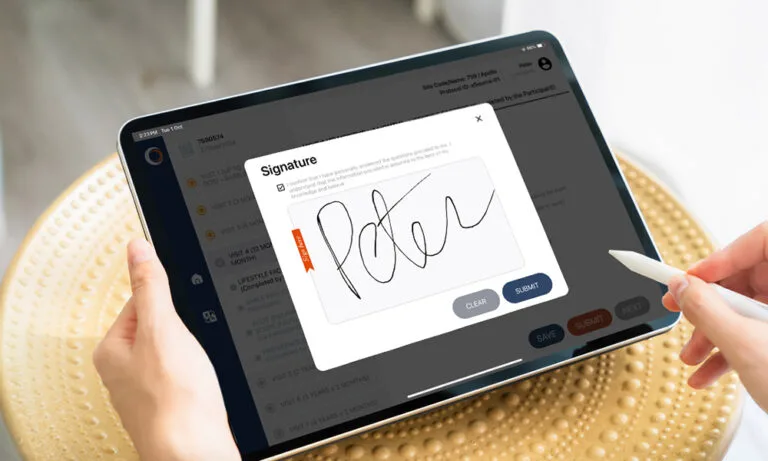
Modern eConsent technology transforms this process by allowing participants to review study information, communicate with research teams, and provide consent electronically. An effective econsent platform can also help sponsors and sites manage consent versions, monitor completion status, facilitate re-consenting, and maintain detailed audit trails.
The following ten providers offer notable econsent solutions for clinical research. This list is not presented as a strict ranking. Sponsors and CROs should evaluate each solution according to their study design, geographic coverage, integration requirements, participant population, and regulatory strategy.
1. Clinion eConsent
Clinion provides integrated electronic consent software for traditional, decentralized, observational, and hybrid clinical studies. The solution supports site-based consent, remote consent, and eConsent combined with ePRO.
Participants can review an electronic econsent form using personal or site-provided devices. Investigators can monitor consent status, manage form versions, conduct remote discussions, and document electronic signatures. Direct integration with Clinion EDC helps research teams move participants from consent into structured clinical data capture without maintaining disconnected trackers or manually recreating participant records.
2. Medidata Consent
Medidata Consent forms part of the broader Medidata clinical trial technology ecosystem. It supports configurable workflows for straightforward studies as well as more complicated designs involving multiple trial arms, pediatric assent, protocol amendments, and re-consenting.
The system provides electronic signatures, automated notifications, version control, and audit-ready consent workflows. Its connection with other Medidata applications may be particularly useful for organizations already using the company’s clinical data and patient engagement products.
3. Veeva SiteVault eConsent
Veeva SiteVault eConsent enables research sites to obtain informed consent either remotely or in person. Participants can access study documents through their own devices, while sites can centrally manage documents, signatures, consent status, and screening information.
The solution is positioned as a site-focused option that can be used across multiple studies. It supports digital collaboration between participants, site teams, sponsors, and monitors while reducing dependence on printing, copying, and manually storing paper consent documents.
4. Signant Health eConsent
Signant Health offers electronic informed consent software designed to improve participant comprehension and produce traceable consent documentation. Its consent experience can include video, audio, comprehension assessments, and tools that allow participants to flag information for discussion with investigators.
The solution also supports automated version management and remote re-consenting. Sponsors can select self-service configurations or combine the technology with operational and consulting support from Signant Health.
5. IQVIA Complete Consent
IQVIA Complete Consent is designed for international clinical research programs requiring flexible consent workflows across different countries and study models. It supports multimedia content, electronic signatures, configurable document collections, participant representatives, re-consenting, and sponsor oversight.
The platform can be deployed for site-based, hybrid, and decentralized trials. Its global operating model may make it appropriate for sponsors managing multinational studies with country-specific consent and signature requirements.
6. Florence eConsent
Florence eConsent provides digital participant consent workflows that connect with Florence’s wider site technology environment. Research teams can invite participants, monitor consent progress, manage staff permissions, update consent versions, and distribute amended forms for re-consenting.
The platform supports remote identity verification, investigator countersignatures, audit trails, and controlled access for monitors and regulatory reviewers. It is particularly relevant for research sites looking to connect consent activities with their existing electronic regulatory workflows.
7. Castor eConsent
Castor offers an eConsent solution that can operate independently or alongside its EDC, ePRO, eCOA, recruitment, and decentralized trial capabilities. Participants can complete consent remotely or at a research site, with built-in video communication available for consent discussions.
The system includes informed consent form versioning, participant status reporting, electronic signatures, and workflows for protocol amendments. Castor may suit organizations seeking one technology environment for recruitment, consent, data collection, and participant engagement.
8. Medrio eConsent
Medrio provides web-based clinical trial econsent for research teams managing remote, in-clinic, and hybrid consenting processes. Sites can manage paper and electronic consent documents within the same study while maintaining version control and consent status visibility.
Interactive content such as videos, images, quizzes, and frequently asked questions can be added to support participant understanding. Automated requests, audit logs, dashboards, and targeted re-consenting tools help reduce manual administrative work.
9. Advarra eConsent
Advarra eConsent is available within the company’s electronic regulatory management environment. It focuses heavily on research-site workflows, participant accessibility, compliance oversight, and integration with other Advarra applications.
Participants can access consent documents from different devices without requiring a dedicated system login. The platform provides audit trails, electronic signatures, version management, remote monitoring access, and connections with Advarra’s CIRBI, Clinical Conductor, and OnCore technologies.
10. THREAD eConsent
THREAD provides mobile-accessible consent capabilities as part of its decentralized research platform. It supports both single-signature and dual-signature workflows, depending on whether investigator or site countersignatures are required.
During virtual econsent, study teams can send consent documents to participants and discuss them through remote visits or telephone calls. The participant can sign digitally, after which the investigator can countersign and return the completed document.
Conclusion
This dailystorypro article must have given you a clear understanding of the topic. Selecting an econsent vendor requires more than comparing feature lists. Sponsors and CROs should assess whether the system supports their countries, languages, signature models, pediatric workflows, legally authorized representatives, protocol amendments, accessibility requirements, and integration environment.
The best econsent software should provide clear participant experiences while giving sites and sponsors reliable oversight. Important capabilities include version control, configurable workflows, electronic signatures, multimedia content, comprehension checks, audit trails, re-consenting, remote access, and secure integration with EDC or other clinical systems.
Ultimately, the right solution should make informed consent easier to understand without reducing the quality of participant–investigator communication. When properly implemented, digital consent can improve accessibility, reduce documentation errors, strengthen inspection readiness, and support more participant-centred clinical research.