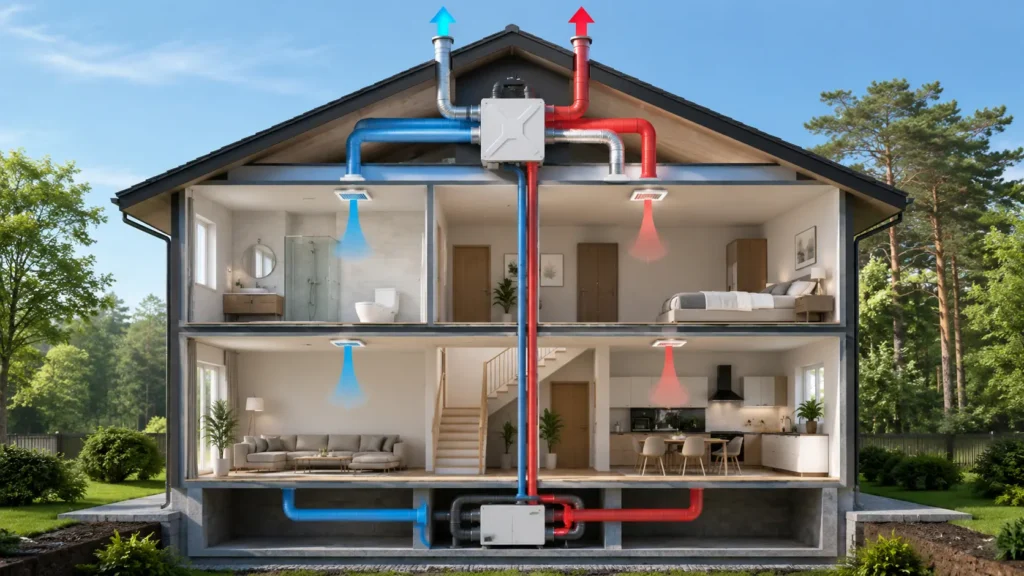
A mechanical ventilation system is a modern solution designed to regulate indoor air by continuously exchanging stale air with fresh air from outside. It simultaneously manages indoor temperature and humidity levels, ensuring a balanced and comfortable living environment. These systems utilise energy-efficient mechanisms to recover heat from outgoing air, reducing overall energy consumption. Their ability to control moisture levels also helps prevent issues such as dampness and mould. By integrating advanced technology, this system helps create healthier and more sustainable indoor spaces.
Enhanced Indoor Air Quality
Mechanical house air heat ventilation systems play a vital role in maintaining healthier indoor environments by ensuring continuous air exchange. These systems effectively expel stale air and introduce fresh air from outside, diluting indoor pollutants such as volatile organic compounds, carbon dioxide, and particulate matter.
By incorporating advanced filtration, these systems can also capture fine dust particles, pollen, and other airborne contaminants, which further improves air purity. This consistent renewal of air helps to minimise the presence of harmful substances that can negatively affect health.
Additionally, these systems regulate indoor humidity, which is essential for preventing conditions that encourage the proliferation of allergens, such as dust mites and mould spores. By maintaining balanced air quality and moisture levels, they create a more comfortable and hygienic living space conducive to long-term health and well-being.
Energy Efficiency
Mechanical house air-heating ventilation systems utilise heat-recovery technology to reduce energy waste significantly. Warm air expelled from the interior transfers its heat to the incoming fresh air, minimising the need for additional heating during colder months. This efficient exchange process ensures a consistent indoor temperature without over-reliance on conventional heating systems.
Additionally, the systems help reduce the strain on cooling systems in warmer weather by maintaining balanced air circulation. Optimised energy use helps reduce household energy consumption, which in turn lowers overall utility costs.
By combining ventilation with heat management, these systems are designed to operate in an energy-conscious manner. This dual functionality supports sustainable living while reducing reliance on energy-intensive appliances for temperature control, promoting comfort and cost-efficiency in residential spaces.
Moisture Control with Mechanical House Air Heat Ventilation System
Mechanical house air heat ventilation systems provide effective humidity regulation, maintaining optimal moisture levels indoors. By efficiently removing excess moisture, these systems help prevent damp conditions that can contribute to structural issues such as rot and warping. Consistent humidity control also reduces the risk of mould and mildew growth, promoting healthier indoor conditions. Additionally, these systems help protect household items, including furniture and textiles, from the damaging effects of excessive humidity, thereby ensuring their longevity.
Improved Comfort Levels
Mechanical house air-heating ventilation systems enhance comfort by maintaining a stable indoor temperature and distributing air evenly throughout the property. These systems eliminate temperature inconsistencies, such as hot or cold spots, by ensuring continuous air circulation and efficient heat recovery. This creates a balanced environment that promotes overall well-being.
Additionally, consistent temperature and humidity regulation foster a more pleasant living environment, making indoor spaces more enjoyable year-round. These systems integrate advanced technology to achieve optimal thermal comfort while reducing reliance on traditional heating or cooling methods.
By managing indoor air efficiently, they support an environment tailored to long-term comfort without compromising energy efficiency. This focus on achieving consistent, comfortable conditions highlights their suitability for diverse residential needs and climates, ensuring a harmonious indoor living experience.
Reduction in Allergens with Mechanical Ventilation System
Mechanical house air-heating ventilation systems are equipped with advanced filtration mechanisms that effectively reduce allergens in indoor air. These systems work by capturing particles such as pollen, dust, and pet dander, which are common triggers for allergies. By continuously cycling and filtering the air, they help maintain a cleaner and healthier indoor environment.
This filtration process is particularly beneficial for individuals with respiratory sensitivities, as it reduces the likelihood of exposure to irritants. Additionally, by regulating humidity levels, these systems can inhibit the growth of mould, another common allergen.
Through these combined functionalities, mechanical ventilation system helps create living spaces that are more comfortable and supportive of long-term respiratory health. Their ability to minimise allergens enhances the overall quality of indoor air, promoting a more hygienic and balanced atmosphere in residential settings.
Noise Reduction
Mechanical house air-heating ventilation systems are designed with noise-damping features, enabling quiet operation that contributes to a peaceful indoor environment. These systems reduce the need to open windows for ventilation, which helps minimise the intrusion of external noise, such as traffic or urban sounds. The integration of advanced technology ensures smooth, silent airflow, making them suitable for homes in busy or high-noise areas. This functionality supports a calm and restful atmosphere, enhancing overall indoor comfort.
Increased Property Value
The inclusion of a mechanical house air heat ventilation system can enhance a property’s appeal by demonstrating a focus on modern, energy-efficient living standards. Such systems are increasingly regarded as desirable features among buyers, as they improve indoor air quality, thermal comfort, and energy conservation.
Properties equipped with these systems reflect thoughtful design and long-term sustainability, aligning with contemporary housing preferences. The presence of this advanced technology may enhance a property’s market competitiveness, potentially leading to higher demand and valuation.
Environmental Impact
Mechanical house air heat ventilation systems play an important role in fostering environmentally conscious living by minimising energy consumption. These systems utilise heat recovery technology to optimise indoor temperature regulation, reducing the need for energy-intensive heating or cooling appliances. As a result, they help reduce greenhouse gas emissions from energy production.
Furthermore, their ability to maintain indoor air quality and moisture levels without excessive energy use aligns with sustainable building practices. By incorporating efficient ventilation solutions, these systems support efforts to create eco-friendly homes.
Low Maintenance Requirements
Mechanical house air heat ventilation systems are engineered for convenience, requiring minimal maintenance to ensure consistent performance. Their components are designed to be durable and resilient, reducing the need for frequent replacements or repairs. Routine upkeep typically involves simple tasks such as cleaning, replacing filters, and inspecting the system to ensure optimal operation.
Advanced design features ensure that servicing is straightforward, often requiring professional attention only at scheduled intervals. These systems are built to provide reliable functionality with little disruption or ongoing effort, making them a practical choice for long-term use.
Versatility of House Ventilation in Installation
Mechanical house ventilation systems are engineered to accommodate diverse residential designs and layouts, making them a suitable solution for various architectural styles. Their adaptability allows integration into both newly built properties and existing structures, ensuring compatibility with different building configurations. These systems can be customised to meet specific spatial requirements, delivering efficient performance regardless of a home’s size or design.
In addition, these systems are designed to perform effectively in a wide range of climatic conditions, making them a practical choice for regions with varying weather patterns. This flexibility ensures optimal indoor air quality and temperature regulation, regardless of external environmental factors.
The installation process for these systems often accounts for the unique needs of each property, enabling seamless integration without disrupting the existing structure. Their ability to accommodate diverse home layouts and climates underscores their functional, adaptable nature, making them a reliable solution for creating comfortable, sustainable indoor environments.
Compliance with Building Regulations
Mechanical house air-heating ventilation systems are designed to comply with stringent building regulations and established health and safety standards. These systems are designed to support energy efficiency objectives, reducing environmental impact while maintaining effective ventilation and temperature control.
Incorporating such systems into residential properties demonstrates compliance with requirements that promote sustainable construction practices. Their design often accounts for ventilation rates, heat recovery efficiency, and indoor air quality, meeting guidelines set by governing bodies.
By utilising systems that satisfy regulatory standards, properties not only achieve compliance but also enhance indoor living conditions. These systems help create spaces that prioritise health, comfort, and energy conservation. Furthermore, adherence to regulations supports wider efforts to advance environmentally responsible building practices.
The integration of these systems into homes reflects a proactive approach towards meeting modern building standards, ensuring properties remain aligned with contemporary expectations for safety, sustainability, and long-term functionality.
Longevity and Durability
Mechanical house air-heating ventilation systems are constructed from durable materials designed to withstand long-term use. Their advanced engineering ensures reliable performance, even under continuous operation, reducing the likelihood of system failure or degradation over time.
Regular maintenance, such as filter replacement, further supports their efficiency and extends their operational lifespan. The robust build quality of these systems minimises the need for frequent repairs or replacements, making them a cost-effective and sustainable choice for maintaining indoor air quality and thermal comfort.
Conclusion
A mechanical house air heat ventilation system provides a comprehensive solution for enhancing indoor environments across Australia. By continuously replacing stale indoor air with filtered outdoor air while recovering thermal energy, these systems optimize energy efficiency and lower utility expenses. Their precise regulation of humidity prevents mould, protecting both structural integrity and resident health. Additionally, noise reduction features, advanced filtration, and compliant, durable engineering improve everyday comfort while increasing property value. Investing in this advanced technology supports a healthier, more sustainable, and cost-effective living space tailored to modern residential demands.
FAQs
How does a mechanical heat ventilation system improve indoor air quality?
The system continuously extracts stale, polluted indoor air and replaces it with fresh outdoor air. Integrated filters capture fine dust particles, pollen, and airborne contaminants before they enter living spaces. By diluting volatile organic compounds and carbon dioxide, the system maintains a clean, hygienic environment that significantly promotes long-term respiratory health.
Can this system lower household energy bills in Australia?
Yes, the integrated heat-recovery technology transfers thermal energy from outgoing air to incoming fresh air, reducing the workload on primary heating and cooling appliances. This continuous energy transfer minimizes power consumption while maintaining consistent indoor temperatures. Consequently, homeowners benefit from lower utility costs and a reduced carbon footprint year-round.
How does mechanical house ventilation control moisture and mould growth?
The house ventilation system continuously regulates humidity levels by extracting excess indoor moisture generated by daily household activities like cooking and showering. Maintaining balanced relative humidity prevents damp conditions, timber rot, and condensation. This effective moisture management effectively inhibits mould and dust mite proliferation, protecting both structural elements and personal health.
Is a mechanical ventilation system noisy to operate at home?
No, modern systems feature specialized noise-damping components and engineered acoustic insulation to ensure ultra-quiet performance. By providing continuous fresh air without needing open windows, they also block external environmental noise such as traffic. This produces a tranquil, quiet indoor atmosphere suitable for suburban and busy urban homes alike.
Are these ventilation systems difficult to install and maintain?
Installation is highly versatile, accommodating both new architectural builds and existing home retrofits with minimal structural disruption. Routine maintenance is straightforward, typically requiring only periodic filter cleaning or replacement and basic system inspections. Their robust construction ensures long-term operational durability with minimal maintenance demands over time.
| Related Business Listings |
| Contact Directory |
| Local Business Profiles |