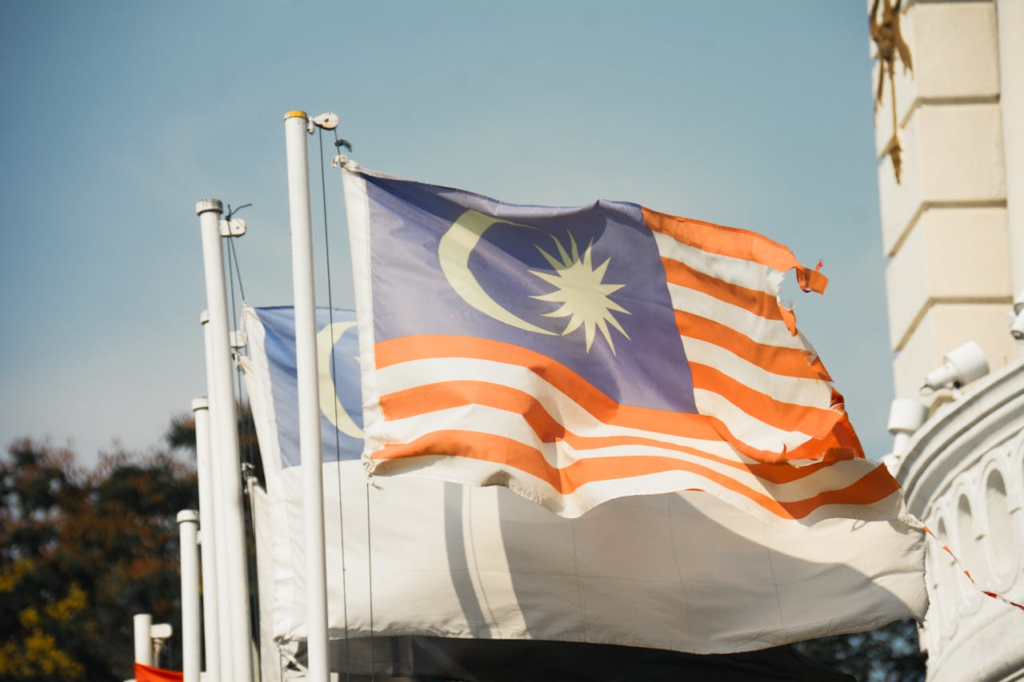
Over the past decade, Malaysia has quietly positioned itself as one of the most reliable and technically capable manufacturing hubs in Southeast Asia. While countries like China, Vietnam, and India often dominate sourcing discussions, Malaysia occupies a unique middle ground: higher technical maturity than most low-cost countries, but more competitive and flexible than highly developed economies such as Japan or Singapore.
This balance makes Malaysia particularly attractive for companies looking to organize factory trips focused on sourcing, supplier qualification, and contract manufacturing. Rather than being a country where buyers simply look for the lowest unit price, Malaysia is increasingly chosen for projects where engineering depth, quality consistency, documentation, and long-term supplier reliability matter.
A factory trip in Malaysia is therefore rarely about visiting dozens of factories in a short time. It is about targeted visits, carefully selected suppliers, and structured discussions around feasibility, industrialization, and scalability. This is precisely where experienced sourcing agencies play a critical role.
Understanding Malaysia’s Manufacturing Landscape Before a Factory Trip
Before organizing a factory trip in Malaysia, it is essential to understand how the country’s industrial ecosystem is structured. Manufacturing capabilities are not evenly distributed across the country. Instead, they are concentrated in well-defined clusters, each with its own industrial DNA, supplier profiles, and strengths.
Approaching Malaysia without this geographical and sectoral understanding often leads to inefficient trips, wasted meetings, and mismatched suppliers.
Key Manufacturing Clusters in Malaysia
Greater Kuala Lumpur and Selangor: The Industrial and Logistical Core
The Greater Kuala Lumpur area, including Selangor, Shah Alam, Klang, Subang Jaya, and Nilai, forms the backbone of Malaysia’s industrial output. This region benefits from direct access to the country’s main ports and international airport, as well as a dense concentration of industrial parks and suppliers.
Manufacturing in this area is characterized by diversity rather than extreme specialization. Companies here are typically strong in plastic injection, metal fabrication, electromechanical assembly, industrial packaging, and contract manufacturing for B2B applications. Many suppliers operate as tier-1 or tier-2 vendors for multinational corporations, which means they are accustomed to audits, technical documentation, and structured quality systems.
For factory trips, Kuala Lumpur and Selangor are often the most efficient starting point. Travel times are manageable, supplier density is high, and discussions can quickly move beyond basic capability checks toward process control, cost structure, and engineering collaboration.
Penang: Electronics, Precision Engineering, and High-Value Manufacturing
Penang is widely recognized as Malaysia’s most advanced manufacturing cluster. Often referred to as the “Silicon Valley of Southeast Asia,” it has been a hub for electronics and semiconductor manufacturing for decades. This long industrial history has created a highly skilled workforce and a deeply integrated supplier ecosystem.
Factories in Penang specialize in electronics manufacturing services, PCBA, semiconductor back-end processes, precision machining, tooling, automation equipment, and medical device components. Compared to other regions, suppliers here tend to focus more on low-to-medium volumes with high complexity rather than mass production.
A factory trip to Penang is particularly relevant for companies working on technically demanding products where tolerances, reliability, and regulatory compliance are critical. Meetings often involve engineering teams rather than purely commercial staff, and discussions tend to be more technical and detailed.
Johor: Heavy Industry and Singapore-Linked Manufacturing
Johor, located in southern Malaysia near the Singapore border, has developed as an extension of Singapore’s industrial ecosystem. Many factories in Johor are owned by, or work closely with, Singaporean groups, combining Singapore-level management standards with Malaysia’s cost structure.
The region is especially strong in heavy fabrication, metal structures, industrial equipment, plastics for larger components, and regional assembly hubs serving ASEAN markets. Johor is well suited for factory trips focused on larger industrial projects, equipment manufacturing, or multi-country supply chain strategies.
Suppliers in Johor tend to be commercially disciplined and expect buyers to come prepared. Factory visits are often highly structured, with an emphasis on feasibility, timelines, and contractual clarity rather than exploratory discussions.
Main Industries Covered During Malaysia Factory Trips
Malaysia’s manufacturing strengths are best understood not by listing industries, but by examining how they support contract manufacturing and outsourcing strategies.
Plastic injection in Malaysia is generally oriented toward technical parts rather than commodity products. Factories often handle engineering plastics, tight tolerances, and secondary processes such as overmolding and assembly. Tooling capabilities exist locally, though complex molds may still involve regional partners.
Metal fabrication ranges from light sheet metal work to heavy welded structures, depending on the region. Precision machining is particularly strong in Penang, while larger fabricated assemblies are more common in Johor and Selangor.
Electromechanical assembly is one of Malaysia’s key advantages. Many suppliers are capable of integrating mechanical parts, electronics, wiring, and testing into finished or semi-finished products. This makes Malaysia well suited for OEM and ODM projects where suppliers act as system integrators rather than simple part manufacturers.
Electronics manufacturing remains a cornerstone of Malaysia’s industrial identity. Beyond PCBA, many factories offer testing, validation, traceability, and quality systems aligned with international standards. This ecosystem supports industries ranging from industrial automation to medical devices.
Why Factory Trips Matter in Malaysia
Despite strong online visibility for some suppliers, Malaysia is not a market where desk-based sourcing alone is sufficient. Many of the most capable factories have limited marketing presence and rely on long-term relationships rather than aggressive online lead generation.
Factory trips serve several critical purposes. They allow buyers to verify that claimed capabilities match reality, to assess organizational maturity, and to understand how decisions are made internally. They also reveal cultural and operational nuances that are impossible to capture through emails or video calls.
In Malaysia, factory visits often influence supplier behavior long after the trip ends. Suppliers tend to take projects more seriously once face-to-face engagement has occurred, particularly if discussions are structured and technically meaningful.
The Role of Sourcing Agencies in Malaysia Factory Trips
Organizing a successful factory trip in Malaysia is rarely just a logistical exercise. The real value lies in supplier identification, qualification, and orchestration, which is where sourcing agencies become essential.
Experienced sourcing agencies do not simply arrange visits. They act as filters, translators of expectations, and risk managers. Before a factory trip even begins, they assess CAD drawings, specifications, target volumes, and cost expectations to determine whether Malaysia is suitable for the project and which regions should be prioritized.
During the trip, agencies ensure that meetings are not superficial. They guide discussions toward process capability, tooling strategy, cost drivers, and scalability. They also help bridge cultural gaps, ensuring that misunderstandings do not derail promising collaborations.
After the trip, agencies often continue to support sampling, supplier comparison, and contract structuring, transforming factory visits into concrete sourcing outcomes rather than isolated events.
How to Find Factories Before Organizing a Trip
Finding factories in Malaysia typically starts online, but online research should be seen as a preliminary filtering step rather than a final decision-making tool. Platforms such as Alibaba or Global Sources can help identify potential suppliers, but they often provide an incomplete or distorted picture of actual capabilities.
Trade shows play a more strategic role. Events such as SEMICON Southeast Asia, METALTECH, and Malaysia Technology Expo offer direct access to manufacturers and reveal how suppliers position themselves within the ecosystem. These events are particularly useful for understanding industry trends and identifying companies that invest in long-term capabilities rather than short-term sales.
Ultimately, the most reliable factory identification process combines desk research, trade show exposure, and on-the-ground validation, usually coordinated by a local sourcing partner.
From CAD Drawings to Factory Visits: The Sourcing Process Explained
A well-structured Malaysia factory trip is the result of a clear sourcing process, not an improvised schedule.
Everything begins with engineering documentation. CAD drawings, specifications, material requirements, and performance expectations must be sufficiently mature before supplier engagement. In Malaysia, suppliers expect clarity early on and are less inclined to engage in speculative discussions without a solid technical foundation.
Once documentation is ready, potential suppliers are identified and pre-qualified. This step involves assessing technical fit, production capacity, certifications, and financial stability. Only a shortlist of qualified factories should be included in a factory trip.
Sampling discussions typically begin during or immediately after visits. Malaysian suppliers generally take sampling seriously but expect realistic timelines and clear feedback loops. Rushed or poorly defined sampling requests often lead to delays or misalignment.
The final stage involves comparative evaluation and negotiation, where cost, lead time, risk, and long-term collaboration potential are weighed together. In Malaysia, the best outcomes usually emerge from balanced agreements rather than aggressive price pressure.
What to Avoid When Organizing a Malaysia Factory Trip
Many factory trips fail not because Malaysia lacks capability, but because of avoidable strategic mistakes.
One common error is attempting to visit too many factories in a short time. Malaysia is not a country where high-volume factory hopping yields better results. Fewer, better-prepared visits almost always lead to superior outcomes.
Another frequent issue is approaching suppliers with unrealistic price expectations based on comparisons with lower-cost countries. Malaysian suppliers are competitive, but they do not compete on price alone. Projects framed purely around cost reduction often fail to gain traction.
It is also risky to skip on-site validation and rely solely on documentation or video calls. Organizational weaknesses, subcontracting risks, and quality culture issues often only become visible during physical visits.
Finally, neglecting cultural dynamics can undermine relationships. Malaysian business culture values respect, clarity, and long-term intent. Confrontational negotiation styles or vague project ownership signals can quickly erode trust.
Choosing the Best Agency for a Malaysia Factory Trip
The best agencies for Malaysia factory trips are those that combine local presence with international sourcing standards. They understand not only where factories are located, but how decisions are made inside them. They know which suppliers are reliable under pressure and which ones struggle when projects scale.
Strong agencies also challenge clients when expectations are misaligned with reality. Rather than simply executing instructions, they act as advisors, helping buyers adjust specifications, volumes, or timelines to fit Malaysia’s industrial strengths.
Most importantly, they view factory trips not as standalone services, but as part of a broader contract manufacturing journey that includes qualification, sampling, ramp-up, and long-term supplier management.
Here are some agencies you can reach out to for organizing supplier visits, assessing manufacturer capabilities and requirements, and conducting on-the-ground audits :
FVSource (FVSource) — hands-on sourcing + factory qualification (Malaysia-ready)
FVSource positions itself as an “outsourced manufacturing & procurement office” that connects buyers with vetted factories, runs audits and quality control, and supports scalable production across multiple sectors. That positioning is relevant for a Malaysia factory trip because it implies the trip is not treated as “factory sightseeing,” but as a qualification step inside a broader sourcing workflow (supplier search → vetting → audits/QC → ramp-up support).
For your factory visits, the practical value of an agency like FVSource is the ability to pre-filter suppliers before anyone boards a plane: validating whether a factory truly fits the project (process capability, materials, machines, traceability mindset), and then structuring each visit around specific checkpoints (process walk, quality system review, critical suppliers/subcontractors, sample review, engineering discussion). Their public materials emphasize audits and QC as core deliverables, which typically correlates with a more “manufacturing-first” factory trip approach rather than a purely commercial one.
What to ask them before you commit: how they short-list factories in Malaysia (data sources, on-the-ground checks), what their standard factory visit agenda looks like, and how they document findings (photos, red-flag log, capability matrix, next-step plan).
MTA (MoveToAsia) — guided factory tours + sourcing support format
MoveToAsia publicly frames “factory tour” as a guided, end-to-end experience that includes facilitating visits to manufacturers and even trade fairs, and they also present product development support that can cover design/CAD drawings and prototyping. That combination matters because a Malaysia factory trip becomes far more effective when it is linked to real project documentation (drawings, specs, acceptance criteria) rather than being purely exploratory.
In practice, this type of agency is often a good fit when your goal is to compress the learning curve quickly—understanding industrial zones, supplier types, and how to run productive factory meetings—while still keeping the trip actionable. Their published messaging emphasizes logistics + coordination + practical on-the-ground guidance, which is exactly what breaks down first when buyers try to run Malaysia visits remotely without local support.
What to ask them before you commit: whether they can run a Malaysia itinerary that is cluster-driven (KL/Selangor vs Penang vs Johor), how they handle pre-visit supplier validation, and what they consider “go/no-go” evidence during the visit (quality systems, process stability, sampling plan, and realistic lead times).
SourcingNotes — supplier search + factory visits + audits/QC (SME-friendly model)
SourcingNotes describes its services as covering the full sourcing journey, including supplier search, factory visits, audits, quality control, and product development support such as design and sampling.
For Malaysia specifically, SourcingNotes can be relevant if you want an agency-style methodology (shortlist → visits → audits/QC → sampling), and you’re comfortable confirming their exact Malaysia coverage and local execution capacity before engaging. Many buyers make a mistake here: they assume that “factory visits” automatically means “strong local execution everywhere.” The right approach is to ask very directly how Malaysia visits are delivered, by whom, and with what local network.
What to ask them before you commit: which Malaysian clusters they actively cover, how many Malaysia-based audits/visits they’ve executed in the last 12 months, and what their supplier qualification template includes (documentation checks, subcontracting risk, process capability proof, and traceability).
Tourstravelpackages.com — itinerary-style “industrial tour packages” concept (useful for structure, verify Malaysia scope)
Tourstravelpackages.com presents factory tours as structured programs that combine audits, due diligence, and supplier scouting into a travel “package,” typically organized by product category and sourcing objective. Even if the site’s strongest footprint appears to be on Vietnam content, this framing is useful for Malaysia trips because it reflects the correct format: you don’t plan a Malaysia industrial trip by geography alone—you plan it by category, critical processes, and decision gates.
If you consider them for Malaysia, treat it as a two-step validation. First, confirm whether they truly operate Malaysia industrial visits (not tourism-style factory visits). Second, confirm who does the technical work during factory meetings: the difference between a travel coordinator and a sourcing/quality professional is the difference between a productive trip and a wasted one.
What to ask them before you commit: whether their “audits/due diligence” are performed by manufacturing professionals, what deliverable you receive after each visit, and how they screen factories before adding them to the itinerary.
KPMG — procurement, supplier risk, and due diligence support (best for governance-heavy sourcing)
KPMG is not a “factory tour agency” in the classic sense, but it becomes relevant for Malaysia factory visits when your sourcing decision needs a strong layer of governance, risk management, transparency, and due diligence—especially for larger organizations or regulated supply chains. KPMG Malaysia describes procurement advisory services oriented toward performance improvement, transparency in supply management, and risk mitigation—capabilities that can be paired with factory visits to make them audit-grade rather than anecdotal.
This is a strong option when your internal stakeholders (legal, compliance, ESG, audit committee) want formalized processes: supplier risk frameworks, integrity due diligence, third-party risk controls, and documented decision trails. In that setup, factory visits become one evidence stream within a broader qualification and contracting workflow.
What to ask before you engage: how they scope “factory-visit-linked” work (supplier risk assessment, third-party due diligence, procurement transformation), what deliverables you get (risk memos, supplier scorecards, governance recommendations), and how they coordinate with technical auditors or on-the-ground inspectors if you need process-level validation.
Malaysia Factory Trips as a Strategic Investment
A factory trip in Malaysia should be seen as a strategic investment rather than a sourcing formality. When well prepared and properly guided, it provides deep insight into supplier capabilities, accelerates decision-making, and reduces long-term operational risk.
Malaysia rewards buyers who approach sourcing with structure, technical clarity, and respect for local dynamics. For companies willing to invest in proper preparation and professional support, Malaysia offers a powerful platform for contract manufacturing that balances cost, quality, and reliability.
In an era where supply chain resilience matters as much as unit price, Malaysia factory trips—led by the right agencies—are increasingly becoming a cornerstone of successful sourcing strategies.