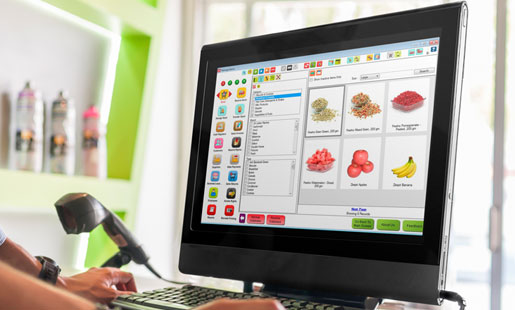
For a retail business, the checkout counter is the most critical touchpoint. In 2026, a slow queue or a pricing error isn’t just a minor inconvenience—it’s a direct reason for a customer to switch to a competitor. This is why retail store billing software has become the backbone of modern shops, ensuring that every transaction is quick, professional, and entirely accurate.
Whether you run a small local boutique or a high-traffic supermarket, modern billing systems have evolved into “Smart POS” (Point of Sale) hubs that do far more than just print receipts. They act as the central nervous system of your business operations.
Retail Store Billing Software: Making Billing Faster and Error-Free
The primary goal of any retail store billing software is to remove the friction between a customer picking up an item and walking out the door. Here is how modern technology is transforming the retail experience.
1. High-Speed Checkout with Barcode Scanning
Manually typing in prices or searching for item names is a recipe for long lines and frustrated customers. Modern billing software integrates seamlessly with high-speed barcode and QR code scanners. One quick “beep” identifies the product, applies the current price, and adds it to the digital bill. In high-footfall environments like grocery stores or fashion outlets, this automation can speed up the checkout process by over 80%, keeping the queue moving even during peak holiday hours.
2. Eliminating Human Calculation Errors
Manual billing is prone to “fat-finger” mistakes—adding an extra zero, miscounting items, or forgetting to apply a seasonal discount. Retail store billing software automates all calculations, ensuring total accuracy. It handles:
-
Complex Discounts: “Buy One Get One” (BOGO) deals or “10% off on bills over ₹2000” are applied automatically by the system.
-
Tax Compliance: The software automatically identifies the HSN code for each product and applies the correct GST rate (CGST/SGST/IGST) without the cashier needing to intervene.
-
Change Calculation: The system calculates the exact balance to return to the customer, drastically reducing cash drawer discrepancies at the end of the shift.
3. Integrated Payment Gateways
In 2026, customers expect a variety of payment options, from UPI and credit cards to digital wallets and even “split payments” (where a customer pays partly in cash and partly via a card). A robust billing system integrates these payment gateways directly into the interface. When a payment is successful on the card machine or via a QR code, the software automatically marks the bill as “Paid.” This prevents the common error of a cashier closing a bill before the payment is actually confirmed.
4. Real-Time Inventory Management
Every time a bill is generated, the retail store billing software automatically subtracts those items from your digital inventory in real-time. This “live sync” prevents the embarrassment of selling an item that is actually out of stock or discovering massive “shrinkage” at the end of the month. Advanced systems also include “low-stock alerts,” notifying you to reorder essential items before your shelves go empty, ensuring you never miss a sale.
5. Advanced Data Security & Role-Based Access
Handling financial data and customer phone numbers comes with a responsibility to protect that information. Modern retail software includes “Role-Based Access Control,” which means a cashier can generate bills, but only a manager can delete a transaction or view the total daily profit. Additionally, cloud-based systems use bank-grade encryption to ensure that your sales data and customer records are protected from unauthorized access or accidental loss.
6. Customer Insights and Loyalty Programs
The billing counter is the perfect place to build a relationship with your customers. Modern software allows you to quickly save a customer’s mobile number and assign “loyalty points” for their purchase. The next time that customer visits, the software alerts the cashier to offer a personalized discount based on their past buying patterns. This turns a one-time shopper into a regular client, significantly increasing the lifetime value of your customers.
7. Offline Billing Capability
Internet outages should not mean a total stop to your business. The best retail billing software offers an “Offline Mode,” allowing you to continue generating bills and scanning items even when the Wi-Fi is down. Once the connection is restored, the software automatically syncs all offline sales to the central cloud server, ensuring your reports remain accurate without any manual data entry.
Conclusion
Investing in retail store billing software is an investment in your customer experience and your own peace of mind. By making the billing process faster and error-free, you reduce staff burnout, eliminate costly tax mistakes, and build a brand that people trust for its efficiency. In the fast-paced retail world of 2026, speed and accuracy are not just luxuries—they are your competitive edge.