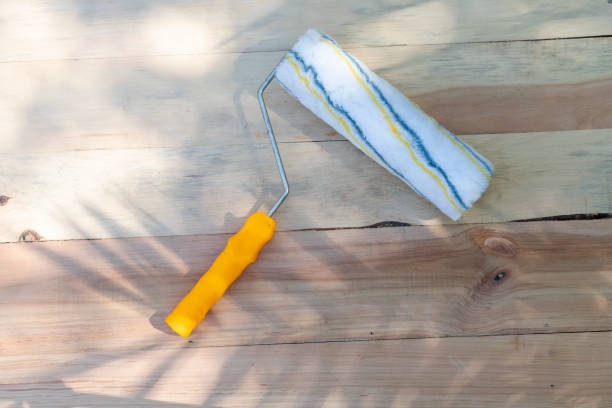
Most people grab whatever roller is closest and call it a day. Fair enough. It looks like a simple tool. But that shortcut usually comes back to bite later. I’ve watched decent paint jobs fall apart because the roller was garbage, plain and simple. Somewhere along the way, while scrolling through paint rollers for sale, people assume they’re all basically the same thing with different price tags. Not even close. The gap between cheap and good shows up on the wall, not in the packaging.
Cheap Rollers vs High-Quality Ones: The Real Difference
You can spot a cheap roller the second it hits paint. It starts shedding, leaves fuzz behind, sometimes even squeaks across the wall. Annoying stuff. And once that lint sticks, you’re not really fixing it, you’re just working around it. A better roller doesn’t fight you like that. It stays together, holds its shape, and doesn’t turn your wall into a dust collector. The difference isn’t subtle either. One feels controlled, the other feels like you’re dragging a mop across drywall.
Better Paint Pickup and Release Matters More Than You Think
This part gets ignored a lot. People focus on paint brands, colors, finish types… but the way the roller handles paint is half the game. Cheap rollers either soak too much and dump it unevenly, or they don’t hold enough so you keep dipping every few seconds. Both are frustrating. A solid roller loads up just right, then releases the paint in a smooth, steady way. You don’t have to press hard. You don’t get those weird heavy lines at the edges. It just rolls out evenly, kind of like it knows what it’s doing.
Finish Quality: Smooth vs Patchy, It’s Not Just Skill
Yeah, technique matters. But blaming everything on “user error” is a bit lazy. Even experienced painters struggle with low-quality tools. You get lap marks, streaks, uneven texture that shows up later when the light hits just right. That’s the worst part, by the way—you think it looks fine, then the next morning it doesn’t. A good roller cuts down those problems. Not completely, nothing does, but enough that the finish looks clean without you overthinking every stroke.
Durability Saves Time (and Money, Eventually)
Cheap rollers are basically disposable, whether they say so or not. They wear out fast, fibers clump together, and halfway through the job they stop performing the way they did at the start—which wasn’t great anyway. So you switch it out, maybe more than once. That adds up. A higher-quality roller lasts longer, keeps its structure, and can handle being cleaned and reused without falling apart. It’s not glamorous, but it saves hassle. And fewer interruptions during a paint job? That alone is worth it.
Different Surfaces Need Different Roller Quality
Walls aren’t all smooth and perfect, even if we wish they were. Some are rough, some have texture, some just… fight back for no reason. A low-end roller doesn’t adapt well. It either skips over spots or overloads others. Better rollers are built with specific nap lengths and materials that actually suit the surface you’re working on. That means less guesswork. You’re not constantly correcting mistakes or going back over areas that didn’t take paint properly the first time.
Professional Results Without Being a Pro
Here’s the honest part—you don’t need years of experience to get a decent finish. But you do need tools that aren’t working against you. A good roller makes things more forgiving. Your lines look cleaner, coverage is more even, and small mistakes don’t stand out as much. It won’t magically turn a beginner into a pro, but it closes the gap a bit. Enough that people notice the result, not the process behind it.
When Size and Type Really Matter
Now, some jobs are just bigger or heavier. Garage floors, epoxy coatings, large open walls… different setup entirely. That’s where something like an 18 inch epoxy roller actually makes sense. It covers more ground, handles thicker materials, and doesn’t bog down halfway through. Using a standard roller in those situations feels slow and uneven, like you’re forcing the wrong tool to do a job it wasn’t built for. And yeah, the finish usually gives that away.
Small Details Add Up Fast
Painting isn’t ruined by one big mistake most of the time. It’s the small stuff stacking up. A bit of lint here, uneven pressure there, slight patchiness in one corner—it all builds. Step back, and suddenly the wall just looks off. Hard to explain, but you can see it. A high-quality roller cuts down those small issues early. Not perfectly, but enough that they don’t pile up into something obvious.
Conclusion
At some point, it comes down to this—you can either fight your tools or work with them. Cheap rollers make you work harder for a worse result. Better ones make the process smoother, a little faster, and way less frustrating. It’s not about spending more just for the sake of it. It’s about avoiding problems you didn’t need in the first place. Once you’ve used a solid roller and seen the difference on the wall, going back to the cheap stuff feels… unnecessary.