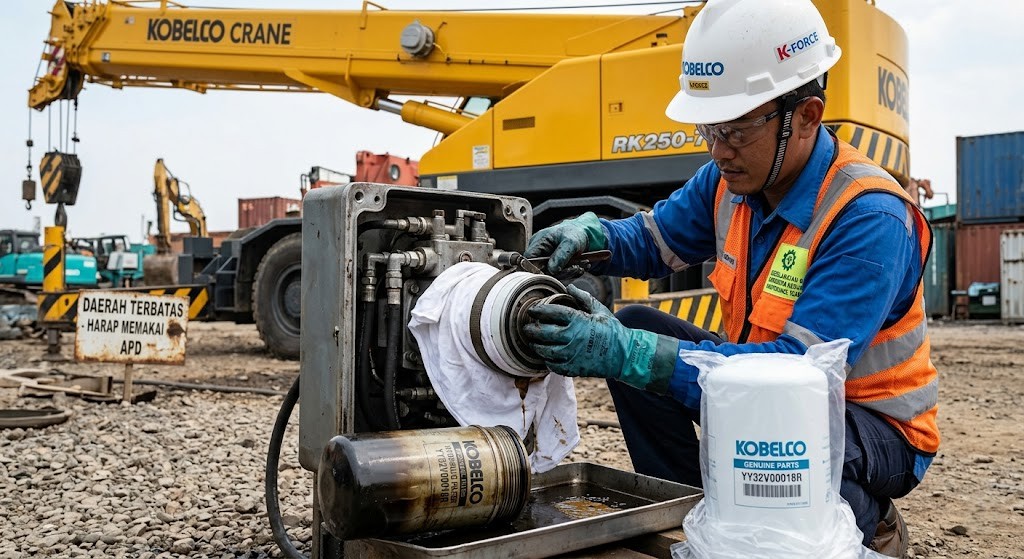
Your Kobelco crane’s hydraulic system represents engineering precision at work. Boom movements, house rotations, load handling—all orchestrated by fluid power. This capability endures only when hydraulic fluid maintains absolute cleanliness. The modest component ensuring this—the hydraulic filter—carries responsibility vastly exceeding its dimensions. Yet maintenance audits consistently reveal it among the most overlooked service requirements.
Pushing filter replacement down the priority list seems harmless. The machine operates without obvious distress. Gauges indicate normal ranges. But beneath this calm surface, progressive damage accumulates steadily. Contamination spreads through precision components without audible or visible warning. When operational problems finally emerge, the underlying deterioration has already reached expensive stages. Approaching filter schedules as flexible recommendations invites substantial financial risk. Embracing them as mandatory protection preserves capital investment value.
The Filter’s Critical Protective Function
Hydraulic fluid transmits immense mechanical force while simultaneously lubricating moving elements. Operating under extreme pressure, this fluid navigates through positive displacement pumps, directional control valves, and linear actuators manufactured to microscopic tolerances. Even particulate matter requiring optical magnification initiates destructive wear processes. Contamination sources encompass manufacturing residue, environmental dust infiltration, elastomer seal degradation products, and atmospheric moisture condensation.
Filtration elements serve as the system’s primary defensive barrier—capturing threats before they reach vulnerable internal surfaces. The biological kidney analogy remains precise: continuous purification sustains overall system health. New filters trap particles according to engineered micron specifications. As operating hours accumulate, loading increases progressively. Eventually, capacity limits force either bypass valve opening permitting contaminated flow continuation, or flow restriction creating downstream pressure starvation.
Both failure modes generate severe economic consequences. Fluid circumventing filtration transforms into abrasive slurry against precision-machined surfaces. Individual hard particles score pump housings or jam critical valve mechanisms. Once initiated, this damage produces additional debris, establishing self-accelerating wear cycles that compound rapidly without timely intervention.
The Hidden Costs of Maintenance Deferral
Delaying filter service tempts during demanding operational periods. Production schedules intensify. Equipment availability becomes critical. You rationalize that next week provides adequate margin. But hydraulic contamination progresses relentlessly regardless of operational convenience. Every hour with compromised filtration permits additional debris circulation through expensive precision components.
Performance degradation extends beyond physical wear measurements. System responsiveness deteriorates noticeably. Crane operators experience sluggish behavior during precision operations. Swing motions exhibit hesitation or imprecision. Boom positioning drifts unexpectedly under load. These symptoms frequently trigger misdirected troubleshooting—technicians replace expensive pumps and valves when filtration neglect actually originated the decline.
Systematic hydraulic diagnosis consumes substantial technical resources. Sequential replacement of major components may occur while contaminated fluid continues destroying each new installation. Eventually tracing performance degradation to filter maintenance failures reveals entirely preventable capital expenditure.
Implementing Proper Replacement Methodology
Kobelco engineering establishes maintenance schedules based on extensive laboratory testing, statistical reliability analysis, and comprehensive field observation. Recommended hydraulic filter replacement intervals represent calculated optimizations balancing contamination generation rates against filtration capacity under typical operating conditions.
These recommendations provide baseline guidance requiring environmental adjustment. Severe operating contexts—construction dust, temperature extremes, or high atmospheric humidity—accelerate filter loading substantially. Monitor filter condition indicators continuously. Readings entering warning zones before scheduled intervals demand immediate replacement action regardless of calendar position.
Execute replacement using disciplined technical procedures. Thoroughly clean external housing surfaces before opening to prevent environmental contamination introduction. Employ proper extraction tools. Inspect removed filters carefully for metallic debris. Bright particulate matter or paste-like sludge indicates internal component wear requiring further investigation.
Install replacement elements using hand-starting techniques before final torque application. Adhere precisely to manufacturer-specified tightening values. Excessive torque damages seals; insufficient torque permits external leakage. Charge systems with specified hydraulic fluids. Remove entrained air through appropriate bleeding procedures. Operate initially at reduced loads to establish proper fluid distribution. These careful steps require minimal additional time while preventing costly installation errors.
Why Authentic Kobelco Parts Deliver Superior Value
Filter manufacturing quality varies dramatically across market sources. Micron rating accuracy, bypass valve calibration precision, and seal material compatibility all critically influence service outcomes. Visually similar aftermarket products often harbor specification deviations creating serious operational problems. Incorrectly calibrated bypass valves fail to protect systems when most needed. Incompatible seal compounds degrade when exposed to specific hydraulic fluid chemistries, becoming additional contamination sources.
Specifying genuine Kobelco parts ensures replacement filters meet exact original equipment engineering specifications. These components undergo comprehensive validation for design pressure, flow characteristics, and fluid compatibility requirements. This engineering integrity transcends marketing claims—it provides measurable protection against accelerated wear mechanisms and performance degradation.
Procurement of authentic Kobelco parts includes complete documentation traceability. Manufacturing sources, quality certifications, and performance specifications remain accessible for verification. Should performance anomalies or safety notifications arise, established resolution mechanisms exist. Generic or counterfeit alternatives lack this essential accountability infrastructure.
Selecting Your Crane Parts Supplier Strategically
Accurate part identification helps, but your crane parts supplier relationship determines maintenance success. Established suppliers contribute technical expertise extending far beyond simple order processing. They verify filter selections against specific machine serial numbers and manufacturing configurations. They proactively communicate engineering updates, part supersessions, and service bulletin information affecting your equipment.
Inventory availability distinguishes adequate suppliers from strategic partners. Waiting until filter failure before ordering guarantees operational disruption. Professional crane parts supplier operations maintain strategic inventory depth for high-demand maintenance items or provide expedited procurement pathways. They recognize which components most critically impact equipment uptime metrics. Develop relationships with technically competent, responsive suppliers who verify technical details before shipment.
Consider consolidated filter kit options when multiple hydraulic circuits require simultaneous service. Coordinated replacement maintains consistent protection quality across all system branches. Knowledgeable crane parts supplier consultants identify which filters serve specific functions—return line filtration, suction straining, or pressure line protection—and recommend appropriate service quantities for complete maintenance.
Strong crane parts supplier partnerships generate ongoing operational benefits. They anticipate your preventive maintenance scheduling requirements. They offer diagnostic consultation when contamination patterns suggest unusual system problems. They function as valuable technical extensions of your maintenance organization rather than mere transactional vendors.
Recognizing Early Warning Indicators
Calendar-based maintenance provides necessary foundation, but operational vigilance catches exceptions requiring immediate attention. Monitor for these specific symptoms indicating filter service needs:
- Hydraulic system warning indicator activation
- Reduced power availability or response sluggishness
- Abnormal pump operating noise characteristics
- Fluid darkening or loss of clarity
- Elevated filter housing surface temperatures
Any combination of these indicators suggests flow restriction or bypass condition existence. Never disregard these warnings. Filter replacement requires substantially less operational downtime than major hydraulic component rebuilding or replacement.
Maintain comprehensive service records. Record equipment hour meter readings at each filter service event. Document any operational symptoms observed prior to replacement. This accumulated historical data enables predictive maintenance optimization and trend identification. Filters exhibiting service life shorter than historical norms indicate contamination sources requiring investigation—potentially failing reservoir seals, damaged intake plumbing, or inadequate breather filtration.
Prevention as Financial Protection Strategy
Major hydraulic repairs impose severe economic burdens. Primary pump replacements typically cost thousands of dollars. Associated operational downtime multiplies these direct costs through lost production capacity and schedule impacts. Filter replacement investment remains trivial by comparison.
This maintenance category lacks dramatic visibility. Clean filtration elements attract no special recognition. Yet every stakeholder affected by crane operations—equipment operators, site supervisors, project managers, clients—recognizes and values consistent equipment reliability. They appreciate schedule adherence and operational availability. Such dependability emerges not from heroic interventions but from disciplined execution of fundamental maintenance practices.
Review your maintenance planning documentation carefully. Schedule upcoming service intervals proactively. Replace filtration elements before performance degradation occurs. Specify authentic Kobelco parts for guaranteed specification compliance. Partner with capable crane parts supplier organizations who understand and support your operational requirements. This systematic methodology protects your capital investment effectively.
Your Kobelco crane embodies robust engineering design intended for extended service life. Realizing that potential requires your consistent commitment to fundamental maintenance discipline. Hydraulic filtration maintenance stands among the most critical of these fundamentals. Never underestimate its protective importance. Both equipment longevity and financial performance will validate this maintenance priority.