The global demand for reliable electricity continues to grow as industries expand, urbanization accelerates, and renewable energy sources become increasingly integrated into power networks. At the center of this evolving energy landscape are substations—critical facilities that ensure efficient transmission and distribution of electrical power. Today, modern substation engineering design goes far beyond traditional layouts and equipment selection. Engineers now leverage advanced technologies, digital tools, and innovative construction methods to create safer, smarter, and more resilient substations.
This article explores the latest approaches to the design of electrical substations and how these innovations are transforming power infrastructure for the future.
The Evolution of Substation Engineering Design
Substations have traditionally been designed with a strong focus on functionality, reliability, and safety. While these principles remain essential, modern projects now incorporate additional considerations such as automation, environmental impact, operational efficiency, and future scalability.
Advancements in substation engineering design allow engineers to optimize layouts, improve equipment performance, and reduce lifecycle costs. Sophisticated modeling software helps identify potential design challenges before construction begins, minimizing delays and reducing project risks.
Modern substations are also designed to accommodate changing grid requirements, including renewable energy integration, electric vehicle charging infrastructure, and increasing electricity demand from industrial and commercial sectors.
Smart Technologies Transforming Substation Design
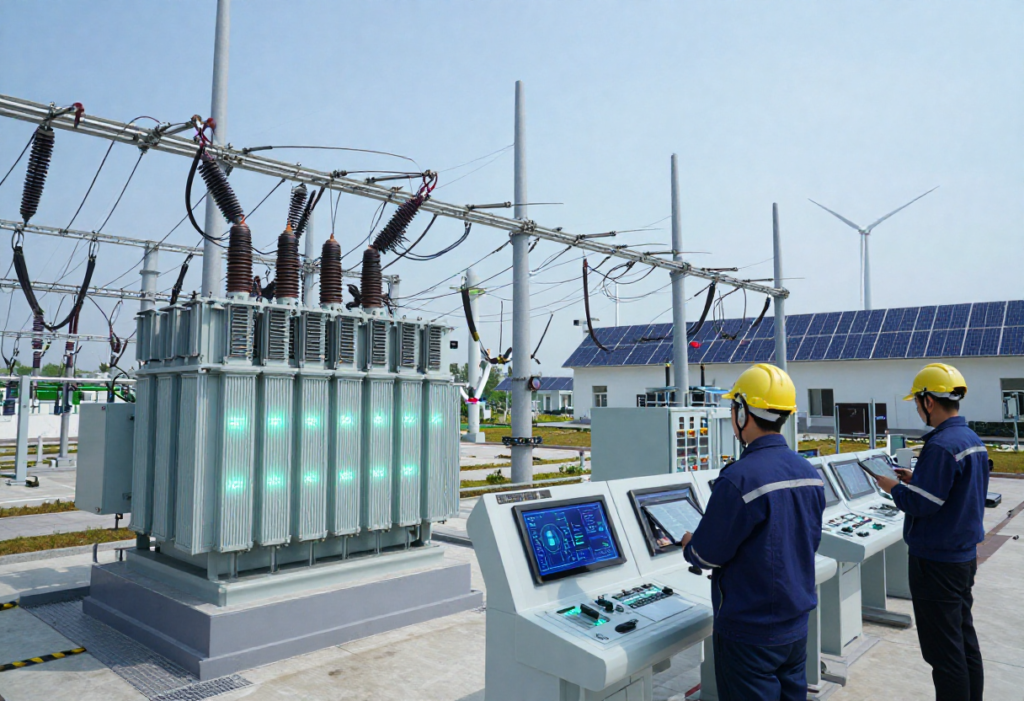
One of the most significant developments in the design of electrical substations is the adoption of smart technologies. Digital substations use intelligent electronic devices (IEDs), advanced communication systems, and real-time monitoring to improve operational efficiency.
Key benefits of smart substation technologies include:
- Faster fault detection and response
- Enhanced system reliability
- Reduced maintenance requirements
- Improved asset management
- Real-time performance monitoring
Digital communication protocols such as IEC 61850 have become industry standards, enabling seamless communication between substation devices. This level of automation allows operators to monitor and control equipment remotely while improving system visibility across the electrical network.
As utility companies seek greater efficiency and resilience, digital substations are rapidly becoming the preferred solution for modern infrastructure projects.
Designing Efficient High Voltage Switchyards
A high voltage switchyard serves as a critical component within transmission substations, managing the flow of electricity between transmission lines, transformers, and distribution networks. Effective switchyard design plays a major role in ensuring power system reliability and operational safety.
Modern switchyard design focuses on several key factors:
Space Optimization
Land availability can be limited, particularly in urban and industrial areas. Engineers use advanced layout planning tools to maximize available space while maintaining required electrical clearances and safety standards.
Reliability and Redundancy
Modern switchyards often include redundant equipment and backup systems to minimize service interruptions. Busbar configurations, circuit breaker arrangements, and protection schemes are carefully selected to ensure continuous operation during equipment failures or maintenance activities.
Safety Considerations
Proper grounding systems, arc flash protection, equipment spacing, and secure access controls are essential elements of switchyard safety design. Engineers must comply with national and international standards to protect personnel and equipment.
Future Expansion Capability
Electrical demand can increase significantly over the lifespan of a substation. Modern high voltage switchyard designs often incorporate provisions for future expansion without requiring major reconstruction.
The Role of Advanced Engineering Software
Technology has transformed how substations are planned and built. Advanced engineering software enables teams to create highly detailed 3D models before construction begins.
Building Information Modeling (BIM) has become an important tool in modern substation projects. BIM allows engineers, contractors, and project stakeholders to collaborate within a shared digital environment. This approach improves coordination and helps identify potential conflicts early in the design process.
Benefits of advanced design software include:
- Improved design accuracy
- Reduced construction errors
- Better project coordination
- Faster project delivery
- Enhanced cost control
Simulation tools also allow engineers to analyze electrical performance, thermal behavior, fault conditions, and equipment loading under various operating scenarios.
Sustainable and Environmentally Responsible Substation Construction
Environmental responsibility has become a major consideration in modern substation projects. Utilities and developers are increasingly seeking solutions that minimize environmental impact while maintaining high levels of performance.
Several sustainable practices are now commonly incorporated into substation engineering design:
Reduced Land Disturbance
Careful site selection and compact equipment configurations help reduce land usage and minimize environmental disruption.
Eco-Friendly Equipment
Many modern substations utilize environmentally friendly insulating materials and technologies that reduce greenhouse gas emissions.
Energy Efficiency
Advanced transformers, intelligent cooling systems, and efficient auxiliary equipment help lower overall energy consumption.
Renewable Energy Integration
Substations are increasingly designed to connect solar farms, wind power facilities, and battery energy storage systems to the electrical grid. This capability supports the transition toward cleaner energy sources while maintaining grid stability.
Enhancing Reliability Through Modern Construction Methods
Construction efficiency is another area experiencing significant innovation. Traditional construction approaches are being supplemented by modular and prefabricated solutions that reduce project timelines and improve quality control.
Prefabricated control buildings, factory-tested equipment assemblies, and modular electrical systems can be manufactured off-site and installed quickly at the project location.
Advantages of modular construction include:
- Faster installation
- Reduced labor requirements
- Improved quality assurance
- Lower project risk
- Enhanced worker safety
These methods are particularly valuable for remote locations, utility upgrades, and large-scale infrastructure projects where project schedules are critical.
Preparing Substations for the Future Grid
The electrical grid is becoming more complex as distributed energy resources, smart grid technologies, and electrification initiatives continue to expand. Future-ready substations must be capable of adapting to these changes.
Modern designs prioritize flexibility, cybersecurity, automation, and scalable infrastructure. Engineers are increasingly incorporating artificial intelligence, predictive maintenance systems, and advanced analytics into substation operations.
By integrating these technologies from the beginning, utilities can improve reliability, reduce operational costs, and support long-term grid modernization goals.
Conclusion
Modern approaches to substation design and construction are reshaping the future of power infrastructure. Through advanced substation engineering design, digital technologies, efficient high voltage switchyard planning, and sustainable construction practices, today’s substations are becoming smarter, safer, and more resilient than ever before.
As energy demands continue to evolve, the design of electrical substations will play a crucial role in supporting reliable power delivery, renewable energy integration, and future grid development. Organizations that embrace innovative engineering strategies can build infrastructure capable of meeting both current and future energy challenges with confidence.