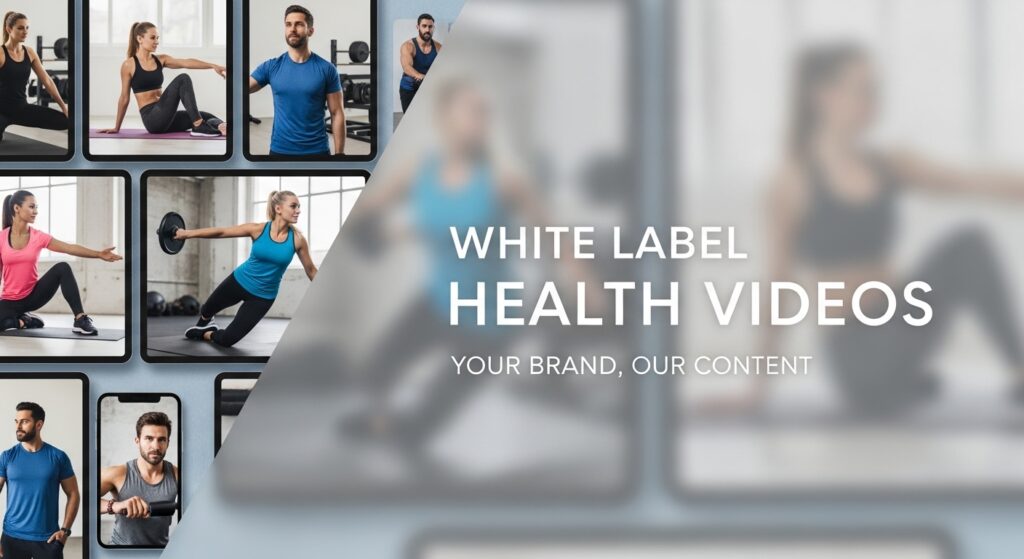
White Label Health Videos
If you’re building or scaling a digital fitness platform, you already know the content problem. Users sign up, explore for a few weeks, and then disappear, not because your app is broken, but because the video library feels thin. Keeping that library fresh is expensive, slow, and messy when you’re trying to do it all in-house. That’s why more platform operators are turning to white label health and wellness videos as a smarter, leaner alternative to custom production.
It’s not a shortcut. It’s a strategy. The platforms growing fastest right now, think the direct challengers to Apple Fitness+ and Peloton, aren’t all filming their own content in private studios. Many are licensing pre-built, professionally produced video assets and putting their own brand on top. The result? A polished, high-volume library at a fraction of the cost and time.
Why Do Digital Fitness Platforms Struggle with Content at Scale?
Content production is the quiet budget drain that catches most platform teams off guard. The math sounds manageable at first, a few videos a month, maybe a small crew, a studio rental here and there. But once you’re serving a growing user base across multiple fitness categories, yoga, HIIT, strength training, recovery, mindfulness, the demand for new content compounds fast.
In-house production comes with costs that don’t scale well. You’re paying for studio time, camera operators, editors, on-screen talent, and licensing for any music or graphics used. A single polished 20-minute workout video can cost anywhere from $500 to several thousand dollars to produce, depending on your quality standards. Multiply that across a catalogue of 200+ videos and you’re looking at serious capital tied up in production before your platform has even hit a sustainable revenue runway.
On top of that, production takes time. The gap between “we need more yoga content” and “the yoga content is live” can be six to ten weeks. Users don’t wait. They cancel.
What Exactly Are White Label Health Videos?
White label health videos are professionally produced fitness and wellness content files that are created without any branding attached, specifically so that another company can license them and present them as their own. You’re not buying stock footage that looks generic. You’re getting full workout sessions, guided meditations, nutrition explainers, or recovery programs, led by credentialed instructors, filmed in quality production environments, ready to publish.
Because the content arrives unbranded, it sits cleanly inside your platform’s interface. Your users see your logo, your color palette, your navigation, and the video content feels like it was made just for you. That’s the point.
Most providers also supply the content with clean metadata, titles, descriptions, difficulty tags, duration labels, category assignments. For your development team, that means faster integration and fewer hours spent manually tagging hundreds of files.
How Does a Stock Fitness Video Library Fit Into a Platform’s Tech Stack?
This is where a lot of platform operators get surprised, in a good way. A well-structured stock fitness video library for platforms isn’t just a folder of MP4 files dropped into a shared drive. It’s a structured content system built for integration.
When you work with a specialist provider, content typically comes packaged with structured metadata that maps cleanly to your existing database schema. That means your search and filter functions, filter by duration, filter by fitness level, filter by body focus, can populate automatically from the metadata supplied with each file. Your engineering team handles the integration once, and then adding new batches of content becomes a routine upload rather than a custom development sprint every time.
For platforms built on systems like Mindbody’s enterprise infrastructure or custom-built member portals, this kind of structured delivery saves real development hours. It’s not glamorous, but it’s one of the most practical reasons operators cite when they make the switch away from in-house production.
A Side-by-Side Look: In-House Production vs. Licensed Content
| Factor | In-House Production | Licensed White Label Content |
|---|---|---|
| Time to Publish | 6 to 10 weeks per batch | Days to hours after licensing |
| Cost Per Video | $500 to $5,000+ | Fraction of that via flat-rate licensing |
| Branding Control | Full control | Full control (unbranded files) |
| Content Variety | Limited by budget and team capacity | Wide, spans multiple categories |
| Metadata Quality | Created manually in-house | Delivered structured and ready to import |
| Instructor Credentials | Depends on who you hire | Pre-vetted by the content provider |
Is White Label Content Right for Every Type of Fitness Platform?
Not every use case is identical, but the model works across a wide range of platform types. Corporate wellness portals, the kind offered by HR tech platforms or employee benefits programs, are one of the strongest fits. These platforms need consistent, professional content without the cost of a dedicated content team. A licensed catalogue covers the range of categories an employee audience needs, from lunchtime stretching sessions to stress management programs.
Digital fitness apps targeting consumers benefit equally. If you’re positioning your platform in a crowded market, content depth is a key differentiator. Users browsing app store reviews will notice when a platform’s library has variety and quality. White label content helps you build that depth quickly, especially in the early growth stages when your own production capacity is limited.
Telehealth and rehabilitation platforms are another growing use case. Pre-built guided exercise content for post-surgery recovery or chronic pain management is both expensive and time-consuming to produce from scratch. Licensed content from specialists in the rehab and mobility space means you can serve those patient groups without needing a clinical video production unit.
What Should You Look for in a White Label Video Content Provider?
The quality gap between providers is real, so it’s worth being specific about what you’re evaluating. The most important factor is instructor credentialing. Look for providers whose on-screen talent holds recognised certifications, ACE, NASM, ACSM for fitness; RYT credentials for yoga; RD or similar for nutrition content. If a provider can’t tell you clearly who their instructors are and what they’re certified in, that’s a red flag.
Production quality is the second filter. Watch sample content critically, not just for visual polish, but for instruction quality, pacing, and audio clarity. Poor audio is one of the fastest ways to erode user trust in your platform, and it’s a problem that no amount of UI design will fix.
Third, ask specifically about licensing terms. You need to know whether the license is exclusive or non-exclusive, how many users or devices it covers, whether it’s a flat fee or usage-based, and what happens if you want to sub-license content to your own white label clients further down the line.
Finally, ask about update frequency. A static catalogue ages fast. The best providers are continuously adding new content, which means your library stays current without any extra effort on your part.
How Does Digital Fitness Content for Platforms Support User Retention?
Retention is the metric that matters most in subscription-based platforms, and content freshness is directly tied to it. Research from the fitness app sector consistently shows that users who engage with new content in their first 30 days are significantly more likely to stay subscribed beyond the three-month mark.
A deep, varied digital fitness content for platforms catalogue gives users a reason to keep coming back. When someone finishes a beginner yoga series, there’s an intermediate series ready for them. When a user completes a four-week strength programme, there’s a five-week programme waiting. That progression path is what turns a casual user into a loyal subscriber.
White label content gives you the volume to build those progression paths without the production bottleneck. You’re not waiting on your film crew to finish the next series. The content is ready when your users are.
Frequently Asked Questions
1. Can I put my own branding on white label health videos?
Yes. That’s the whole point. White label videos are supplied without any third-party branding, so you present them to your users as native platform content under your own brand name and visual identity.
2. How quickly can I launch a licensed video library on my platform?
With a well-structured provider, integration can be completed in a matter of days rather than weeks. The content arrives with clean metadata, so your development team isn’t starting from scratch on tagging and categorisation.
3. Is licensed content cheaper than producing videos in-house?
For most platforms, yes, substantially. Custom video production at professional quality costs thousands of dollars per session. Licensing spreads that production cost across multiple clients, making the per-video cost much lower for each licensee.
4. What categories of wellness content are typically available?
Most specialist providers cover fitness workouts (HIIT, strength, cardio, yoga, Pilates), mindfulness and meditation, nutrition guidance, mobility and flexibility, and rehabilitation exercises. The breadth depends on the provider, so it’s worth reviewing their full catalogue before signing.
5. Will my users be able to tell the content is licensed, not produced in-house?
Not if the content is high quality and properly integrated. Because the files arrive unbranded, your users simply see professional workout videos inside your platform. The licensing arrangement is invisible to them.
6. Are there content options for corporate wellness programs specifically?
Yes. Many providers include content specifically suited to corporate audiences, shorter session lengths, desk-based stretching, stress management, and sleep hygiene content that fits neatly into an employee wellness programme.
Ready to Scale Your Platform’s Content Library?
If your platform’s growth is being held back by slow content production or a thin video catalogue, white label health content is the most practical fix available. It cuts your cost per video, removes the production timeline bottleneck, and gives your users the content depth they need to stay engaged long-term.
Fitter Stock provides ready-to-license health, fitness, wellness, and rehabilitation video content built specifically for digital platforms, apps, and enterprise portals. Browse the full catalogue and see what’s available for your niche, no production overhead, no long waits, just professional content ready to publish under your brand.