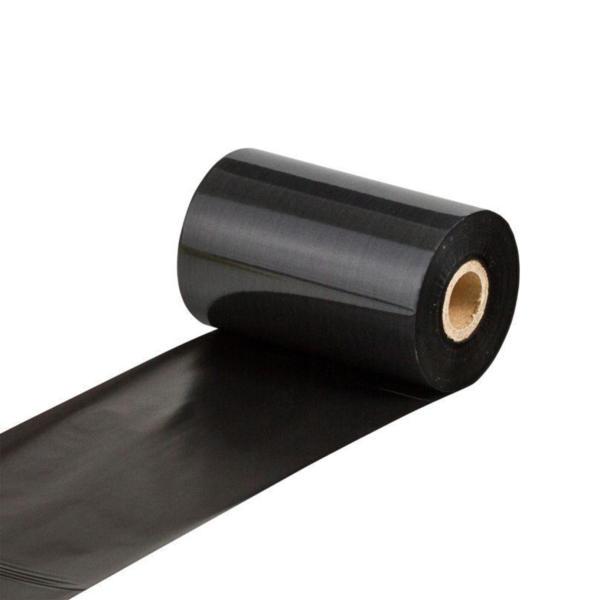
A wax resin thermal transfer ribbon is an essential printing consumable used by businesses that need durable, high-quality labels for product identification, inventory management, shipping, and industrial applications. Designed for thermal transfer printers, this ribbon combines wax and resin-based inks to produce printed text, barcodes, product information, and other label content that can withstand more demanding conditions than many standard wax ribbons.
Businesses across manufacturing, warehousing, logistics, retail, healthcare, and distribution rely on accurate labels to track products, manage stock, and maintain efficient operations. Selecting the right ribbon helps improve print quality, barcode readability, and label durability while reducing unnecessary printing costs.
Unlike direct thermal printing, which uses heat-sensitive label material, thermal transfer printing uses a heated printhead to transfer ink from a ribbon onto a compatible label surface. The ribbon formulation, label material, printer settings, and operating environment all influence the final result.
A wax resin ribbon offers a practical balance between print quality, durability, and cost. It can be suitable for applications that require better resistance to abrasion and handling than standard wax ribbons typically provide.
This guide explains how wax resin thermal transfer ribbons work, their benefits, common applications, material compatibility, and the factors to consider when purchasing them.
What Is a Wax Resin Thermal Transfer Ribbon?
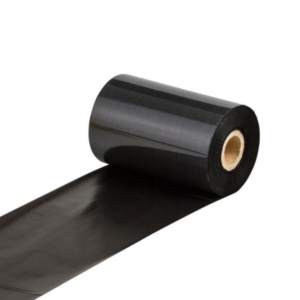
A wax resin thermal transfer ribbon is a coated printing film that transfers ink onto a label when exposed to heat from a compatible thermal transfer printhead.
The ribbon typically consists of a thin polyester base film, an ink coating containing wax and resin components, and a back coating designed to help protect the printhead and support smooth ribbon movement.
During printing, the printer heats selected areas of the ribbon. The ink melts or softens and transfers onto the label surface, creating text, graphics, and machine-readable barcodes.
Wax resin ribbons combine the printing characteristics of wax with the durability advantages of resin.
Wax components help support efficient ink transfer and clear printing, while resin components can improve adhesion and resistance to rubbing, depending on the formulation and label material.
The exact performance varies by manufacturer and ribbon grade. Some products are designed for coated paper labels, while others are formulated for selected synthetic materials.
Choosing a ribbon that matches the printer, label surface, and intended application is important for achieving reliable results.
How Does a Wax Resin Thermal Transfer Ribbon Work?
Thermal transfer printing uses controlled heat to transfer ink from a ribbon onto a label.
The process involves several components working together, including the printer, thermal printhead, ribbon, and label material.
Heat Transfer Process
The thermal printhead heats specific points on the ribbon as it moves across the label.
The heat causes the ink coating to transfer onto the label surface in the required pattern. The printer controls the heated areas to produce characters, images, and barcodes.
The quality of the printed result depends on factors such as printhead condition, temperature settings, printing speed, ribbon formulation, and label compatibility.
Wax and Resin Ink Composition
Wax-based components generally support efficient transfer and economical printing.
Resin components can improve adhesion and resistance to abrasion, depending on the formulation and substrate.
Combining these materials allows wax resin ribbons to serve applications that require more durability than many standard wax ribbons offer without necessarily requiring a full-resin formulation.
Compatibility With Label Materials
The ribbon must be compatible with the label’s surface coating.
Wax resin ribbons are commonly used with selected coated paper labels and compatible synthetic label materials.
Using an incompatible ribbon can result in poor adhesion, smudging, fading, or inconsistent barcode quality.
For specialised applications, consult the ribbon and label manufacturers’ compatibility recommendations before selecting a product.
Key Benefits of Wax Resin Thermal Transfer Ribbons
Wax resin ribbons offer several advantages for businesses that require consistent and dependable label printing.
Improved Resistance to Abrasion
Labels can experience friction during handling, transportation, storage, and product use.
Wax resin formulations can provide better abrasion resistance than standard wax ribbons, although actual performance depends on the ribbon grade and label surface.
This can be useful for labels that are handled repeatedly or exposed to routine warehouse activity.
Clear Text and Barcode Printing
Accurate printing is essential when labels contain product codes, serial numbers, shipping details, or inventory information.
A suitable wax resin ribbon can produce sharp text and clear barcodes when used with compatible labels and correctly configured printers.
Readable barcodes help scanning systems capture information accurately, supporting inventory control and order processing.
Businesses should test barcode performance under their actual printing and handling conditions.
Versatile Applications
Wax resin ribbons are available in formulations suited to different label materials and operational requirements.
Depending on the specific product, they can be used for retail labels, warehouse identification, manufacturing labels, logistics applications, and certain industrial identification tasks.
This versatility makes them useful for businesses that need a balance between printing quality and durability.
Suitable for Many Commercial Environments
Wax resin ribbons are commonly used in warehouses, distribution centres, manufacturing facilities, and retail operations.
They can help produce labels that remain readable during routine handling and transportation.
However, they should not automatically be considered suitable for severe chemical exposure, outdoor weathering, extreme temperatures, or other demanding conditions. These applications may require specialised resin ribbons or other marking technologies.
Balance Between Cost and Performance
A wax resin ribbon may offer a practical middle ground between economical wax ribbons and more specialised resin ribbons.
For businesses that need improved durability without the full performance requirements of a resin-only product, this can provide an appropriate balance.
The most cost-effective option depends on ribbon consumption, print quality, label lifespan, printer compatibility, and the consequences of label failure.
Wax Resin vs Wax vs Resin Thermal Transfer Ribbons
Understanding the differences between common ribbon types helps businesses select suitable printing supplies.
Wax Thermal Transfer Ribbons
Wax ribbons are generally designed for economical printing on compatible paper labels.
They are often used for shipping labels, retail price labels, inventory stickers, and other applications where resistance requirements are relatively modest.
Their lower cost can make them attractive for high-volume printing.
However, standard wax ribbons generally provide less resistance to abrasion and certain environmental conditions than suitable wax resin or resin ribbons.
Wax Resin Thermal Transfer Ribbons
Wax resin ribbons combine wax and resin components to provide a balance between printing economy and durability.
They are commonly selected for coated paper labels and compatible synthetic substrates that require improved resistance to handling and rubbing.
They may be suitable for product identification, warehouse labels, manufacturing applications, and selected logistics tasks.
Performance varies by formulation, so buyers should review the manufacturer’s specifications.
Resin Thermal Transfer Ribbons
Resin ribbons are generally designed for applications that require greater resistance to abrasion, chemicals, heat, or other environmental conditions, depending on the specific formulation.
They are often used with compatible synthetic labels for industrial identification, asset tracking, laboratory applications, and specialised product labelling.
Resin ribbons may require specific label materials and printer settings to achieve their intended performance.
They are not automatically the best choice for every application because compatibility, printing conditions, and cost must still be considered.
Which Ribbon Should You Choose?
The correct ribbon depends on the label surface, required durability, printing volume, and operating environment.
Wax may be suitable for economical, short-term paper labels. Wax resin may be appropriate when better abrasion resistance is required. Resin may be necessary for applications with more demanding environmental or chemical exposure requirements.
Testing the complete combination of printer, ribbon, and label is often the most reliable way to confirm suitability.
Common Applications of Wax Resin Thermal Transfer Ribbons
Wax resin ribbons support a variety of commercial and industrial labelling requirements.
Warehousing and Inventory Management
Warehouses use labels to identify products, storage locations, cartons, bins, and inventory units.
Printed barcodes help employees scan items during receiving, picking, packing, and stocktaking.
Wax resin ribbons can be suitable for selected warehouse labels that experience repeated handling or require better durability than standard wax printing provides.
Businesses should choose ribbon and label combinations that maintain readability throughout the expected label lifespan.
Manufacturing and Product Identification
Manufacturers use labels to display product numbers, batch references, serial numbers, and other identification details.
These labels may need to remain readable throughout production, storage, and distribution.
Wax resin ribbons can be useful for applications where print durability and clear identification are important.
For labels exposed to high temperatures, aggressive chemicals, or demanding industrial conditions, specialised resin products may be more appropriate.
Shipping and Logistics
Shipping labels help identify parcels, track shipments, and direct goods through distribution networks.
Wax resin ribbons can be used for compatible shipping and logistics labels when greater resistance to handling is required.
The ribbon should produce readable barcodes and text at the printing speed used by the operation.
For high-volume shipping, businesses should also consider ribbon capacity, printer efficiency, and the cost of replacing consumables.
Retail and Product Labelling
Retail businesses use labels for product identification, stock control, pricing, and internal inventory management.
Wax resin ribbons can produce clear text and barcodes on compatible label materials.
For products that experience frequent handling, an appropriate wax resin formulation may provide improved print durability compared with a standard wax ribbon.
The label surface and expected conditions should guide product selection.
Healthcare and Laboratory Identification
Healthcare facilities and laboratories may use thermal transfer labels for sample identification, inventory tracking, equipment labelling, and other controlled processes.
The required ribbon depends on the label material, storage conditions, and the specific information being printed.
Some laboratory applications involve refrigeration, freezing, moisture, chemicals, or specialised containers. A general wax resin ribbon should not be assumed suitable for all such conditions.
Businesses should verify the product’s performance for the intended application and use validated label systems where necessary.
Asset Tracking
Businesses often label equipment, tools, storage containers, and other assets to support identification and inventory control.
Wax resin ribbons may be suitable for selected asset labels where the substrate and environmental conditions are compatible.
For long-term outdoor use or exposure to chemicals and repeated abrasion, a more specialised ribbon and label combination may be required.
How to Choose the Right Wax Resin Thermal Transfer Ribbon
Selecting the correct ribbon involves checking printer specifications, label material, dimensions, and expected operating conditions.
Confirm Printer Compatibility
Thermal transfer printers vary in their supported ribbon widths, lengths, core sizes, winding directions, and loading arrangements.
Before ordering, check the printer manufacturer’s documentation and confirm the ribbon dimensions and configuration.
Using an incompatible ribbon may prevent correct installation or cause printing problems.
Match the Ribbon to the Label Material
The label surface has a major influence on ink transfer and adhesion.
Some wax resin ribbons are optimised for coated paper labels, while others are designed for compatible synthetic materials.
Review the manufacturer’s compatibility guidance and test the ribbon on the exact label stock used in your business.
Check Ribbon Width and Length
Ribbon width should be suitable for the label and printer configuration.
A ribbon that is too narrow may fail to cover the required print area, while an unnecessarily wide ribbon can increase material use.
Ribbon length affects how often consumables need to be replaced. Longer ribbons may reduce downtime in high-volume operations if the printer supports the required dimensions.
Consider Printing Speed
Different ribbons have different performance characteristics at various printing speeds and heat settings.
A ribbon designed for one printing condition may not provide the same result at a significantly higher speed.
Check the manufacturer’s recommendations and test the ribbon at the speed used in daily operations.
Evaluate Durability Requirements
Consider how long the label needs to remain readable and what conditions it will encounter.
Routine warehouse handling may require different performance from a label exposed to sunlight, moisture, chemicals, or extreme temperatures.
If the application requires specialised resistance, verify the manufacturer’s test data rather than relying only on the general term wax resin.
Review Printhead Protection
Ribbon back coatings can influence friction and the interaction between the ribbon and the printhead.
Selecting a suitable ribbon and maintaining the printer can help support consistent print quality and equipment performance.
Follow the printer manufacturer’s cleaning and maintenance recommendations, and avoid using consumables that are incompatible with the equipment.
How to Improve Wax Resin Thermal Transfer Printing Quality
Correct setup and maintenance help businesses produce clear, consistent labels.
Adjust Heat Settings
The printhead temperature should be appropriate for the ribbon and label combination.
Insufficient heat can result in faint printing or incomplete transfer, while excessive heat may cause smudging, excessive darkness, or unnecessary wear.
Use the manufacturer’s recommended settings as a starting point and make controlled adjustments when necessary.
Choose a Suitable Print Speed
Printing speed can affect how much time the ribbon has to transfer ink to the label.
If barcodes appear incomplete or text lacks definition, test a lower speed and review the other printer settings.
The optimal speed depends on the printer, ribbon formulation, label material, and required print quality.
Keep the Printhead Clean
Dust, adhesive residue, and other contaminants can affect print quality.
Clean the printhead and other relevant components according to the printer manufacturer’s instructions.
Regular maintenance can help prevent streaks, missing print lines, and inconsistent barcode appearance.
Inspect Barcode Quality
A barcode may appear readable to the eye but still perform poorly during scanning.
Businesses should test barcode readability using appropriate verification methods when the application requires reliable scanning performance.
Review ribbon compatibility, label quality, print settings, and printer condition if scanning problems occur.
Store Ribbons Correctly
Thermal transfer ribbons should be stored according to the manufacturer’s recommendations.
Protect unused rolls from excessive heat, humidity, direct sunlight, dust, and physical damage.
Correct storage helps maintain the condition of the ribbon before use.
Buying Wax Resin Thermal Transfer Ribbons in Bulk
Businesses that print labels regularly may benefit from purchasing ribbons in larger quantities.
Compare Total Cost
Compare the price per roll, ribbon dimensions, usable length, shipping costs, and minimum order requirements.
A lower-priced roll may not provide better value if it has a shorter length or does not deliver the required print quality.
Consider how ribbon changes affect downtime and labour costs in high-volume environments.
Check Supplier Reliability
A reliable supplier should provide accurate product specifications, clear pricing, and dependable delivery arrangements.
Ask about stock availability, lead times, and repeat-order options.
For businesses with continuous printing operations, maintaining an appropriate reserve stock can help reduce the risk of interruptions.
Request Samples or Test Rolls
If you are changing ribbon brands or formulations, test the product before placing a large order.
Print sample labels using the intended printer and label stock. Check text clarity, barcode readability, adhesion, and resistance to the expected handling conditions.
Testing helps identify compatibility issues before they affect large production runs.
Plan Inventory Levels
Review how many rolls your business consumes each week or month.
Use actual consumption and supplier lead times to determine a suitable reorder point.
Avoid overordering products that may not be compatible with future printer or label changes.
Common Mistakes to Avoid When Buying Wax Resin Ribbons
One common mistake is choosing a ribbon based only on price without checking compatibility.
Another is assuming that all wax resin ribbons provide identical durability. Formulations vary, and performance depends on the label material and operating conditions.
Businesses should also avoid overlooking ribbon dimensions, winding configuration, and printer requirements.
Failing to test barcode readability can lead to scanning issues during shipping or inventory processing.
Finally, selecting a ribbon for demanding chemical or outdoor applications without verifying its suitability may result in fading, smudging, or premature label failure.
Conclusion
A wax resin thermal transfer ribbon is a practical printing solution for businesses that need clear labels with a useful balance of print quality, durability, and cost.
It can be suitable for warehouse identification, manufacturing labels, shipping operations, retail products, and other applications where compatible labels require better abrasion resistance than standard wax ribbons may provide.
The right choice depends on printer compatibility, label material, ribbon dimensions, printing speed, and environmental requirements. Businesses should compare product specifications, test samples when possible, and work with suppliers that provide reliable technical information.
By selecting the right ribbon and maintaining printing equipment properly, organisations can improve label consistency, support accurate barcode scanning, and manage printing costs more effectively.
Frequently Asked Questions
1. What is a wax resin thermal transfer ribbon?
A wax resin thermal transfer ribbon is a coated film containing wax and resin-based ink that transfers onto compatible labels using heat from a thermal transfer printer. It is used to print text, barcodes, and product identification information.
2. What is the difference between wax and wax resin ribbons?
Wax ribbons are generally economical for compatible paper labels, while wax resin ribbons typically offer improved resistance to abrasion and handling. The actual performance depends on the formulation and label material.
3. Can wax resin ribbons print on synthetic labels?
Some wax resin ribbons are designed for compatible synthetic label materials. However, not every formulation works with every substrate, so manufacturer compatibility recommendations should be checked before use.
4. Are wax resin thermal transfer ribbons suitable for barcodes?
Yes. Suitable wax resin ribbons can produce clear, scannable barcodes when matched with compatible labels and correctly configured printers. Barcode quality should be tested for the intended application.
5. How do I choose the correct ribbon size?
Check the printer’s supported ribbon width, length, core size, and winding configuration. The ribbon should match the printer specifications and provide sufficient coverage for the label’s print area.
6. How can I improve wax resin ribbon print quality?
Use compatible label stock, adjust heat and speed settings according to the manufacturer’s guidance, clean the printhead regularly, and test barcode readability. Proper storage also helps maintain ribbon quality.
7. Where can businesses buy wax resin thermal transfer ribbons wholesale?
Businesses can purchase ribbons from thermal printing suppliers, barcode equipment distributors, and industrial labelling providers. Compare dimensions, compatibility, roll length, pricing, technical support, and delivery times before ordering.