A customer doesn’t buy your jewelry the moment they click “add to cart.” They buy it the moment they open the box. Sounds dramatic, right? But think about your own experience. You’ve ordered something online, opened the packaging, and felt the quality—or lack of it—before you even touched the product inside. That split-second judgment is visceral and it’s permanent.
For jewelry brands, packaging isn’t secondary. It’s the bridge between a digital purchase and a physical experience. Yet so many designers spend months perfecting their pieces and five minutes choosing a box. That mismatch shows. In this article, we’ll look at why the container matters as much as the contents, and how working with a custom leather jewelry box supplier can turn your unboxing moment into a quiet competitive advantage.
The Unboxing Economy and Why It Isn’t Going Anywhere
Here’s the thing about unboxing videos. Most brands think they need to engineer something flashy—confetti, ribbon explosions, multi-layer reveals. But that’s not actually what people respond to. Watch enough of those videos and you’ll notice a pattern. The moments that get the audible reaction, the “oh wow,” almost always come from tactile details. The weight of a box. The resistance of a magnetic closure. The soft slide of a drawer. The absence of cheap plastic crinkle.
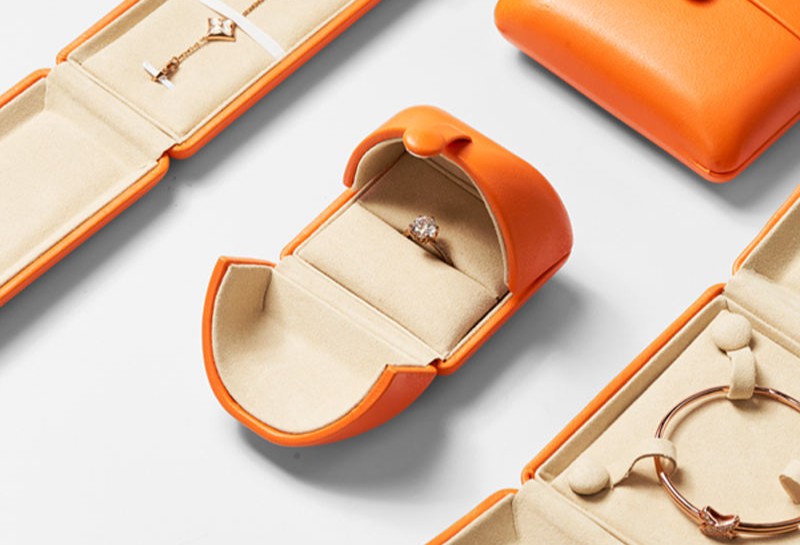
These aren’t expensive flourishes. They’re the result of thoughtful design decisions made during manufacturing. A box that fits the jewelry perfectly instead of leaving it swimming in a generic cavity. A hinge that opens smoothly and stays open at the right angle. A lining texture that complements the piece rather than distracting from it.
This is where a leather jewelry box manufacturer brings something that off-the-shelf packaging can’t touch. Intentionality. Every dimension, every material choice, every interior layout gets decided based on what your jewelry actually needs. A heavy pendant requires a different insert than a delicate chain. A chunky signet ring sits differently than a thin stacking band. These details feel small but they accumulate into an experience that either whispers “this is special” or doesn’t.
And the data backs this up. Studies on packaging perception consistently show that premium packaging raises the perceived value of the product inside. People will pay more for the same item presented better. It’s not rational, but it’s real. Your box is quietly setting a price anchor in your customer’s mind before they ever put the necklace on.
The Three Seconds That Make or Break Customer Loyalty
Now, this is where most people go wrong. They invest in beautiful outer packaging—the gift box, the ribbon, the tissue paper—and then drop the jewelry into a generic plastic baggie or a flimsy insert that shifts during shipping. The exterior promises luxury. The interior delivers a letdown.
There’s a critical three-second window when someone lifts the lid. Their brain is making dozens of micro-assessments. Does the hinge feel sturdy or wobbly? Does the leather smell natural or chemical? Does the interior cradle the jewelry or let it rattle around? None of these thoughts are conscious, but together they form a verdict.
Think of it like walking into a restaurant. You don’t need to see the kitchen to form an opinion about cleanliness. You glance at the floor, the table surfaces, the way the server handles the menu. Those peripheral signals tell you everything. Your packaging works the same way. It’s a proxy for your brand’s attention to detail.
This is why material consistency matters so much. If your brand aesthetic is warm and organic, your box shouldn’t be shiny and synthetic. If your jewelry is modern and architectural, your packaging shouldn’t be rustic burlap. The box needs to feel like it belongs to the same family as the jewelry. That alignment doesn’t happen by accident. It comes from working with a custom leather jewelry box supplier who asks questions about your brand before asking about your order quantity.
| Brand Aesthetic | Box Style That Reinforces It |
| Minimalist modern | Clean lines, monochromatic leather, concealed magnetic closure |
| Boho artisan | Textured or tooled leather, visible stitching, earthy dye tones |
| Vintage romantic | Soft curved edges, debossed patterns, velvet interior with antique hardware |
| Edgy contemporary | Matte black leather, sharp corners, unexpected interior color pop |
| Classic luxury | Full-grain leather, subtle embossed logo, suede lining, substantial weight |
A supplier who has built production expertise across multiple styles gives you room to explore what feels right. If you’re sourcing from a leather jewelry box manufacturer with diverse design capabilities, you’re not boxing yourself into a single aesthetic. You’re finding the container that amplifies what your brand already does well.
What Your Returns Data Might Be Trying to Tell You
Let’s talk about something awkward. Returns. Every brand has them, and the reasons listed in the dropdown menu rarely tell the whole story. “Changed mind.” “Not as expected.” “Item smaller than anticipated.”
Here’s a thought. Some of those returns aren’t about the jewelry at all. They’re about the expectation gap created by the packaging. If someone opens a flimsy box and pulls out a beautiful ring, their brain experiences a cognitive dissonance. The packaging told them to expect something average, but the jewelry is premium. Or worse, the packaging promised luxury and the product didn’t measure up. Either way, the mismatch creates doubt, and doubt drives returns.
The fix isn’t more expensive packaging. It’s more honest packaging. A box that accurately represents your brand’s position in the market. If you sell accessible demi-fine jewelry, your packaging should feel elevated but not intimidating. If you sell heirloom investment pieces, your box better feel substantial enough to hold something that’s going to outlive you.
Pay attention to your repeat customer packaging feedback. Do people mention keeping the box? Do they reuse it? A leather box that becomes a permanent fixture on someone’s dresser is doing more than storing jewelry. It’s storing brand recall. Every time that person reaches for it, they’re reminded of you. That’s the kind of organic marketing that no ad spend can replicate.
Frequently Asked Questions
Does custom packaging actually increase repeat purchases?
Not directly in a way you can easily track, but it reduces the expectation gap that leads to returns. Customers who feel the packaging matched their expectations are more likely to trust you with a second purchase. Packaging builds or erodes that trust silently.
What if my order volume is too small for custom manufacturing?
Many manufacturers offer lower MOQs now than they did a decade ago. Start with a stock design that can be subtly customized—color, logo placement, interior layout. As you scale, you can move into fully bespoke tooling. Don’t assume the door is closed before you knock.
How do I choose between a lid-and-base box, a drawer box, or a book-style case?
Match the opening mechanism to how the jewelry is used. Necklaces that tangle need a flat, open layout. Rings benefit from snug, secure slots. Earrings often work best in a shallow tray. Let the jewelry dictate the interior architecture, then build the exterior around it.
Should my logo be embossed, debossed, foil-stamped, or printed?
Embossing and debossing feel more subtle and high-end. Foil stamping adds contrast and visibility. Printing is the most affordable but least durable option. The right choice depends on your brand voice—louder brands can handle foil, while understated brands benefit from blind debossing.
Can leather packaging survive international shipping without damage?
Yes, if it’s constructed properly. Corner protection, rigid structural board beneath the leather, and properly cured adhesives all prevent shipping damage. A manufacturer who builds for e-commerce rather than just retail display will account for transit conditions.
Your jewelry deserves a first impression that tells the truth about what’s inside. That doesn’t mean the most expensive box on the market. It means a box that feels intentional, consistent, and built with the same care you put into the pieces themselves. Get that right, and your packaging stops being a cost center. It becomes one of the quietest, most effective sales tools you own.