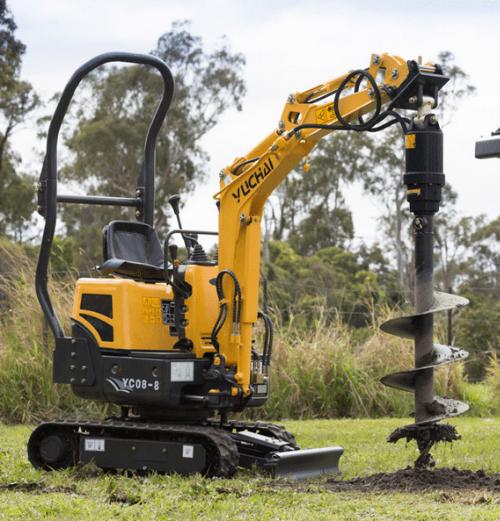
Choosing an auger for your mini excavator sounds simple at first. Pick the size you need, attach it, and start drilling. But that’s not really how it works.
A lot of operators learn the hard way that the wrong match between the machine and attachment can turn a productive job into a slow, frustrating one.
Your excavator’s hydraulic flow matters. The auger diameter matters. The soil conditions matter too. All these pieces have to work together.
Before buying a mini excavator auger attachment, you need to understand how hydraulic flow (GPM), torque, and auger size affect performance. Because the biggest auger isn’t always the best choice. Sometimes it’s actually the wrong choice.
Why Hydraulic Flow (GPM) Matters for Auger Performance
Hydraulic flow is basically the amount of hydraulic oil your mini excavator sends to the attachment. It’s measured in gallons per minute (GPM).
The auger drive uses that hydraulic power to create torque, which is what allows the bit to cut through the ground.
Too little flow?
The auger may spin slowly, struggle, or stall.
Too much flow?
You can create excessive pressure and heat, which can damage components over time.
This is why matching the attachment to your machine specs is so important. The goal isn’t maximum power. It’s the right balance.
Understanding Auger Torque vs Auger Diameter
This is where many buyers get confused.
People usually think, “Bigger auger means better.” Not always.
A larger auger requires more torque to turn. More diameter means more soil resistance, especially in hard ground.
For example:
- Small holes for posts need less torque
- Larger holes for trees or foundations need much more power
Your mini excavator might handle a smaller auger perfectly but struggle with a much larger one.
The attachment needs to match what your machine can realistically handle.
How to Choose the Right Auger Size for Your Mini Excavator
Start with the job, not the attachment.
Ask yourself:
- What diameter holes do I actually need?
- What type of soil am I drilling?
- How often will I use the auger?
For lighter jobs:
- Fence posts
- Small landscaping projects
- Basic planting
A smaller auger usually works well.
For heavier work:
- Tree planting
- Large posts
- Construction applications
You’ll likely need a larger diameter auger with higher torque requirements.
The best setup is the one that finishes the job efficiently without overworking the machine.
Matching GPM to the Right Excavator Auger Drive Attachment
The hydraulic motor inside your auger drive is designed for a specific flow range.
When searching for an Excavator Auger Drive Attachment, check the recommended hydraulic flow range from the manufacturer.
A few things to consider:
Low-flow mini excavators
These machines may need compact auger drives designed for lower GPM. Running a large attachment can result in weak performance.
High-flow systems
These can support more aggressive drilling, larger bits, and tougher ground conditions.
Unknown hydraulic specs
Always check your machine manual or manufacturer specifications before buying.
Guessing is where problems start.
Soil Conditions Change Everything
A 12-inch auger in soft soil is a completely different job compared to a 12-inch auger in rocky ground.
Ground conditions affect:
- Drilling speed
- Required torque
- Wear on the bit
- Hydraulic demand
Clay, compacted soil, roots, and rocks all increase resistance.
That means the same attachment can perform differently depending on where you’re working.
Experienced operators know this already. The ground decides what the machine can do.
Common Mistakes When Choosing an Auger Attachment
A few mistakes show up again and again.
Buying the biggest auger first
Bigger isn’t always better. If the machine can’t power it properly, you just end up fighting the attachment.
Ignoring hydraulic specifications
Two mini excavators can look similar but have different hydraulic output.
Always check GPM and pressure.
Using the wrong bit for the job
Different auger bits are designed for different materials. Dirt, rock, and mixed ground don’t all behave the same.
Not considering future work
If you do different types of jobs, think about versatility. Sometimes a slightly more flexible setup makes more sense than buying the biggest option.
Why Contractors Care About the Right Auger Match
For contractors, time is money.
A properly matched auger attachment means:
- Faster drilling
- Less machine strain
- Better fuel efficiency
- Fewer maintenance issues
A mismatched setup does the opposite.
The machine works harder. The operator gets frustrated. The job takes longer.
That’s why companies like Spartan Equipment focus on helping customers choose attachments based on actual machine requirements, not just selling the biggest option available.
Maintenance Tips to Keep Your Auger Setup Working
Even the right attachment needs care.
Regular checks should include:
- Inspecting hydraulic hoses
- Checking mounting connections
- Monitoring wear on teeth and cutting edges
- Keeping the drive clean
- Checking for unusual vibration
Small issues become expensive issues if ignored.
Especially with drilling equipment. It takes a lot of force.
FAQ – Mini Excavator Auger Attachment Questions
What GPM do I need for a mini excavator auger attachment?
It depends on your specific auger drive and machine. Always match the attachment’s required hydraulic flow with your excavator’s output.
Can a mini excavator run any size auger?
No. Larger augers require more torque and hydraulic power. Choose a size that matches your machine capabilities.
Is a bigger auger always better?
Not necessarily. The correct size depends on the job, soil conditions, and excavator power.
What happens if hydraulic flow is too low?
The auger may turn slowly, lose power, or struggle in tougher ground.
How do I choose an Excavator Auger Drive Attachment?
Match it based on your excavator’s hydraulic flow, pressure, required torque, and the type of drilling work you plan to do.
Final Thoughts
Matching an auger to your mini excavator isn’t just about picking a diameter and hoping it works.
Hydraulic flow, torque, soil conditions, and job requirements all play a role.
The right mini excavator auger attachment will make drilling smoother, faster, and easier on your equipment. The wrong one can create unnecessary stress and wasted time.
Before buying, check your excavator’s GPM, understand the work you’re doing, and choose an attachment that actually fits your machine.
Because in the field, the best attachment isn’t the biggest one.
It’s the one that gets the job done without fighting you.