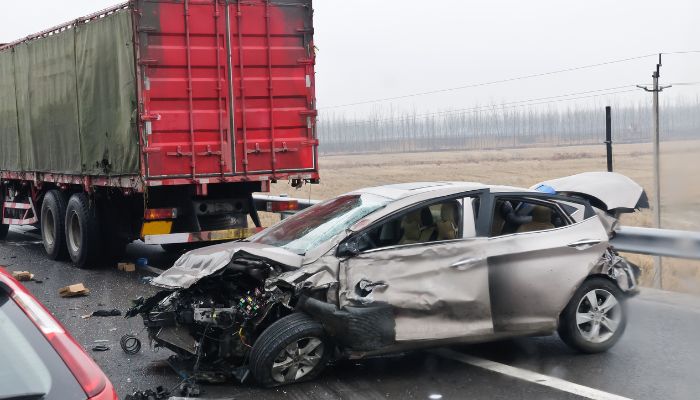
When someone in Atlanta gets hurt in a crash, one of the first questions they ask is: “Is my truck accident claim handled the same way as a car accident claim?” The short answer is no — and the differences matter a lot when it comes to who pays, how much you can recover, and how long the process takes. Understanding those differences before you speak with a lawyer can save you from costly mistakes.
This layered complexity is exactly why working with a Midtown Personal Injury Lawyer early in the process makes a significant difference in the outcome of your case.
🚨 Hurt in a Truck or Car Accident in Atlanta?
Don’t wait — trucking companies start building their defense the same day. Get a free case review from an experienced Atlanta injury attorney before it’s too late.
👉 Call Now: (404) 487-8529 — Available 24/7
or Submit Your Case Online →
Why Truck and Car Accident Claims Are Not the Same
Most people assume all vehicle accident claims follow the same basic path. However, truck accidents involve a completely different legal and regulatory framework than car accidents. A car accident typically involves two private drivers and their personal insurance policies. A truck accident, on the other hand, can involve the truck driver, the trucking company, the cargo loader, the vehicle manufacturer, and multiple insurance policies — sometimes all at once.
The Role of Federal Motor Carrier Safety Regulations
One of the most significant legal distinctions in truck accident claims is the role of federal law. The federal motor carrier safety regulations — enforced by the Federal Motor Carrier Safety Administration (FMCSA) — set strict standards for commercial truck drivers and the companies that employ them. These rules cover hours of service, weight limits, driver qualifications, vehicle inspections, and maintenance records.
When a truck accident occurs in Atlanta, investigators examine whether any of these regulations were violated. For example, if a driver was on the road for more hours than legally allowed, that violation becomes critical evidence. Motor carrier safety compliance records are often the foundation of a strong truck accident claim — and they are not part of a standard car accident case at all.
Multiple Liable Parties vs. One or Two Drivers
In a typical car accident in Atlanta, liability usually falls on one driver or is split between two. In a truck accident, liability can extend to several parties simultaneously. The trucking company may be responsible if it hired an unqualified driver or pressured drivers to skip rest breaks. The cargo company may share fault if improperly loaded freight caused the truck to overturn.
This is where an experienced Sandy Springs Truck Accident Lawyer becomes essential — because identifying every liable party is the difference between partial and full compensation.
Insurance Coverage: A Major Difference
Commercial trucks carry much higher insurance minimums than private passenger vehicles. Under federal law, most interstate trucks must carry at least $750,000 in liability coverage, and many carry over $1 million. A standard car accident policy in Georgia typically starts at $25,000.
This higher coverage exists because truck accidents cause significantly more damage. However, it also means that trucking company insurers deploy experienced legal teams quickly after an accident. They begin gathering evidence, talking to witnesses, and building their defense almost immediately. Accident victims often do not realize this until weeks later — by which time valuable evidence may already be lost.
Evidence Gathering Is More Time-Sensitive in Truck Cases
In a car accident, key evidence includes photos, a police report, and witness statements. In a truck accident, the evidence list is far broader and far more time-sensitive. Truck black boxes (also known as Electronic Logging Devices or ELDs) record speed, braking, and driving hours — but trucking companies are not always required to preserve this data indefinitely.
Additionally, the truck’s maintenance logs, the driver’s employment history, drug test results, and the company’s safety inspection records all become part of the evidentiary picture. In contrast, a Sandy Springs pedestrian accident attorney handling a standard vehicle collision would rarely need to subpoena a company’s internal safety database.
Georgia’s Comparative Fault Rules Apply to Both — But Differently
Georgia follows a modified comparative fault rule, which means you can recover damages as long as you are less than 50% at fault. This applies to both car and truck accident claims. However, the way fault is calculated often differs in practice.
In car accidents, fault determination is relatively straightforward. In truck accidents, multiple parties may each carry a percentage of fault, which affects how much each one pays and from which insurance policy. A skilled Midtown Personal Injury Lawyer knows how to structure fault arguments to maximize your recovery across all responsible parties, not just the truck driver.
Damages You Can Recover
Both car and truck accident victims in Atlanta can pursue similar categories of damages:
- Medical expenses — current and future treatment costs
- Lost wages — income missed due to injury and recovery
- Pain and suffering — physical and emotional impact
- Property damage — vehicle repair or replacement
- Loss of enjoyment of life — for serious or permanent injuries
- Punitive damages — in cases involving gross negligence or willful misconduct
However, truck accident claims tend to result in larger settlements or verdicts simply because the injuries are often more severe, more parties are liable, and insurance coverage is higher.
Work-Related Truck Accidents and Workers’ Compensation
If you were injured in a Work Related Car Accident while driving for your employer — or if you were struck by a truck driver operating in the course of their job — the legal picture becomes even more layered. In Georgia, you may have the right to file both a personal injury claim and a workers’ compensation claim depending on the circumstances.
Understanding how these two systems interact is critical. For instance, if a delivery driver injures you while on the clock, their employer’s workers’ compensation system may cover some costs, but your civil claim against the company remains separate. An Alpharetta workers’ compensation lawyer can help sort out which claims apply to your situation.
Why Attorneys Sometimes Withdraw From These Cases
People occasionally ask: Why do attorneys withdraw from cases? In complex truck accident litigation, withdrawal can happen when a client fails to cooperate with discovery, when there is a fundamental conflict of interest, or when new facts emerge that compromise the case’s legal viability. What does it mean when a lawyer withdraws? It means the attorney-client relationship has ended, and you need new representation — ideally before any deadlines pass.
This is one reason why choosing the right lawyer from the beginning matters. Truck accident cases are demanding, and both the attorney and client must be fully committed to the process.
Workers’ Compensation in Truck Accident Cases
If the accident occurred while you were working — for example, a warehouse employee injured by an on-site truck — you may be dealing with both a workers’ comp claim and a third-party liability claim at the same time. A workers compensation lawyer Savannah clients often consult for multi-claim situations can clarify how compensation from one claim may offset the other and how to pursue maximum recovery across both.
Similarly, workers compensation lawyers columbus ga regularly handle cases where employees were hurt in commercial vehicle incidents on job sites, making this a recognized overlap in Georgia personal injury law.
Slip and Fall Compared to Truck Accident Claims
It is worth noting that not all serious injury claims in Georgia involve vehicles. A case handled by an Alpharetta Slip And Fall Accident Lawyer follows a different legal path entirely — one focused on premises liability, property owner negligence, and different evidence standards. However, the principle of establishing liability clearly, gathering evidence quickly, and understanding insurance coverage applies across all serious injury cases in Georgia.
⏱️ Evidence Disappears Fast — Act Now
Truck black boxes, driver logs, and safety records can be deleted or overwritten within days. The sooner you call, the better your chances of preserving what you need to win.
👉 Call (404) 487-8529 Right Now
Book your Free consultation. No fees unless we win. Takes less than 5 minutes.
How Atlanta’s Urban Environment Affects Truck Claims
Atlanta’s dense road network, including I-285, I-75, I-85, and the connector, creates unique conditions for commercial truck accidents. Tight urban interchanges, aggressive merging traffic, and high pedestrian density increase accident risk significantly. The 404 Personal Injury Atlanta legal environment reflects this reality — local courts see a steady volume of serious truck accident cases, and judges and juries in the metro area are generally familiar with how these cases work.
A Sandy Springs Motorcycle Accident Lawyer working on cases near high-volume Atlanta corridors understands that proximity to commercial freight routes raises specific legal considerations, whether the vehicle involved is a motorcycle, car, or truck.
Handling Claims Across Multiple Georgia Locations
Truck accidents in Georgia often involve vehicles traveling through several cities before or after the accident occurs. Evidence, witnesses, and liable parties may be spread across the metro area. A Sandy Springs workers compensation attorney or a lawyer familiar with multiple Georgia jurisdictions can help coordinate claims that cross city lines — ensuring nothing gets missed because of geography.
This is especially relevant when a truck traveling from Savannah through Macon and into Atlanta is involved in an accident with local commuters. Jurisdiction and venue questions in these cases require experienced legal handling.
What to Do Immediately After a Truck Accident in Atlanta
If you are involved in a truck accident in Atlanta, the steps you take in the first 24–72 hours are critical:
First, seek medical attention immediately — even if you feel fine. Delayed symptom onset is common in serious collisions. Next, call the police and ensure a report is filed. Photograph everything at the scene, including the truck’s license plate, DOT number, cargo, and any visible damage.
Do not speak with the trucking company’s insurance adjuster without legal advice. Their job is to minimize the payout, not protect your interests. Contact a Midtown Personal Injury Lawyer as quickly as possible to preserve electronic data, maintain records, and protect your legal rights before the trucking company’s team gets too far ahead.
Our Service Locations – Where We Serve
Our legal team proudly serves injury victims across Georgia, including Atlanta, Sandy Springs, Alpharetta, Columbus, Macon, and Savannah. No matter where your accident happened within these communities, our attorneys are available to review your case, explain your options, and fight for the full compensation you deserve. We make it easy to get started — just call or visit us online.
Conclusion
Truck accident claims and car accident claims are both serious — but they are not the same. From federal regulations and multi-party liability to larger insurance pools and more complex evidence requirements, truck cases demand a deeper level of legal knowledge and faster action. Whether your accident happened on I-285, in midtown Atlanta, or near a suburban freight corridor, knowing your legal rights is the first step toward fair compensation.
Frequently Asked Questions
Q1: How is a truck accident claim different from a car accident claim in Atlanta? Truck claims involve federal regulations, multiple liable parties, and higher insurance limits. Car accident claims are simpler, usually involving just two drivers and personal insurance policies.
Q2: How long do I have to file a truck accident claim in Georgia? Georgia’s statute of limitations for personal injury is generally two years from the accident date. However, evidence in truck cases disappears quickly, so acting within days — not months — is strongly advised.
Q3: Can I sue the trucking company, not just the driver? Yes. In many cases, the trucking company is liable for hiring practices, vehicle maintenance failures, or pressuring drivers to violate hours-of-service rules. Both parties can be named in your claim.
Q4: What if I was partially at fault in a truck accident? Georgia’s modified comparative fault rule allows recovery as long as you are less than 50% at fault. Your compensation is reduced by your percentage of fault, but you can still recover damages.
Q5: Do I need a lawyer for a truck accident, or can I handle it myself? Truck accident cases are legally complex. Trucking companies deploy legal teams immediately. Handling it alone risks losing critical evidence and accepting a far lower settlement than you deserve.