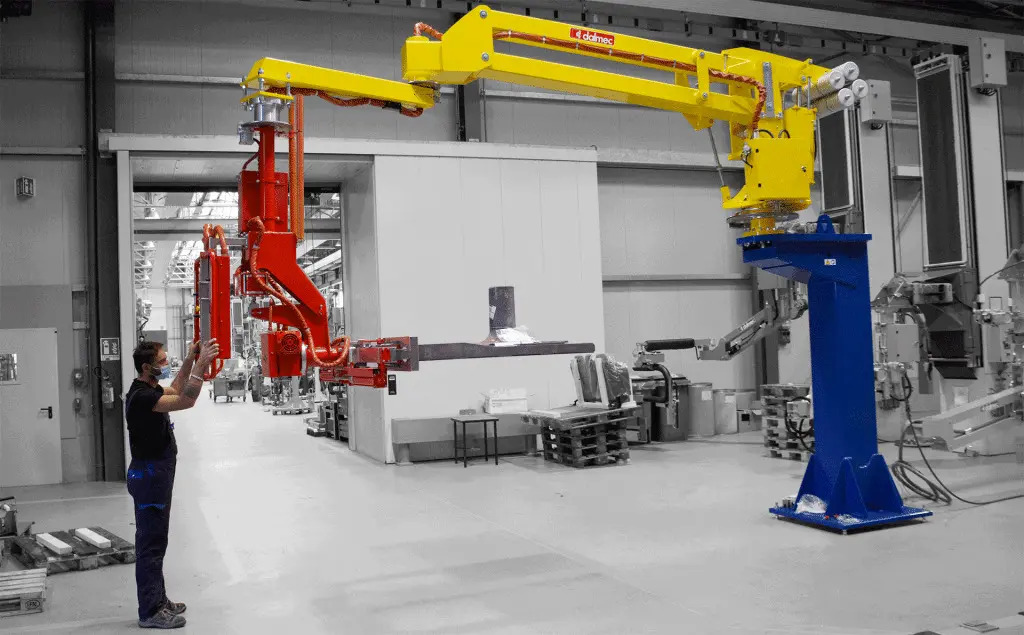
In the demanding landscape of modern manufacturing and fabrication, the margin for error is razor-thin. Productivity targets, stringent safety regulations, and the relentless pursuit of quality all hinge on one critical factor: how materials are handled. For industries that work with heavy, unwieldy, or delicate metal sheets, the solution lies not in increased manpower, but in smarter, more precise technology. This is where the metal sheet industrial manipulator comes into its own, revolutionising workflows from automotive assembly lines to bespoke fabrication shops.
The Overlooked Cost of Manual Metal Handling
For decades, the manual handling of metal sheets has been accepted as an unavoidable part of the job. However, this acceptance carries significant hidden costs. Moving large sheets of steel, aluminium, or other alloys places immense strain on workers, leading to fatigue, reduced productivity, and a high risk of musculoskeletal injuries . These injuries not only impact employee wellbeing but also result in costly downtime, compensation claims, and a drain on skilled labour.
Furthermore, manual handling is a primary source of material damage. A slight slip or misalignment can cause scratches, dents, or warping in expensive metal stock, leading to rework and waste . In industries where precision is paramount, even minor imperfections can compromise the integrity and quality of the final product. The physical limitations of human strength also create a bottleneck, slowing down production lines and limiting throughput.
What is a Metal Sheet Industrial Manipulator?
A metal sheet industrial manipulator is an advanced pneumatic lift-assist device engineered to address these challenges head-on. Unlike forklifts or cranes, which lack the required dexterity, or simple hoists, which offer limited control, an industrial manipulator provides a unique combination of power and precision.
These systems use mechanical arms, often equipped with specialised gripping tools like vacuum suction cups or clamps, to provide a user with complete control over heavy and awkward loads . By neutralising the weight of the material, the manipulator allows an operator to lift, rotate, tilt, and position large metal sheets with minimal physical effort. The result is a seamless extension of the operator’s capabilities, enabling the smooth, accurate, and safe movement of materials.
Core Benefits of Precision Handling
Integrating a metal sheet industrial manipulator into your workflow unlocks a cascade of operational and financial benefits. Here’s how they deliver a competitive advantage:
-
Unparalleled Worker Safety: By eliminating the need for manual lifting, these devices significantly reduce the risk of back injuries, muscle strains, and repetitive stress injuries . This creates a safer, more sustainable work environment and helps businesses comply with stringent workplace health and safety regulations.
-
Significant Productivity Gains: A task that once required two or three workers can often be completed by a single operator in a fraction of the time . This frees up skilled personnel for higher-value tasks and helps meet production targets with greater ease.
-
Enhanced Product Quality: The precise, controlled movement of a manipulator ensures that metal sheets are placed with accuracy, every time. This reduces handling errors, minimises damage to materials, and ensures consistent quality in components and assemblies .
-
Reduced Material Waste and Costs: By preventing damage from drops, mishandling, or misalignment, manipulators help businesses save significantly on costs associated with repairs, rework, and wasted materials .
Seamless Integration into Modern Workflows
One of the key strengths of modern manipulators is their adaptability. They are designed to integrate seamlessly with existing production equipment, acting as a perfect interface between the operator and high-precision machinery .
For instance, in a fabrication facility, a manipulator can be used to effortlessly grip a metal sheet, rotate it, and position it with pinpoint accuracy into a laser cutting machine or a press brake . This ensures accurate loading and unloading, which is critical for maintaining quality and reducing cycle times. The devices are custom-engineered to fit specific workflows, sheet sizes, load weights, and space constraints, ensuring they enhance the process without causing disruption .
A Leader in Industrial Manipulation
A global leader in this field, with decades of experience and over 650 systems installed in Australia and New Zealand alone, is Dalmec . Their industrial manipulators are renowned for their robust construction, reliability, and customisation, often built to handle the most demanding environments.
For instance, their Maxipartner model is a powerful pneumatic manipulator that can handle loads up to 900 kg . Its articulated arm provides smooth, balanced motion, allowing operators to lift, tilt, and rotate heavy panels into tight spaces with zero strain. When you choose a Dalmec, you are not just buying a machine; you are investing in a safer, more efficient, and more productive future for your business.
By prioritising ergonomics and efficiency, Dalmec manipulators are a statement of commitment to workforce wellbeing and operational excellence. They protect your most valuable assets—your employees—while ensuring your production processes remain at the forefront of precision engineering. It’s a smarter way to work that delivers results on every level.