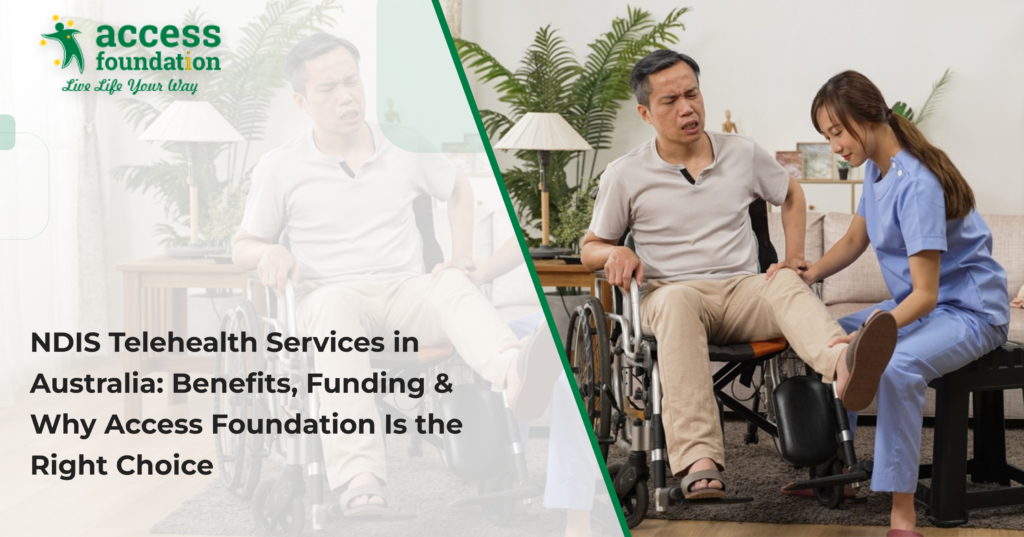
Access to quality healthcare is essential for every person, regardless of where they live or the challenges they face. For many Australians living with disability, attending regular appointments can be difficult due to mobility limitations, transport issues, health conditions, or distance from healthcare providers. NDIS Telehealth is helping remove these barriers by making professional healthcare and disability support more accessible than ever before.
With secure online consultations, participants can connect with experienced healthcare professionals from the comfort of their homes. Whether it’s therapy, health consultations, or ongoing support planning, telehealth offers a convenient and flexible way to receive the services included in an NDIS plan.
At Access Foundation, we believe every participant deserves reliable, participant-centred care. Our telehealth services help individuals receive quality support while promoting independence, convenience, and improved wellbeing across Australia.
What Is NDIS Telehealth?
NDIS Telehealth allows eligible participants to receive disability-related services through secure video or phone appointments instead of attending every consultation in person.
These virtual appointments provide access to qualified professionals while maintaining the same commitment to personalised care and participant outcomes.
Common telehealth services include:
- Occupational Therapy
- Speech Pathology
- Physiotherapy
- Psychology
- Behaviour Support
- Support Coordination
- Health consultations
- Goal planning
- Progress reviews
Telehealth enables participants to stay connected with healthcare professionals regardless of their location.
Why Healthcare Accessibility Matters
Accessible healthcare allows participants to receive timely support without unnecessary delays or barriers.
Many individuals living with disability experience challenges such as:
- Limited transportation
- Mobility restrictions
- Long travel distances
- Limited access to specialists
- Busy family schedules
- Health conditions that make travel difficult
Without accessible healthcare options, participants may delay appointments, miss therapy sessions, or experience interruptions in their care. Telehealth helps overcome these challenges by bringing professional support directly to participants.
How NDIS Telehealth Improves Healthcare Accessibility
1. Eliminates Travel Barriers
Travelling to appointments can require significant time, planning, and physical effort.
Telehealth removes the need for frequent travel, allowing participants to attend appointments from home while saving valuable time and reducing fatigue.
This is especially beneficial for individuals with mobility challenges or chronic health conditions.
- Connects Participants with More Specialists
Some participants live in areas where specialist healthcare services are limited.
Telehealth expands access by allowing participants to consult experienced professionals across Australia without needing to travel long distances.
This means participants have greater choice when selecting providers who best meet their individual needs.
- Supports Rural and Remote Communities
Access to disability healthcare can be challenging in regional and remote Australia.
Telehealth helps bridge the gap by ensuring participants living outside metropolitan areas receive consistent access to professional support.
Participants no longer need to travel for hours simply to attend routine appointments.
- Offers Greater Appointment Flexibility
Busy schedules can make attending traditional appointments difficult.
Telehealth offers flexible appointment times that fit around:
- Work commitments
- Education
- Family responsibilities
- Daily routines
- Carer availability
This flexibility helps participants receive ongoing support without disrupting their everyday lives.
- Encourages Regular Healthcare
When appointments are easier to attend, participants are more likely to continue receiving ongoing therapy and healthcare.
Regular consultations help:
- Monitor progress
- Adjust support plans
- Achieve NDIS goals
- Improve wellbeing
- Prevent unnecessary treatment delays
Consistent care often leads to better long-term outcomes.
- Creates a Comfortable Environment
Many participants feel more confident speaking with healthcare professionals while in familiar surroundings.
Being at home can reduce anxiety and improve communication, creating more productive appointments and better engagement with therapy.
Services Available Through NDIS Telehealth
Many healthcare and disability services can be delivered effectively online.
These include:
- Occupational Therapy
- Speech Therapy
- Psychology
- Behaviour Support
- Physiotherapy consultations
- Functional assessments
- Support Coordination
- Care planning
- Family education
- Progress reviews
Telehealth can complement face-to-face services or become a regular part of ongoing support, depending on individual needs.
Telehealth vs Traditional Healthcare
| Feature | Telehealth | Face-to-Face Care |
| Travel Required | No | Yes |
| Flexible Scheduling | Excellent | Moderate |
| Home-Based Appointments | Yes | No |
| Access to Specialists | High | Depends on location |
| Travel Costs | Low | Higher |
| Professional Care | Yes | Yes |
Both approaches provide valuable support, and many participants benefit from a combination of virtual and in-person services.
Tips for a Successful Telehealth Appointment
To make the most of your appointment:
- Test your internet connection.
- Use a smartphone, tablet, or computer with a camera.
- Find a quiet and private room.
- Keep your NDIS documents nearby.
- Prepare questions before the session.
- Join the appointment a few minutes early.
These simple preparations help create a smooth and effective consultation.
Why Choose Access Foundation?
At Access Foundation, we are committed to making disability support more accessible for participants across Australia.
Our experienced professionals deliver personalised telehealth services that focus on individual goals, independence, and long-term wellbeing.
When you choose Access Foundation, you receive:
- Experienced healthcare professionals
- Flexible appointment options
- Participant-centred care
- Reliable communication
- Personalised support plans
- Consistent ongoing assistance
We believe quality healthcare should be accessible regardless of location or personal circumstances.
Frequently Asked Questions
Is NDIS Telehealth suitable for everyone?
Telehealth is appropriate for many participants, although some assessments and therapies may still require face-to-face appointments depending on clinical needs.
Can I receive therapy through telehealth?
Yes. Many allied health professionals provide occupational therapy, speech pathology, psychology, physiotherapy, and behaviour support through secure online consultations.
Is telehealth secure?
Yes. Professional NDIS providers use secure platforms that protect participant privacy and comply with Australian privacy requirements.
Do I need special equipment?
No. Most telehealth appointments only require a smartphone, tablet, or computer with a stable internet connection.
Conclusion
Healthcare should be accessible, convenient, and tailored to the unique needs of every participant. NDIS Telehealth is transforming disability support by removing common barriers to care, improving access to qualified professionals, and making it easier for participants to receive consistent healthcare wherever they are in Australia.
Whether you live in a busy city or a regional community, telehealth provides a practical way to stay connected with the support you need while reducing travel and increasing flexibility.
At Access Foundation, we are proud to help participants access high-quality telehealth services that promote independence, improve wellbeing, and support long-term NDIS goals. If you’re looking for a more flexible way to receive disability support, our team is here to guide you every step of the way.