Scientific research continues to uncover new insights into how biological molecules influence cellular processes, protein interactions, and biochemical functions. Among the most commonly studied compounds are amino acids and peptides. Although these terms are often used together, they are not the same.
Understanding the difference between peptides and amino acids is essential for researchers, laboratories, and biotechnology professionals who rely on high-quality research materials for accurate experimental outcomes.
In this guide, we’ll explain what amino acids and peptides are, how they differ, their laboratory applications, and why choosing premium research-grade products is critical for scientific success.
What Are Amino Acids?
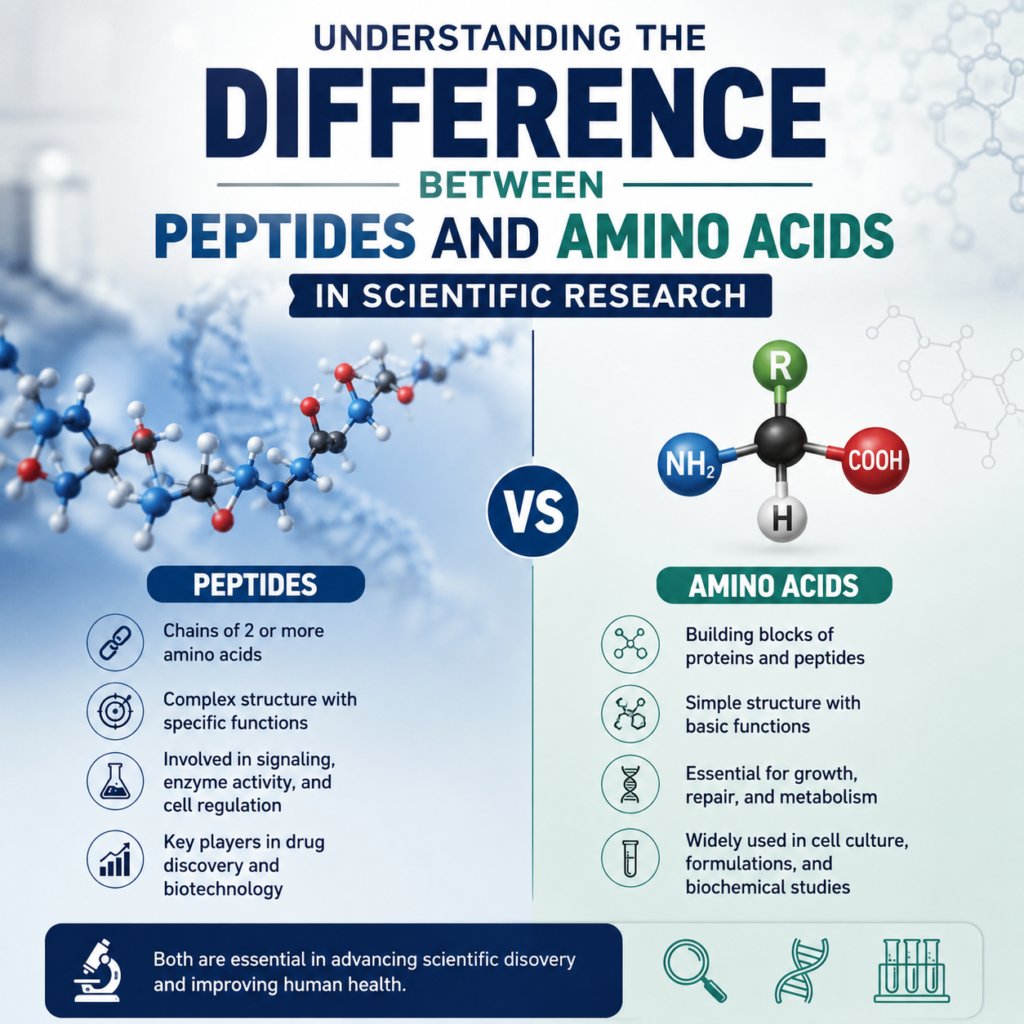
Amino acids are the fundamental building blocks of proteins. Every protein found in living organisms begins as a sequence of amino acids linked together through peptide bonds.
Scientists recognize twenty standard amino acids that participate in protein synthesis. Each amino acid contains a unique side chain that influences its chemical properties and biological functions.
In laboratory research, amino acids are widely studied for:
- Protein synthesis
- Cell metabolism
- Biochemical reactions
- Molecular biology
- Enzyme activity
- Structural biology
What Are Peptides?
Peptides are short chains of amino acids connected by peptide bonds. While amino acids represent individual molecules, peptides consist of multiple amino acids joined together in a specific sequence.
Depending on their length, peptides may contain anywhere from two to several dozen amino acids.
Research peptides are commonly used in laboratory studies involving:
- Cell signaling
- Protein interactions
- Biochemistry
- Molecular biology
- Drug discovery
- Biotechnology research
Research peptides are intended strictly for laboratory research purposes and are not approved for human consumption.
Peptides vs Amino Acids: What’s the Difference?
Although closely related, peptides and amino acids differ in several important ways.
| Feature | Amino Acids | Peptides |
|---|---|---|
| Structure | Single molecules | Chains of amino acids |
| Composition | Individual building blocks | Multiple amino acids linked together |
| Size | Smaller molecules | Larger molecular structures |
| Laboratory Use | Protein synthesis research | Cell signaling, molecular research, biotechnology |
| Function | Building proteins | Supporting complex biological research |
Understanding these differences helps researchers choose the appropriate materials for their laboratory applications.
How Peptides Are Formed
Peptides are created when two or more amino acids join through chemical bonds known as peptide bonds.
As additional amino acids connect together, longer peptide chains are formed. Eventually, these chains can develop into complete proteins depending on their length and structure.
This natural relationship explains why amino acids and peptides are frequently studied together in scientific research.
Applications in Scientific Research
Both amino acids and peptides play valuable roles across numerous research fields.
Common laboratory applications include:
- Molecular biology
- Protein chemistry
- Pharmaceutical development
- Biotechnology
- Cell biology
- Analytical chemistry
- Drug discovery research
Their versatility makes them essential tools for researchers worldwide.
Why Quality Matters in Research
High-quality laboratory materials contribute to reliable and reproducible scientific results.
Researchers should always prioritize:
- High purity
- Third-party testing
- Certificate of Analysis (COA)
- Product consistency
- Transparent documentation
Using premium research-grade peptides helps laboratories reduce variability while improving confidence in experimental outcomes.
Choosing the Right Research Peptide Supplier
Selecting a trusted supplier is just as important as choosing the correct research material.
Before purchasing, researchers should evaluate:
- Product purity
- Third-party laboratory testing
- Certificate of Analysis availability
- Storage recommendations
- Batch consistency
- Supplier reputation
- Customer support
Reliable suppliers help ensure researchers receive products that meet modern laboratory standards.
Why Choose Amino Pure Canada?
Researchers looking for Research Peptides Canada need a supplier committed to quality, transparency, and reliability.
Amino Pure Canada provides premium research-grade products designed to support scientific laboratories across Canada.
Premium Research-Grade Products
Products are carefully selected to meet laboratory quality expectations.
Third-Party Tested
Independent testing helps verify purity and consistency.
Certificate of Analysis Available
Many products include supporting analytical documentation.
Wide Selection of Research Peptides
Researchers can choose from a broad range of laboratory compounds.
Fast Shipping Across Canada
Reliable nationwide delivery supports uninterrupted research projects.
Secure Ordering Process
A safe purchasing experience designed for research professionals.
Professional Customer Support
Dedicated assistance helps researchers make informed purchasing decisions.
Best Practices for Researchers
To ensure successful laboratory outcomes:
- Purchase only research-grade products.
- Verify purity before ordering.
- Request Certificates of Analysis.
- Confirm third-party testing.
- Store peptides properly.
- Work with trusted Canadian suppliers.
These practices improve laboratory consistency while supporting high-quality scientific research.
The Future of Peptide and Amino Acid Research
Advances in biotechnology, pharmaceutical science, and molecular biology continue expanding the role of peptides and amino acids in laboratory research.
As analytical technologies improve, researchers will increasingly depend on premium-quality research materials supported by transparent quality standards and reliable suppliers.
Conclusion
Although amino acids and peptides are closely connected, they serve different roles in scientific research. Amino acids are the basic building blocks of proteins, while peptides are chains of amino acids that support a wide range of laboratory applications.
Understanding these differences enables researchers to select the right materials for their studies and improve research accuracy.
By partnering with trusted suppliers like Amino Pure Canada, laboratories can confidently source high-quality research-grade peptides backed by quality documentation, transparency, and professional support.