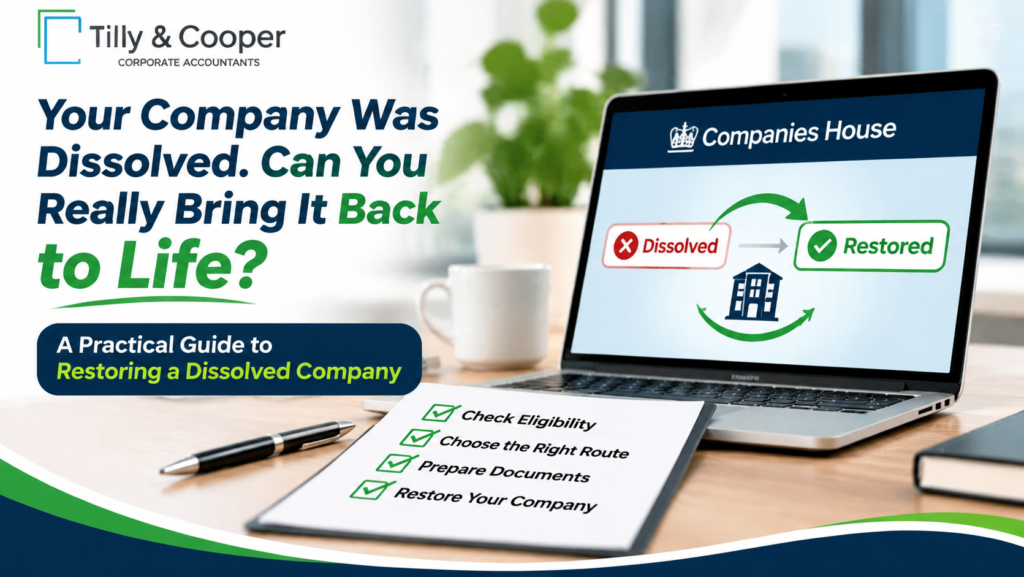
A company being removed from the Companies House register does not always mean that its business interests have reached a permanent end. In some circumstances, former directors, shareholders and other eligible parties may have legal grounds to bring the company back onto the register.
There are several reasons why this situation can arise. A business may have been removed following missed statutory filings, administrative problems or a voluntary decision by its directors. Later, someone may discover that the company still has valuable assets, outstanding legal matters or business opportunities that require its legal status to be reinstated.
This is where restoring a dissolved company becomes relevant. Understanding the available legal procedures, eligibility conditions and practical requirements can help applicants make informed decisions before beginning the process.
Why Would Someone Want to Restore a Dissolved Company?

Restoration is not always about restarting a business. Sometimes, the reason is connected to financial interests or legal responsibilities that remain unresolved.
Here are some common situations where restoration may be considered.
Recovering business assets:
A dissolved company may have owned money, property, equipment or investments when it was removed from the register. These assets may have passed to the Crown under the Bona Vacantia rules. Restoration can provide a route towards addressing ownership and recovery.
Accessing frozen company funds:
Banks generally freeze or close accounts when a company is dissolved. If money remains in the account, restoration may be necessary before the former company can request its release.
Resolving contractual matters:
A business may have outstanding agreements, commercial disputes or contractual rights that need to be addressed through the company’s legal identity.
Continuing business operations:
Former directors may decide that restoring the original company is preferable to establishing an entirely new legal entity, depending on the circumstances.
Dealing with legal claims:
Creditors, former business partners and other eligible parties may have reasons to seek restoration where a dissolved company’s legal existence is relevant to a claim.
The appropriate reason for restoration should be established before selecting an application route.
Understanding the Two Routes to Company Restoration
The UK company restoration framework provides two main procedures. They serve different circumstances, and selecting the wrong one can create unnecessary delays.
1. Administrative Restoration
Administrative restoration allows certain former directors or members to apply directly to Companies House without beginning court proceedings. This option is generally available where the Registrar of Companies struck off the company, rather than the directors voluntarily applying for its closure. Eligibility normally requires the applicant to have been a director or member when the company was struck off, and the company must meet the relevant statutory conditions. For the ordinary administrative route, the company must generally have been carrying on business or in operation when it was struck off. Applications are made using form RT01. Applicants must also address outstanding statutory documents, applicable filing fees, penalties and any required Bona Vacantia consent.
2. Restoration Through a Court Order
Court restoration is generally considered when administrative restoration is unavailable. For example, a company voluntarily dissolved following an application by its directors will normally require a court order if restoration is subsequently sought. The court route can also be relevant to creditors, former liquidators and other individuals with qualifying interests in the company. This procedure involves legal documentation and court requirements. Independent legal advice may therefore be appropriate, particularly where disputes, financial claims or complicated ownership matters are involved. The correct route depends on the company’s dissolution history, the applicant’s position and the purpose of restoration.
How to Restore a Dissolved Company in the UK?
Anyone looking to understand how to restore a dissolved company UK should begin by examining the company’s official record rather than immediately preparing an application.
A structured assessment can help identify potential problems before money is spent on professional services or court proceedings.
Step 1: Establish the reason for dissolution
Search for the company using its name or registration number on Companies House. Review its filing history, status and dissolution date. Determine whether the company was removed following compulsory strike-off or voluntary dissolution. This distinction is important because it affects the available restoration procedure.
Step 2: Examine the company’s previous activities
Review available business records, financial statements, contracts and correspondence. For administrative restoration, evidence of the company’s business activities or operational status may be relevant to establishing eligibility.
Step 3: Identify outstanding responsibilities
Check whether the company has missing annual accounts, confirmation statements, unpaid filing fees or other compliance matters. It is important to understand these requirements before submitting an application, as incomplete documentation can prevent the process from progressing.
Step 4: Investigate assets and financial interests
Determine whether the company had money in bank accounts, property, investments or other assets when it was dissolved. If assets passed to the Crown, the relevant Bona Vacantia authority may need to provide written consent before administrative restoration can proceed.
Step 5: Prepare the appropriate application
Once eligibility and outstanding requirements have been established, prepare the relevant application. Administrative restoration generally involves form RT01, while court restoration requires the appropriate court procedure and supporting evidence.
Step 6: Address post-restoration responsibilities
Restoration is not the end of the process. Once the company returns to the register, its directors may need to address historical obligations, update records and ensure future statutory filings are completed.
Financial Considerations Before Starting Restoration
The cost of restoring a company varies considerably. It depends on the application route, the number of outstanding filings and the complexity of the company’s financial position. Administrative restoration has a Companies House application fee. As of November 2026, the RT01 fee is £341. Other expenses may include outstanding filing fees, applicable late filing penalties, accountancy work and Bona Vacantia requirements.
Court restoration can involve additional expenses, including court fees and legal representation. Business owners should also consider whether the value of the company’s remaining assets or commercial interests justifies the overall cost of reinstatement. A financial assessment at the beginning can help prevent unexpected expenses later.
What Happens to Company Assets After Dissolution?
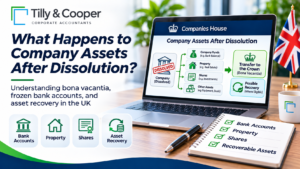
One issue that is sometimes overlooked is the treatment of assets following dissolution. Under the Bona Vacantia principle, property and rights belonging to a dissolved company may pass to the Crown. This can include bank balances, land, shares and certain other financial interests.
Restoration may provide a way for the company to regain its legal position and address the ownership of these assets. However, recovery is not necessarily automatic. The relevant authority, financial institution or asset holder may require additional documentation and verification.
For further information, businesses can explore Tilly & Cooper’s guide on recovering money from a dissolved company bank account.
Common Problems That Can Delay Restoration
Even when a company appears eligible, several practical issues can complicate the application.
Some common examples include:
- Incorrectly identifying the original reason for dissolution.
- Applying through an unsuitable restoration procedure.
- Missing historical accounts or confirmation statements.
- Failing to investigate company assets.
- Not obtaining the required Bona Vacantia consent.
- Leaving outstanding penalties or filing fees unresolved.
- Providing incomplete or inconsistent company information.
These issues demonstrate why preparation is an important part of the restoration process.
Getting Professional Support for Company Restoration
Restoration involves legal procedures as well as accounting and compliance responsibilities. Depending on the company’s circumstances, applicants may need assistance reviewing historical records, preparing outstanding accounts and dealing with Companies House requirements. Tilly & Cooper Corporate Accountants provides company restoration services to support directors and businesses through the reinstatement process.
Professional assistance can include reviewing the company’s status, identifying the appropriate administrative route, preparing outstanding statutory documents and helping directors understand their compliance responsibilities. Where court proceedings are necessary, coordination with an appropriately qualified legal professional may also be required. Businesses considering restoration can explore the detailed UK guide to restoring a dissolved company for further information about eligibility, documentation and the overall process.
Final Thoughts
Restoring a dissolved company can be an important step when unresolved assets, financial interests or legal responsibilities remain connected to a former business. However, the process should never begin with an assumption that every dissolved company can automatically return to the register. Eligibility, the original method of dissolution, application deadlines and outstanding obligations all need careful consideration.
By examining these matters early and obtaining appropriate professional guidance, former directors and other eligible applicants can approach company restoration with a clearer understanding of the requirements. The most important first step is to establish why the company was dissolved and determine which legal procedure applies to its circumstances.