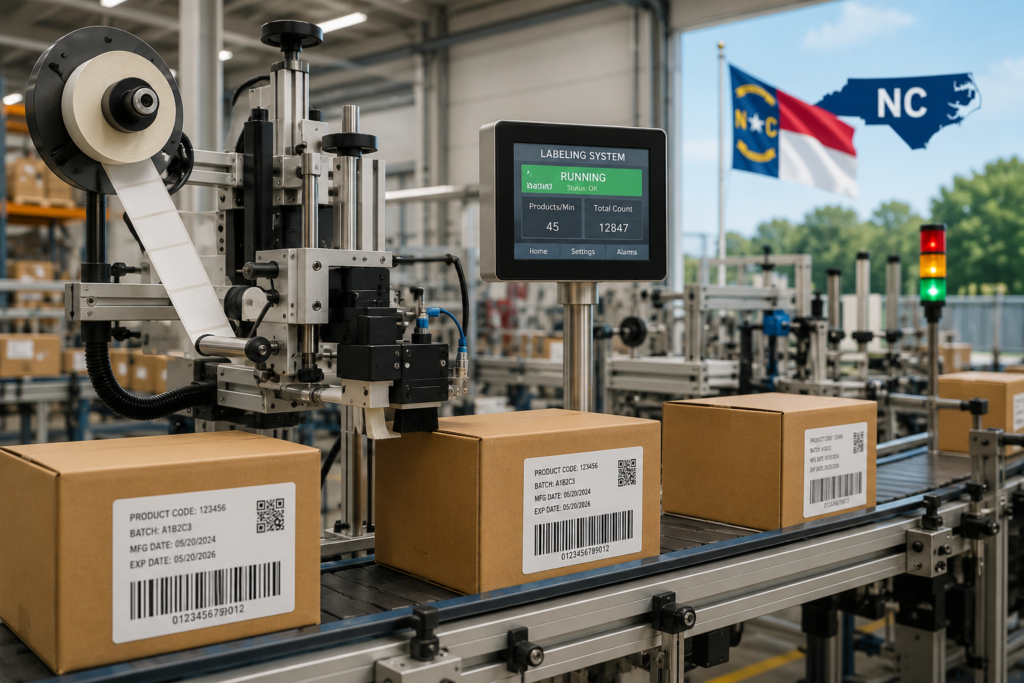
Manufacturers, warehouses, and distribution centers rely on accurate product identification to keep operations organized and compliant. From tracking inventory to meeting regulatory requirements, labeling plays a critical role in every stage of production and shipping. Choosing reliable industrial labeling systems helps businesses reduce errors, improve traceability, and streamline workflows without disrupting daily operations.
As production environments become more automated, labeling technology continues to evolve to meet increasing demands for speed, durability, and precision. Whether you produce food, pharmaceuticals, automotive components, or consumer goods, industrial labeling systems in North Carolina provide dependable solutions that support accurate identification throughout the supply chain. Investing in the right system today can improve productivity while preparing your business for future growth.
Why Industrial Labeling Matters in Modern Manufacturing
Industrial labels do much more than display product names. They provide essential information that supports production, logistics, and quality assurance.
Key functions include:
Product identification
Shipping label generation
Regulatory compliance
Inventory management
Accurate labeling reduces manual mistakes and ensures products move efficiently from manufacturing facilities to customers.
Features to Look for in Industrial Labeling Systems
Every production environment has different labeling requirements. Selecting the right equipment depends on your products, production speed, and operating conditions.
Choosing the Right Printing Method
The first selection decision is determining whether thermal transfer, direct thermal, or laser printing is appropriate for the application. Thermal transfer printing uses a ribbon to create durable images that are well suited to labels requiring resistance to heat, chemicals, moisture, and abrasion. Direct thermal printing does not use a ribbon and is commonly used for applications such as shipping and temporary identification where long-term durability is less critical. Laser printing can support high-quality, precise output and may be appropriate for certain specialized labeling environments. The right print method affects durability, consumable costs, and suitability for the operating environment.
High-Speed Printing
Fast printing capabilities help keep production lines moving without unnecessary delays.
Durable Label Materials
Industrial environments often expose labels to moisture, chemicals, heat, or abrasion. Polyester provides strong resistance to moisture, chemicals, and abrasion, while polypropylene offers durability and flexibility for demanding applications. Vinyl is useful where flexibility and weather resistance are important, and polyimide is designed for high-temperature environments and applications requiring exceptional heat resistance. Selecting the appropriate material helps maintain readability throughout the product lifecycle.
Variable Data Printing
Modern systems allow real-time printing of serial numbers, expiration dates, barcodes, and production codes.
System Integration
Many labeling systems integrate directly with warehouse management systems (WMS), enterprise resource planning (ERP) systems, and automated production equipment for seamless workflows.
Standards and Equipment Considerations
B2B labeling requirements may also involve standards such as UL 969 for marking and labeling systems, as well as barcode print quality grading to help ensure symbols can be scanned consistently. Thermal transfer applications may require selecting the appropriate ribbon type based on the label material and environmental conditions. Print-and-apply applicators are another important equipment category, automatically applying printed labels to products, cases, or pallets rather than simply producing labels for manual application.
Industries That Benefit from Advanced Labeling Solutions
Many industries depend on reliable labeling technology to maintain efficiency and compliance.
These include:
Food and beverage manufacturing
Pharmaceutical production
Chemical processing
Automotive manufacturing
Consumer packaged goods
Logistics and warehousing
Electronics manufacturing
Each industry has unique labeling requirements, making customized solutions an important consideration.
North Carolina has significant manufacturing and life sciences activity around the Research Triangle, while Charlotte and surrounding areas support diverse manufacturing and distribution operations. Virginia also has established industrial activity in regions such as Hampton Roads, where manufacturing, logistics, and shipbuilding contribute to the state’s industrial economy. These regional concentrations create varied labeling requirements across production, warehousing, and distribution environments.
Benefits of Upgrading Your Labeling Process
Replacing outdated labeling equipment offers several operational advantages. Modern systems can reduce repetitive manual work while improving the consistency of product identification across production and distribution operations. Automated labeling can also support faster throughput, more accurate inventory records, and improved traceability when production information changes frequently.
Consistent print quality and automated data handling can help reduce labeling errors and associated labor costs. Businesses can also simplify regulatory processes by maintaining clearer identification and documentation throughout the supply chain. Automated labeling minimizes downtime while improving overall production efficiency.
How to Choose the Right Labeling Solution
Before investing in a labeling system, evaluate your current production needs and future growth plans.
Consider these factors:
Production volume
Label size requirements
Printing resolution
Environmental conditions
Integration with existing equipment
Maintenance requirements
Scalability for future expansion
A system designed around your workflow helps maximize efficiency while reducing long-term operating costs.
Maintenance Tips for Long-Term Performance
Routine maintenance helps extend equipment life and maintain consistent label quality. Clean print heads regularly and replace worn rollers when necessary to support reliable operation. Using compatible label materials and inspecting sensors for debris can also help prevent avoidable printing and application problems. Software updates and routine calibration checks should be performed as recommended to keep equipment operating accurately.
Preventive maintenance reduces unexpected breakdowns and keeps production schedules on track.
Preparing for the Future of Industrial Labeling
Industrial labeling continues to advance with automation, smart manufacturing, and digital tracking technologies. Businesses adopting modern labeling systems are better positioned to improve operational visibility, support compliance requirements, and enhance customer satisfaction. As manufacturing demands continue to grow across North Carolina, investing in reliable labeling technology can strengthen production accuracy while supporting long-term operational success. Selecting the right solution today helps create a more efficient, scalable, and dependable manufacturing environment for years to come.
If your facility needs more accurate, durable, and efficient product identification, evaluate your current labeling process and choose an industrial labeling solution designed around your production environment, materials, and future growth.