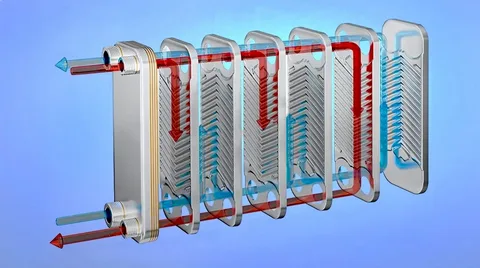
A house heat exchanger is a critical component in energy-efficient residential designs, functioning to transfer heat between air streams without allowing them to mix. This process ensures that energy from warm exhaust air is not wasted, as it is used to preheat incoming fresh air. By reducing the reliance on additional heating systems, heat exchangers contribute significantly to energy savings and thermal comfort within homes. The design of these systems typically includes a network of channels or plates that maximise the surface area for heat transfer, allowing for efficient operation. Modern innovations have also improved the compactness and functionality of heat exchangers, enabling seamless integration into ventilation systems. Additionally, their ability to maintain indoor air quality while improving thermal efficiency makes them an essential component in achieving sustainable and environmentally friendly living spaces.
The Role of Passive Home Ventilation Systems
Passive home ventilation systems play a vital part in maintaining both energy efficiency and indoor air quality in residential spaces. These systems are designed to operate continuously, providing fresh air circulation while minimising heat loss. A key feature of these systems is their ability to incorporate heat exchangers, which transfer thermal energy from outgoing air to incoming air. This process significantly reduces the reliance on conventional heating methods, leading to notable energy savings.
Passive ventilation systems typically include components such as filters to trap impurities, fans to ensure air movement, and insulated ducts to maintain thermal efficiency. They are engineered to create a balanced environment where stale air is expelled and replaced with fresh air, all while conserving heat. This combination of energy efficiency and air quality enhancement makes them an essential element of sustainable home design.
Exploring Energy Recovery in Heat Exchangers
Energy recovery within heat exchangers serves as an essential mechanism for improving the energy efficiency of ventilation systems. This process involves transferring thermal energy from outgoing exhaust air to incoming fresh air, ensuring minimal heat loss during ventilation. The operation relies on carefully engineered systems that maintain the separation of air streams, thus preserving indoor air quality while optimising energy use.
By integrating energy recovery into ventilation, buildings experience reduced dependence on conventional heating systems, which translates into lower operational costs and reduced environmental impact. This technique is particularly beneficial in regions where temperature differences between indoor and outdoor environments are significant, as it maximises thermal retention.
Additionally, advancements in technology have enhanced the performance and adaptability of energy recovery systems, making them a practical and sustainable choice for modern residential and commercial applications.
Types of Home Heat Exchangers
Home heat exchangers are available in various types, each designed to meet specific needs within residential ventilation systems. Air-to-air heat exchangers are widely implemented to transfer heat between outgoing and incoming air streams, promoting energy efficiency and improved indoor comfort. Plate heat exchangers, featuring flat plates that facilitate heat transfer, are valued for their compact design and effective performance. Rotary heat exchangers utilise a rotating wheel to transfer thermal energy, making them suitable for applications requiring high efficiency.
Counterflow heat exchangers, with their opposing air stream design, are recognised for their superior heat transfer capabilities. Additionally, liquid-to-air heat exchangers employ a liquid medium to move heat efficiently, making them ideal for specialised systems. Each type offers distinct advantages, enabling tailored solutions that align with the energy efficiency and ventilation requirements of modern residential properties.
Installation Considerations for Heat Exchangers
Proper placement and integration are vital when installing heat exchangers to ensure they function efficiently within a residential setting. The system must be positioned to allow optimal airflow and heat transfer while adhering to the architectural constraints of the building. Adequate insulation of ducts and components is crucial to minimise energy loss during operation.
Additionally, compatibility with existing ventilation systems is an important factor, as seamless integration avoids disruptions in performance. Soundproofing measures may also be necessary to reduce operational noise, particularly in residential areas. Professionals undertaking the installation often assess the building’s layout and ventilation needs to determine the most effective configuration.
Attention to these details ensures that the heat exchanger contributes to both energy efficiency and improved indoor air quality, meeting the demands of modern sustainable home design.
Efficiency of Passive House Ventilation System
The efficiency of passive house ventilation system is determined by their design, installation quality, and the integration of advanced components such as heat exchangers. These systems ensure consistent air circulation while maintaining thermal comfort, reducing the need for supplemental heating or cooling. By carefully balancing airflows and utilising energy recovery mechanisms, they achieve high levels of efficiency in energy use. The incorporation of insulated ducts and optimised airflow pathways further enhances their performance.
Regular inspections and cleaning of filters also play a role in sustaining efficiency over time. Designed to operate with minimal energy consumption, these systems contribute to creating environmentally responsible living spaces while ensuring a comfortable and healthy indoor environment.
Maintaining Heat Exchanger Systems
Routine upkeep is essential to ensure the continued efficiency and durability of heat exchanger systems. Periodic cleaning of internal components prevents the build-up of dust and debris, which can obstruct airflow and reduce thermal performance. Inspection for wear and tear, such as leaks or inefficient operation, allows for timely repairs that can extend the lifespan of the system. Lubrication of moving parts, where applicable, minimises friction and supports smooth functioning.
Professional servicing at recommended intervals can help identify and address potential issues before they escalate, ensuring optimal performance. Additionally, maintaining the cleanliness of air filters contributes to both energy efficiency and indoor air quality, making consistent maintenance a key factor in the effectiveness of heat exchanger systems.
Environmental Impact of Energy Recovery Systems
Energy recovery systems contribute to environmental sustainability by efficiently reusing thermal energy that would otherwise be lost during ventilation. This process reduces the demand for additional energy resources, helping to minimise the environmental burden associated with heating and cooling. By decreasing the reliance on fossil fuels and lowering energy consumption, these systems play a crucial role in reducing greenhouse gas emissions. Their application in residential and commercial buildings supports the transition towards energy-efficient infrastructure.
Furthermore, the reduced strain on conventional heating systems not only conserves energy but also aligns with broader efforts to achieve long-term ecological goals. Integrating such systems within modern designs underscores their significance in fostering environmentally responsible practices in the built environment.
Cost Implications of Installing Energy Recovery Heat Exchanger
The financial considerations of installing heat exchangers encompass both initial costs and long-term savings. While the upfront expense may include equipment, installation, and potential modifications to existing systems, the reduction in energy consumption often offsets these costs over time. Enhanced energy efficiency results in lower heating and cooling expenses, contributing to substantial savings in operational costs.
Additionally, incorporating energy recovery heat exchanger can increase a property’s overall energy rating, potentially raising its market value. The lifespan of modern heat exchangers, combined with reduced reliance on conventional heating systems, further enhances their cost-effectiveness.
Evaluating installation costs alongside long-term economic benefits provides a comprehensive understanding of the financial viability of these systems within energy-efficient residential designs.
Common Myths about Heat Exchangers
Certain misconceptions about heat exchangers persist, often creating confusion about their functionality and benefits. One widespread belief is that heat exchangers consume excessive energy, when, in fact, they are specifically designed to improve energy efficiency by transferring thermal energy between air streams.
Another misunderstanding is that these systems are only suited to large-scale buildings, whereas they are increasingly utilised in residential properties due to advancements in compact and efficient designs. Some assume that maintenance is overly burdensome, yet regular upkeep, such as cleaning filters and inspecting components, is straightforward and ensures longevity.
Additionally, there is a misconception that heat exchangers compromise air quality; however, their design ensures fresh and filtered air circulation while retaining heat within the system.
Future Trends in Heat Exchanger Technology
Advancements in heat exchanger technology are focusing on enhancing efficiency and sustainability through innovative designs and materials. The use of lightweight, high-conductivity materials is improving heat transfer rates while reducing the overall size and weight of the systems. Modular designs are becoming more prevalent, allowing for easier integration and customisation in various building types. Developments in smart technology are enabling systems to adapt dynamically to changing environmental conditions, optimising energy use.
Research into advanced coatings and corrosion-resistant materials is further extending the durability and lifespan of heat exchangers. These technological improvements align with the growing emphasis on creating energy-efficient solutions that meet evolving environmental and regulatory demands, ensuring heat exchangers remain a key feature in sustainable infrastructure.
Regulatory Standards for Heat Exchangers
Adherence to regulatory standards ensures that heat exchangers are designed and operated in accordance with energy efficiency and safety requirements. These regulations establish criteria for performance, material durability, and environmental compliance, promoting best practices within the industry. Standards often address aspects such as thermal efficiency, air quality preservation, and the reduction of energy consumption.
Regular updates to regulations reflect advancements in technology and shifting environmental priorities, encouraging continuous improvement in system design. Meeting these requirements is essential for supporting energy-efficient infrastructure and aligning with national and international sustainability goals, thereby fostering responsible building practices in modern residential and commercial developments.
Conclusion
Passive house heat exchanger plays a transformative role in advancing residential energy conservation and maintaining superior indoor air quality. By integrating highly efficient heat exchangers, these systems recapture up to ninety percent of thermal energy that would otherwise be lost through standard ventilation. They deliver a continuous supply of clean, filtered air while dramatically reducing reliance on conventional heating and cooling appliances. Professional installation, strategic duct design, and routine maintenance ensure optimal, quiet operation for years. Adopting passive house ventilation principles aligns perfectly with modern sustainability standards, empowering homeowners to achieve lower operational energy costs, reduce carbon footprints, and enjoy optimal thermal comfort throughout Australia.
FAQs
What is the role of a heat exchanger in passive house ventilation?
A heat exchanger transfers thermal energy between outgoing stale air and incoming fresh outdoor air without allowing the two streams to physically mix. In cold weather, it uses heat from warm exhaust air to preheat cold incoming air, drastically reducing heating energy requirements and maintaining stable indoor temperatures across Australia.
How do passive home ventilation systems save energy?
These systems conserve energy by recapturing up to ninety percent of the thermal energy present in exhaust air before it exits the building. Pre-conditioning incoming fresh air minimizes the operational workload on primary space heating and cooling systems, significantly lowering utility expenses while supporting overall environmental sustainability and energy management goals.
Are passive heat exchangers noisy during continuous operation?
No, modern passive home ventilation systems operate quietly when designed and installed properly. System designers incorporate soundproofing measures, acoustic duct lining, and ultra-quiet EC fans running at low speeds. When properly calibrated by qualified professionals, the continuous airflow remains virtually silent and non-disruptive to household occupants.
Do passive house heat exchangers require heavy maintenance?
Maintenance is straightforward and manageable for property owners. Filters should be cleaned or replaced every three to six months to preserve air purity and prevent airflow restrictions. Annual inspections by qualified technicians ensure that fans, condensate drains, control settings, and heat exchange cores remain clean and operating at peak thermal efficiency.
Can passive house ventilation systems be retrofitted into existing homes?
Yes, passive house ventilation systems can be retrofitted into existing properties, provided there is adequate space for ductwork, insulation, and unit placement. Professional technicians conduct thorough site assessments to determine optimal duct routing and unit sizing, ensuring seamless integration, enhanced indoor air quality, and maximum energy recovery for older structures.
| Related Business Listings |
| Contact Directory |
| Local Business Profiles |