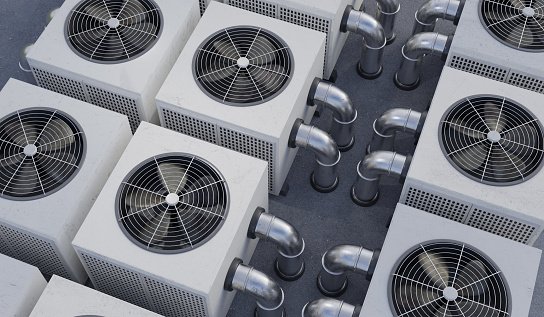
HVAC units (heating, ventilation and air conditioning). 3D rendered illustration.
Heating & Ventilation encompass systems designed to regulate indoor climates through temperature control, air circulation, and pollutant removal. Heating systems provide warmth during colder periods, ensuring indoor spaces remain comfortable and habitable. Ventilation systems play a crucial role in exchanging stale indoor air with fresh outdoor air, reducing humidity levels and maintaining air quality. A heating and ventilation system contributes to creating a balanced and healthier indoor environment by addressing concerns related to moisture, allergens, and airborne particles. Effective Heating & Ventilation not only improve comfort but also promote overall well-being by maintaining optimal living or working conditions throughout the year. Understanding their fundamental role highlights their significance in modern indoor climate management.
Components of a Heating & Ventilation Unit
A heating & ventilation unit consists of interconnected components that work collectively to maintain indoor comfort. Key elements include the heat exchanger, responsible for transferring thermal energy efficiently, and the blower fan, which facilitates air circulation throughout the system.
Filters play a crucial role in trapping dust, allergens, and other particles, ensuring clean air delivery. The thermostat functions as a control mechanism, activating heating or cooling processes based on the set temperature. Ductwork channels the air to various parts of the building, while dampers regulate airflow within the system.
Additional features, such as humidifiers or dehumidifiers, may be integrated to optimise moisture levels, contributing to a balanced and comfortable indoor environment. Each part is essential for efficient system operation.
How a Heating & Ventilation System Works
Heating & Ventilation systems function by integrating various components to manage indoor climate effectively. The process begins with the thermostat, which detects changes in indoor temperature and signals the system to activate. The heating element generates warmth, which is distributed through the building via ductwork or radiators.
Simultaneously, the ventilation system introduces fresh air from the outside while expelling stale air, using fans and ducts to maintain air circulation. Filters within the system capture dust and pollutants, contributing to improved air quality.
Additionally, dampers and control mechanisms help regulate airflow to ensure balanced distribution. Together, these elements maintain a comfortable and healthy indoor environment by addressing temperature, air movement, and quality requirements simultaneously.
Types of Heating Systems
Heating systems are designed to cater to different needs and environments, offering diverse options for indoor climate control. Central heating systems, often powered by boilers or furnaces, utilise a network of ducts or pipes to distribute warmth uniformly across spaces. Radiant heating provides direct heat through underfloor systems or wall-mounted panels, ensuring targeted warmth.
Heat pumps are energy-efficient solutions that transfer heat from external air, water, or ground sources to indoor areas. Electric heaters, commonly used in smaller spaces, offer flexible heating options. Each type of system is suited to specific requirements, such as energy efficiency, cost considerations, or compatibility with varying climates, allowing for tailored solutions to achieve the desired indoor temperature.
Types of Ventilation Systems
Ventilation systems serve different purposes and are designed to suit various environments. Natural ventilation utilises architectural features such as strategically placed windows, vents, or openings to facilitate airflow without mechanical assistance. Mechanical ventilation systems, including supply-only, exhaust-only, and balanced systems, employ fans and ductwork to control air exchange more precisely.
Balanced systems, often equipped with heat recovery ventilators, simultaneously introduce fresh air and expel stale air, ensuring consistent indoor air quality. Hybrid systems combine natural and mechanical elements to optimise airflow while reducing energy consumption. These systems are essential for maintaining indoor air quality by removing airborne pollutants, controlling humidity levels, and ensuring adequate oxygen supply in residential, commercial, or industrial settings.
Energy Efficiency in Heating & Ventilation
Energy efficiency in Heating & Ventilation systems is achieved through innovative design and proper management. Features such as energy recovery ventilators help reclaim heat from exhaust air, reducing the need for additional energy. High-efficiency boilers, heat pumps, and programmable thermostats contribute to precise temperature regulation, optimising energy use. Well-insulated buildings and sealed ductwork minimise energy loss, enhancing the performance of heating systems.
Ventilation systems with variable speed fans adjust airflow based on demand, lowering energy consumption. Integrating smart technologies further enables automated adjustments to match changing indoor conditions. Prioritising energy-efficient components and practices not only supports cost savings but also aligns with environmental sustainability goals, ensuring effective climate control with reduced energy dependency.
Installation of Heating and Ventilation Unit
The installation of heating and ventilation unit involves precise planning and execution to ensure optimal system performance. Proper positioning of equipment is crucial for efficient airflow and uniform temperature distribution across the space. Electrical connections and ductwork must be carefully integrated to align with system specifications and safety standards.
Adequate insulation and sealing of duct joints are essential to prevent energy loss and maintain system efficiency. The process may also require calibration of thermostats and verification of operational settings to match the building’s specific needs. Professional installation is often preferred, as it ensures adherence to industry regulations and reduces the likelihood of operational issues, providing a reliable and well-functioning indoor climate control system.
Maintenance of Heating & Ventilation Systems
Regular maintenance ensures the efficiency and longevity of Heating & Ventilation systems. Key tasks involve inspecting and cleaning system components such as heat exchangers, blowers, and ventilation fans to prevent the accumulation of debris that may hinder performance.
Ductwork should be checked for any blockages or leaks that could disrupt airflow or energy efficiency. Filters must be replaced or cleaned periodically to maintain optimal air quality and reduce strain on the system. Electrical connections and controls, including thermostats, require regular assessment to ensure accurate operation.
Additionally, monitoring moisture levels and addressing any excessive humidity or dryness can protect system functionality. Comprehensive servicing by qualified professionals helps to detect potential issues and ensure systems operate safely and effectively.
Upgrading Heating & Ventilation Systems
Upgrading Heating & Ventilation systems often involves integrating advanced technologies to enhance energy efficiency and indoor climate control. Modern systems can feature improved heat exchangers, high-performance filters, and variable speed fans, which optimise airflow and minimise energy consumption. Enhanced automation, such as smart thermostats, allows for precise temperature regulation and adaptation to changing environmental conditions.
Retrofitting existing systems with energy recovery ventilators or upgrading insulation within ductwork can further improve performance. Upgraded systems often comply with the latest standards for energy efficiency and air quality, ensuring alignment with regulatory requirements.
Professional evaluation of system requirements and compatibility is essential to ensure seamless integration and achieve a balance between performance, cost savings, and environmental sustainability.
Common Issues with Heating and Ventilation
Heating and Ventilation systems may encounter issues that impact their performance and efficiency. Problems such as inconsistent airflow, excessive noise, or unexpected system shutdowns can often arise from blockages within ductwork or malfunctioning components. Dirty or clogged filters may hinder proper air circulation, reducing overall system efficiency and contributing to poor indoor air quality.
Mechanical wear and tear on components like fans, motors, or dampers can also affect system functionality over time. Incorrect thermostat settings or calibration errors may lead to uneven heating or cooling. Identifying and addressing such problems through routine inspections and timely servicing is crucial for maintaining optimal system operation, ensuring the delivery of consistent indoor comfort and healthy air quality.
Regulations and Standards for Heating & Ventilation
Regulations and standards for Heating & Ventilation are established to ensure systems operate efficiently, safely, and sustainably. These guidelines encompass energy performance, emissions control, and indoor air quality to promote healthier environments. Building codes often specify requirements for system installation, ductwork design, and insulation to prevent energy loss.
Ventilation standards outline minimum airflow rates and pollutant control measures to maintain air purity. Compliance with these regulations helps reduce environmental impact while ensuring systems meet health and safety criteria. Adhering to these standards is vital for maintaining performance integrity and aligning with legal obligations in residential, commercial, and industrial applications.
The Role of Heating and Ventilation Companies
Heating and ventilation companies play a pivotal role in the implementation and upkeep of climate control systems. These companies assess the specific requirements of buildings, recommending suitable Heating & Ventilation solutions tailored to structural and environmental conditions.
Their expertise extends to the installation of complex systems, ensuring proper alignment with technical specifications and regulatory standards. Maintenance services provided by these professionals include routine inspections, cleaning, and component replacement to preserve efficiency and prevent operational issues.
Additionally, their involvement in system upgrades helps integrate modern technologies, enhancing performance and energy efficiency. By addressing both technical and regulatory aspects, these companies contribute significantly to maintaining comfortable, healthy, and well-regulated indoor environments in residential, commercial, and industrial settings.
Future Trends in Heating & Ventilation Technology
Advancements in Heating & Ventilation technology are driving efficiency and sustainability in indoor climate management. Artificial intelligence is increasingly integrated into systems, enabling predictive maintenance and adaptive climate control based on real-time data. Innovations in heat recovery systems are improving energy conservation by maximising the reuse of waste heat.
Additionally, developments in sustainable materials and eco-friendly refrigerants are reducing the environmental impact of these systems. Modular and scalable designs are also gaining prominence, allowing customisation to specific building needs. These emerging trends reflect a focus on creating more energy-efficient, environmentally conscious, and adaptable systems for modern residential and commercial applications.
Conclusion
A heating and ventilation system is essential for maintaining comfortable, healthy, and energy-efficient indoor environments. They regulate temperature, improve airflow, control humidity, and help remove indoor pollutants. Selecting suitable equipment, ensuring correct installation, and completing regular maintenance can improve system performance and reliability. Energy-efficient technologies such as heat recovery, smart controls, and variable-speed fans can also help reduce energy consumption. As technology develops, modern Heating & Ventilation solutions are becoming more efficient, sustainable, and adaptable. Understanding how these systems work enables property owners to make informed choices that support indoor comfort, air quality, energy efficiency, and long-term system performance.
FAQs
What is the purpose of a heating and ventilation system?
Heating and ventilation system regulates indoor temperature, circulates fresh air, removes stale air, and helps maintain comfortable indoor conditions.
How can Heating & Ventilation systems save energy?
Efficient equipment, proper insulation, smart controls, and heat recovery technology can reduce energy consumption and improve overall system performance.
Why is regular maintenance important?
Regular maintenance helps prevent faults, maintain airflow, improve efficiency, and extend the operating life of system components.
What types of ventilation systems are available?
Common options include natural, mechanical, exhaust, supply, balanced, and hybrid ventilation systems, depending on building requirements.
When should a Heating & Ventilation system be upgraded?
An upgrade may be suitable when equipment becomes inefficient, unreliable, costly to operate, or unable to maintain consistent indoor comfort.
| Related Business Listings |
| Contact Directory |
| Local Business Profiles |