When someone asks how many acres an excavator mulcher can clear in a day, they usually want a simple number. Five acres? Ten? Maybe more?
Unfortunately, there isn’t one number that works for every job. Anyone giving you a guaranteed acreage figure without asking about vegetation, machine size, terrain, and operator experience is probably guessing.
A properly matched excavator mulcher attachment can clear a surprising amount of land in a day. But the actual production rate depends heavily on what’s growing there and how difficult the site is to work.
For contractors, landscapers, farmers, and land-clearing crews, that difference matters. A realistic estimate is much more useful than an impressive number that only works under perfect conditions.
So, How Many Acres Can You Expect?
For general planning, a mini excavator or compact excavator running a mulching attachment might realistically cover around 0.5 to 2 acres per day in many normal conditions.
A larger excavator with a properly sized forestry mulcher can potentially cover several acres in a day, especially when working through lighter vegetation and relatively open terrain.
But don’t treat those numbers as a promise.
Heavy hardwood, thick undergrowth, steep slopes, rocky ground, wet conditions, and difficult access can cut production dramatically. Light brush and grass? Completely different story.
The machine may spend more time positioning than actually mulching.
That’s why acreage-per-day estimates should always be treated as a range.
What Has the Biggest Impact on Daily Production?
The attachment itself matters, but it isn’t the only factor.
Vegetation Density
This is probably the biggest one.
A field covered with tall grass and small brush can move quickly. Dense woods with mature trees is another animal entirely.
A mulcher has to work harder when material is larger and more tightly packed. The operator also has to make more passes over the same area.
If you’re clearing mostly light brush, production can be surprisingly high.
If you’re grinding heavy timber down to manageable mulch, don’t expect the same acreage.
Tree Size Changes Everything
Tree diameter matters.
Small saplings can often be processed quickly. Larger trees require more cutting time, more passes, and better positioning.
The operator may need to work around the base before bringing the mulcher through the material.
And if the goal is a clean finished site rather than simply knocking vegetation down, the job takes longer again.
This is where contractors sometimes underestimate a project. They calculate acreage without considering what is actually growing on those acres.
A five-acre property with light brush may be easier than one acre of dense, mature vegetation.
Machine Size and Hydraulic Flow Matter
Your excavator needs to match the attachment.
A compact machine with limited hydraulic flow can’t be expected to perform like a much larger excavator.
When choosing a mini excavator attachment, always pay attention to the machine’s hydraulic flow, pressure, operating weight, and auxiliary circuit specifications.
The mulcher needs enough hydraulic power to operate correctly. If the machine is undersized, you’ll probably see slower cutting, reduced productivity, and more strain on the system.
On the other hand, pairing the right attachment with a properly sized machine can make the entire operation much smoother.
It’s not about using the biggest machine possible. It’s about using the right combination.
Terrain Can Slow You Down Fast
Flat, open ground is easy to plan around.
Slopes aren’t.
An excavator has a major advantage here because it can position the mulcher while keeping the machine farther away from difficult areas. That’s one reason excavator-mounted mulching systems are useful for roadside vegetation, slopes, ditches, and rough terrain.
Still, steep ground means more repositioning.
The operator has to work carefully. Safety comes first. Always.
A job that looks like three acres on a map might take much longer once you actually start moving across the property.
Operator Experience Makes a Real Difference
Two operators can use the same machine and attachment and produce very different results.
An experienced operator knows how to:
- Approach vegetation efficiently
- Avoid unnecessary passes
- Maintain proper cutting pressure
- Position the excavator correctly
- Keep material moving through the cutting area
A newer operator may spend more time repositioning or trying to force material through the attachment.
That’s normal. Skill develops with time.
But when you’re estimating production for a commercial project, operator experience should absolutely be part of the calculation.
What About Smaller Excavators?
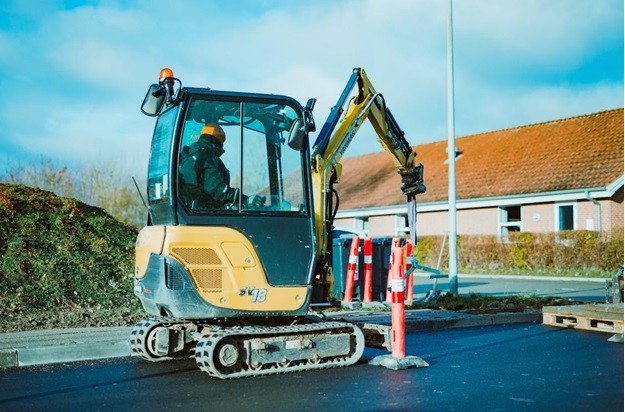
Mini excavators have a place in land clearing, especially where access is limited.
A smaller mini excavator attachment setup can work around buildings, fences, narrow paths, residential properties, and other areas where a large machine simply can’t operate comfortably.
The tradeoff is production.
You aren’t going to get the same acreage per day as a larger excavator running a high-flow mulcher. That’s not necessarily a problem.
If the job requires precision and access more than raw production, a compact setup may actually be the better business choice.
Getting the job done at all beats bringing a huge machine onto a site where it can’t maneuver.
Don’t Forget Cleanup and Finishing Work
Another common estimating mistake is counting only the mulching time.
A finished land-clearing project may also involve:
- Moving around remaining debris
- Reaching missed vegetation
- Cleaning edges
- Working around structures
- Final grading or site preparation
If the customer expects a clean, finished property, the mulcher isn’t necessarily the last piece of equipment you’ll use.
This is where having multiple attachments can make a contractor more productive. The excavator can switch from mulching to digging, grading, or material handling depending on the job.
That’s the real value of a versatile machine.
How to Estimate Your Own Acres Per Day
Instead of relying on somebody else’s production number, measure your own work.
Start with a small section of the property. Track how long it takes to complete that area under normal operating conditions.
Then consider:
Area completed ÷ operating hours = approximate production rate
Don’t include unrealistic breaks or perfect conditions. Use a normal working day.
After a few projects, you’ll have a much better idea of what your specific excavator, mulcher, and operator can accomplish.
That’s a lot more useful than a generic “X acres per day” claim.
Is an Excavator Mulcher Worth It for Contractors?
For the right type of work, absolutely.
A mulching setup can turn an excavator into a land-clearing machine without bringing in a separate dedicated forestry machine for every job.
That can be useful for contractors handling property maintenance, right-of-way clearing, utility work, farm maintenance, and site preparation.
It also gives operators more control in areas where wheeled equipment or skid steers may struggle.
The important part is matching the attachment to the work.
Don’t buy based on acreage claims alone.
Look at hydraulic requirements, machine size, vegetation type, terrain, attachment construction, and the kind of jobs you actually get.
FAQ: Excavator Mulcher Productivity
How many acres can a mini excavator mulcher clear in a day?
It depends heavily on vegetation, terrain, machine size, and operator experience. Around 0.5 to 2 acres per day can be a reasonable planning range for some lighter-to-moderate jobs, but heavy vegetation can reduce that significantly.
Can an excavator mulcher clear large trees?
Some mulching attachments are designed to handle larger vegetation, but capacity depends on the attachment, excavator, hydraulic power, and tree size. Always follow the manufacturer’s specifications.
Is a mini excavator good for land clearing?
Yes, especially for smaller properties, tight-access areas, slopes, and jobs where maneuverability matters more than maximum production.
What excavator size is best for a mulcher?
There’s no universal answer. The attachment’s hydraulic flow and weight requirements should be matched to the excavator. A properly matched machine will generally perform much better than an undersized setup.
Does operator experience affect mulching productivity?
Absolutely. Experienced operators usually spend less time repositioning and can work through vegetation more efficiently.
Final Thoughts
So, how many acres can an excavator mulcher realistically clear in a day?
The honest answer is: it depends.
A compact excavator working through light vegetation might handle a fraction of an acre to a couple acres in a day. A larger excavator with a properly matched excavator mulcher attachment can cover considerably more when conditions are favorable.
But don’t build your estimate around the best-case scenario.
Look at the vegetation. Look at the terrain. Check hydraulic flow. Consider machine size and operator experience. Then build some breathing room into your estimate.
For contractors and land-clearing professionals, that’s the smarter way to price a job and schedule a crew.
The right mini excavator attachment can make a compact machine surprisingly capable. Just remember, productivity isn’t about the attachment alone. It’s about the whole setup working together.