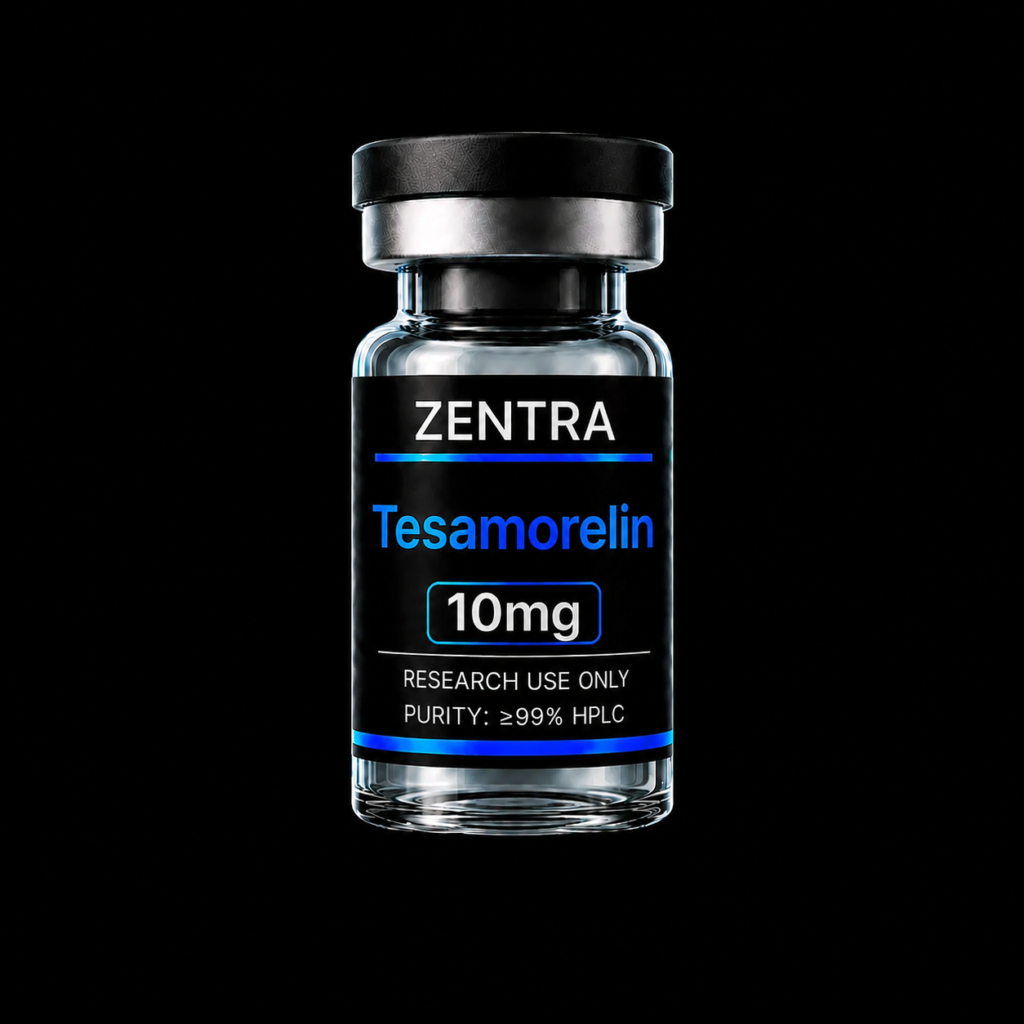
Tesamorelin lies at an interesting intersection in growth hormone research, largely because of how it works with the pituitary gland instead of overriding it. Rather than flooding a biological system from the outside, this compound prompts cells to do what they were already built to do, only with more precision and control. That kind of targeted signalling is exactly what keeps drawing researchers back to it, study after study. Interest in tesamorelin peptides has grown steadily among labs examining growth hormone pathways under controlled conditions. This blog talks about exactly how that mechanism plays out, from the first receptor interaction to the effects that follow.
Starting With the Structure
Before getting into what happens on a cellular level, it helps to know what this molecule actually looks like on paper.
- It is a synthetic version of growth hormone-releasing hormone, built to mimic something already present in biological systems.
- A stabilised N-terminus gives it extra protection against fast enzymatic breakdown.
- It does not replace hormone output. It prompts the pituitary to keep producing on its own.
- Researchers comparing different tesamorelin peptides often look closely at this structural stability first.
The Pituitary Connection
In study models, the pituitary gland is really where all the action starts, almost like a switchboard for hormone signalling.
- Tesamorelin attaches to receptors found on somatotroph cells in the anterior pituitary.
- That binding sets off a chain reaction that raises cyclic AMP levels inside the cell.
- Rising cyclic AMP levels trigger stored growth hormone to be released into the system.
- The release pattern still follows a natural pulsatile rhythm rather than one big surge.
Distinction From Direct Hormone Exposure
People sometimes assume this works exactly like introducing growth hormone directly. But that is not quite accurate.
- It stimulates the pituitary rather than supplying hormone from an outside source.
- Somatostatin feedback loops stay intact, so the regulatory checks built into the system are not bypassed.
- This is one reason tesamorelin peptides are seen as a more targeted option compared to blunter interventions.
- The overall effect tends to mirror how these systems regulate themselves naturally.
Downstream Effects on IGF-1 Production
Growth hormone release is really just step one. The liver picks up the signal from there.
- Elevated growth hormone prompts liver tissue to ramp up insulin-like growth factor 1, or IGF-1.
- IGF-1 is closely tied to cellular growth, repair, and metabolic activity in research models.
- Measuring IGF-1 gives researchers a useful indirect read on how well the pituitary responded.
- This two-part relay is part of what makes the pathway worth studying closely.
Stability and Timing
Stability and timing matter more here than people often realise. Pharmacokinetic data in the FDA-approved labeling report a mean elimination half-life of about 11 minutes in healthy subjects for the current EGRIFTA WR formulation.
- The molecule clears the system fairly fast thanks to a short half-life.
- That quick clearance helps preserve a natural secretion rhythm instead of a prolonged artificial spike.
- Dipeptidyl peptidase enzymes are largely responsible for breaking it down over time.
- Its structural tweaks were designed to slow that breakdown just enough to allow meaningful activity.
Recurring Research Themes
A few topics that keep coming up across these studies are as follows:
- Fat distribution and lipid metabolism.
- Cellular repair tied to IGF-1 activity.
- Comparisons with other growth hormone releasing hormone analogues.
- Pituitary responsiveness across repeated study cycles.
Researchers also study other peptides through similarly pathway-focused approaches. For example, MOTS-c has attracted research interest for its relationship with cellular and metabolic signalling.
Wrapping Up
At the end of the day, this mechanism is really about working with biology instead of against it. From receptor binding to IGF-1 production, each step leans on processes that already exist. That is a big part of why tesamorelin peptides remain such an active area of study. At Zentra Labs, we supply these compounds strictly for qualified laboratory and academic research.