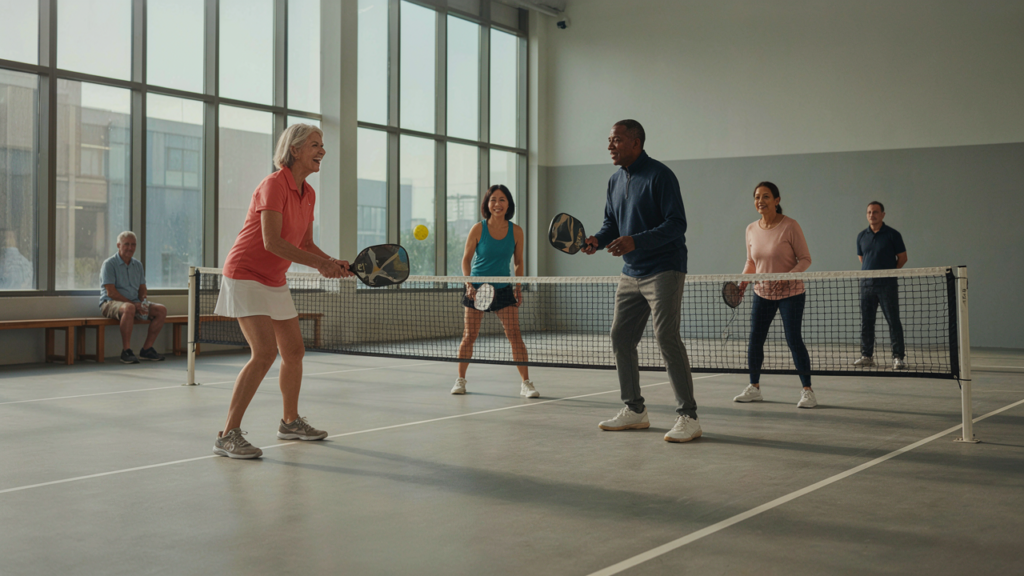
Returning to an active lifestyle can be exciting, especially when there is a fun and social sport waiting on the other side of the court. For many older adults, pickleball offers an approachable way to stay active, meet new people, and enjoy friendly competition without needing years of racket-sport experience.
If you are getting back into sports after a long break, the key is not to rush. Getting started with pickleball should be about learning the basics, becoming comfortable with movement, and gradually building confidence. With the right approach, seniors can enjoy pickleball at their own pace while developing better balance, coordination, and court awareness.
Here are some practical tips to help older players make a comfortable and enjoyable return to the court.
Start Slowly and Focus on Comfort
One of the most important pickleball tips for older players is to begin at a manageable pace. You do not need to play a full competitive game during your first session. Start with short practice periods that allow you to become familiar with the paddle, ball, court dimensions, and basic movements.
Before playing, spend several minutes warming up. Gentle walking, shoulder movements, arm circles, ankle movements, and controlled leg exercises can help prepare your body for activity. After a long period away from sports, gradually increasing your playing time can be more comfortable than immediately attempting a long session.
Pay attention to how you feel during and after play. Comfortable progress is more important than trying to keep up with experienced players.
Choose Beginner-Friendly Equipment
The right equipment can make learning pickleball considerably easier. Beginners generally benefit from a paddle that feels comfortable in the hand and is easy to control. You do not necessarily need the most expensive paddle available.
Grip size is especially important. A paddle that feels too large or too small may make it harder to control shots comfortably. When possible, try holding different paddles before making a purchase.
Proper footwear also deserves attention. Choose athletic shoes that provide stability and are designed for court movement. Running shoes are built primarily for forward motion, while court shoes are generally designed to provide better support during side-to-side movement.
Comfortable clothing and appropriate court shoes can help you concentrate on learning rather than adjusting your equipment.
Learn the Basic Shots Before Playing Competitive Games
You do not need a large collection of advanced shots to enjoy pickleball. Start with a few fundamental skills.
Practice your forehand and backhand strokes using controlled swings. The objective at first is consistency rather than power. Try sending the ball over the net with enough height and control to keep rallies going.
Next, learn the basic serve. Pickleball serves are made diagonally into the opponent’s service area, and beginners can benefit from developing a reliable motion instead of trying to hit extremely hard.
The return of serve is another important skill. Focus on making clean contact and directing the ball back into play.
As your confidence grows, begin practicing the soft game near the non-volley zone, commonly called the kitchen. Controlled shots and accurate placement often matter more than hitting the ball as hard as possible.
Work on Balance, Footwork, and Court Positioning
Pickleball involves frequent short movements rather than constant running, but balance and positioning still matter. Good footwork can help you reach the ball without making unnecessary movements.
One useful habit is to stay balanced after each shot. Avoid leaning too far forward or reaching excessively when you could take a small adjustment step.
Court positioning is equally important. Beginners sometimes chase every ball without considering where they should stand. Learning where to position yourself can make the game feel easier and reduce unnecessary movement.
If you are playing doubles, communicate with your partner. Simple calls such as “mine” or “yours” can prevent confusion. Move together when possible rather than leaving large gaps between teammates.
For seniors returning to sports, efficient movement can be more valuable than speed. Good positioning allows you to play smarter while conserving energy.
Build Confidence Through Short, Consistent Sessions
Improvement does not have to happen all at once. One of the best approaches to beginner pickleball for seniors is consistent practice with realistic goals.
For example, your first goal might be completing five consecutive shots with a partner. Later, you might work toward ten or twenty controlled shots. You can also practice serving into the correct area several times in a row.
These small milestones provide measurable progress without creating unnecessary pressure.
Consider mixing skill practice with recreational games. Practice helps you develop technique, while friendly games teach you how those skills work in real situations.
Playing with people at a similar experience level can also make the learning process more enjoyable. Many pickleball communities welcome beginners, making it easier to find partners who are interested in learning rather than simply competing.
Make Pickleball Part of an Active Lifestyle
Pickleball can become more than an occasional activity. For older adults, regular recreational play can provide an enjoyable reason to stay active and connected with others.
However, listen to your body and allow yourself adequate recovery between sessions. Hydration, comfortable pacing, proper warm-ups, and rest all contribute to a more sustainable routine.
If you have been inactive for a significant period or have concerns about starting a new exercise program, consider discussing your plans with an appropriate healthcare professional before increasing your activity level.
Most importantly, remember that pickleball is supposed to be fun. You do not need to master every technique immediately. Learn the fundamentals, enjoy the social side of the sport, and give yourself time to improve.
A Confident Return Starts With the Basics
Getting back on a pickleball court after time away can feel challenging at first, but the learning process can also be rewarding. By starting slowly, choosing comfortable equipment, practicing fundamental shots, improving balance and positioning, and setting realistic goals, older players can develop confidence one session at a time.
Whether you are completely new to pickleball or returning to racket sports after several years, a patient approach can help you enjoy the game while building your skills. With practice and the right environment, the court can become a welcoming place to stay active, connect with others, and have fun.