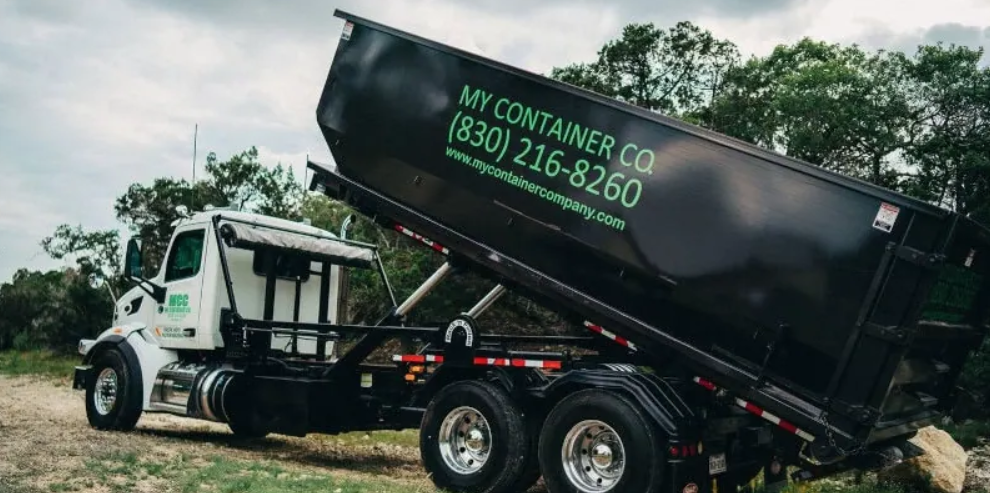
A 40 yard dumpster for rent is designed for projects that generate a substantial amount of waste and debris. It is one of the largest commonly available roll-off dumpster sizes and is frequently used for major construction, demolition, commercial remodeling, large cleanouts, and roofing projects.
A 40-yard container holds 40 cubic yards of material, but its actual exterior dimensions and weight allowance can vary by provider and location. For example, current specifications from major rental providers list containers around 22–23 feet long, 7–8 feet wide, and approximately 7 feet high.
The right dumpster should be selected according to both the volume and weight of the material, not simply the size of the project.
A 40 yard dumpster for rent offers substantial waste capacity for large residential, commercial, construction, renovation, and demolition projects.
What Is a 40 Yard Dumpster?
Understanding the Capacity
A 40-yard dumpster has a nominal capacity of 40 cubic yards. That makes it suitable for large quantities of bulky debris that would otherwise require multiple smaller containers or numerous pickup-truck loads.
One current rental guide estimates that a 40-yard dumpster can accommodate approximately 12 pickup-truck loads, while another provider describes its 40-yard container as equivalent to about 16 pickup loads. The difference demonstrates why pickup-load estimates should be treated as approximate rather than universal.
The container’s capacity is measured by volume, so it does not mean that every type of material can safely be loaded to the top.
Typical Dimensions
Dimensions differ between rental companies.
| Specification | Typical example |
|---|---|
| Length | About 22–23 feet |
| Width | About 7–8 feet |
| Height | About 7 feet |
| Capacity | 40 cubic yards |
| Common use | Large construction, remodeling, demolition, and cleanouts |
For example, Rumpke lists a 40-yard roll-off at approximately 22.5 feet long × 8 feet wide × 7 feet high, while WM lists approximately 21 feet 11 inches long × 7 feet wide × 7 feet high for one of its 40-yard containers.
Renters should always confirm the exact dimensions of the container being delivered because specifications vary by provider and market.
What Is a 40 Yard Dumpster Used For?
Large Construction Projects
A 40-yard dumpster can be appropriate for construction sites that generate large quantities of general debris.
Typical materials can include:
- Wood
- Drywall
- Flooring
- Packaging
- Cabinets
- Fixtures
- Nonhazardous construction debris
- General renovation waste
The specific materials accepted depend on the rental provider and local disposal requirements.
Demolition Projects
Demolition can generate significant quantities of debris within a short period.
A 40-yard container can provide a centralized location for materials removed during structural or interior demolition. Rumpke, for example, lists demolitions, major construction, commercial-scale remodeling, and large building cleanouts among applications for its 40-yard containers.
Large Remodeling Projects
Major kitchen, bathroom, whole-home, commercial, or multi-unit renovations can generate enough waste to justify a large roll-off container.
A 40-yard option can be particularly useful when bulky materials such as cabinets, drywall, flooring, and framing components take up substantial space.
Roofing Projects
Roof replacements can create a high volume of shingles and other roofing debris.
WM identifies 40-yard roll-off dumpsters as an option for large roofing jobs and remodeling projects.
Roofing materials can be relatively dense, however, so weight restrictions should be checked before selecting a 40-yard container.
Commercial Cleanouts
Large offices, warehouses, retail spaces, apartment buildings, and other commercial properties can produce substantial quantities of discarded materials.
A 40-yard dumpster can be useful for:
- Warehouse cleanouts
- Office renovations
- Retail remodeling
- Building cleanouts
- Multi-unit property cleanouts
- Estate cleanouts
- Large-scale junk removal
40 Yard Dumpster Weight Limits
Why Weight Matters
A dumpster’s 40-cubic-yard capacity describes volume rather than allowable weight.
This distinction is particularly important when disposing of dense materials. Concrete, dirt, brick, asphalt, and similar materials can become too heavy before the container is full.
Some rental companies advertise weight allowances around 4–5 tons, while other service agreements may provide different limits. WM, for example, lists a 10-ton maximum on one of its 40-yard rental offerings, demonstrating that weight policies can vary substantially by provider and service area.
The rental agreement should always be checked for the exact included weight allowance before heavy debris is loaded.
Heavy Materials Require Extra Planning
A 40-yard dumpster may not be the best choice simply because it is the largest available size.
For example, a project involving mostly concrete or dirt may need a smaller container specifically designed for heavy debris. Rumpke notes that dense materials can exceed transportation weight limits before a 40-yard container is full.
40 Yard Dumpster vs. Smaller Sizes
Comparing Dumpster Sizes
The right size depends on the amount and type of debris.
| Dumpster size | Approximate capacity | Common applications |
|---|---|---|
| 10 yard | 10 cubic yards | Small heavy-material jobs |
| 20 yard | 20 cubic yards | Cleanouts and moderate remodeling |
| 30 yard | 30 cubic yards | Large renovations and commercial projects |
| 40 yard | 40 cubic yards | Major construction, demolition, and large cleanouts |
WM’s current size guide lists its 20-yard container at approximately 8 pickup loads, 30-yard container at 14 pickup loads, and 40-yard container at 16 pickup loads.
These figures illustrate that a larger dumpster can reduce the number of containers or hauling cycles required for high-volume projects.
When a 30 Yard Dumpster May Be Enough
A 30-yard dumpster may be appropriate when a project generates significant waste but does not require the full volume of a 40-yard container.
WM describes its 30-yard option as suitable for office or large home renovation projects and junk removal.
Choosing a smaller container can also make sense when site access is limited or when the material is unusually heavy.
How Much Does a 40 Yard Dumpster Cost?
Factors That Affect Rental Prices
There is no universal price for a 40-yard dumpster.
The total rental cost can depend on:
- Geographic location
- Rental duration
- Included weight allowance
- Type of debris
- Disposal fees
- Delivery charges
- Pickup charges
- Permit requirements
- Additional rental days
- Excess-weight charges
- Local landfill or transfer-station rates
Some providers calculate pricing during the ordering process based on location and project details.
Additional Fees
A renter should ask whether the quoted price includes all expected charges.
Potential additional costs can involve:
- Exceeding the included weight allowance
- Keeping the dumpster beyond the agreed rental period
- Prohibited materials
- Difficult delivery or pickup conditions
- Failed delivery attempts
- Required permits
Rumpke, for example, identifies excess weight, unapproved materials, extended rental periods, and certain failed placement or pickup situations as factors that can lead to additional charges.
Comparing the complete rental terms is more useful than comparing only the advertised base price.
How Long Can a 40 Yard Dumpster Be Rented?
Short-Term Rentals
Rental periods differ by provider and location.
Some services include a defined number of days in the base rental, while others may structure pricing around the project duration.
WM lists seven rental days for certain 40-yard temporary dumpster offerings.
Extended Rentals
Large construction and renovation projects may require a container for several weeks.
When a project timeline is uncertain, the renter should ask about:
- Included rental days
- Daily extension fees
- Pickup scheduling
- Exchange options
- Renewal procedures
Planning the rental period in advance can help reduce avoidable extension charges.
Where Should a 40 Yard Dumpster Be Placed?
Choosing a Suitable Location
A 40-yard dumpster requires substantial space because the delivery vehicle needs room to maneuver and position the container.
The placement area should generally be:
- Level
- Firm
- Free of obstructions
- Accessible to the delivery vehicle
- Clear of low branches and overhead utilities
- Away from blocked driveways or traffic routes
Rumpke recommends a hard, level surface and advises customers to provide sufficient space for delivery while keeping the area clear of utility lines, branches, parked vehicles, and other obstructions.
Allow Space for Delivery
The container itself is only part of the space requirement.
The delivery truck needs additional room to approach and place the dumpster safely. WM recommends leaving at least 100 feet of length for drop-off for one of its 40-yard offerings.
Exact clearance requirements can vary by truck and provider, so the delivery company should confirm the necessary space before scheduling.
What Can Be Put in a 40 Yard Dumpster?
Commonly Accepted Materials
Depending on the provider, common nonhazardous materials may include:
- Household junk
- Wood
- Drywall
- Flooring
- Furniture
- Construction debris
- Remodeling debris
- Roofing materials
- General commercial waste
Acceptance policies vary, so renters should verify the rules before loading unusual materials.
Prohibited Materials
Many dumpster services restrict materials such as:
- Hazardous waste
- Chemicals
- Liquids
- Batteries
- Tires
- Medical waste
- Asbestos
- Certain appliances or electronics
WM’s 40-yard rental information, for example, excludes batteries, auto parts, tires, drums, liquids, chemicals, hazardous waste, asbestos, and certain appliances and electronics.
Rumpke similarly lists hazardous materials, wet paint, batteries, medical waste, tires, and other restricted items among prohibited materials for its 40-yard containers.
The safest approach is to confirm questionable materials with the rental provider before placing them inside the container.
How to Prepare for a 40 Yard Dumpster Rental
Measure the Available Space
Before ordering, measure the intended placement area and confirm that the delivery vehicle can access it.
Estimate Debris Volume
Estimate how much material the project will generate.
A 40-yard container provides substantial capacity, but an oversized dumpster is not always economical if the project produces only a moderate amount of waste.
Consider Material Weight
Determine whether the project involves dense materials.
Heavy debris may require a different dumpster size or disposal arrangement even when the volume appears manageable.
Check Local Permit Requirements
Some municipalities require permits when a dumpster is placed on a public street, sidewalk, or other regulated area.
Requirements vary by jurisdiction, so the renter should check local rules before delivery.
Tips for Loading a 40 Yard Dumpster
Distribute Material Evenly
Material should be spread throughout the container rather than concentrated in one area.
Even distribution can help maintain stability and reduce problems during transportation.
Do Not Overfill
Items should remain within the container’s permitted fill level.
Rumpke instructs customers not to fill above the designated fill line or allow material to hang over the sides.
Keep Heavy Debris in Mind
Evenly filling a container does not eliminate weight restrictions.
Concrete, dirt, brick, asphalt, and similar materials can reach the weight limit before the container is visually full.
When Is a 40 Yard Dumpster the Right Choice?
A 40-yard dumpster can be appropriate when a project involves large quantities of bulky, relatively lightweight, or mixed nonhazardous debris.
It can be especially useful for:
- Large construction projects
- Major remodeling
- Commercial renovations
- Demolition
- Large roofing projects
- Warehouse cleanouts
- Retail renovations
- Multi-unit property cleanouts
For smaller projects, a 20- or 30-yard container may provide sufficient capacity. For dense materials, a smaller heavy-debris container may be more suitable.
Final Thoughts on 40 Yard Dumpster for Rent
The most important considerations are not just cubic-yard capacity but also dimensions, weight limits, acceptable materials, rental duration, placement requirements, and total cost.
Because specifications vary between providers, renters should confirm the exact container dimensions, included weight allowance, rental period, delivery requirements, and prohibited materials before placing an order.
With proper planning, the right 40-yard roll-off dumpster can provide a convenient centralized solution for managing large volumes of project debris while helping the project stay organized and on schedule.