LED display technology has become an essential part of modern advertising, digital signage, entertainment, and corporate communication. From shopping mall advertising walls to concert stages and outdoor billboards, businesses rely on LED displays to deliver bright visuals, dynamic content, and engaging customer experiences. However, the performance of any display depends on the quality of its individual components, particularly the modules that form the screen.
Understanding how led modules work can help businesses make better purchasing decisions, plan installations, and manage long-term maintenance costs. Whether you are purchasing a new led screen for commercial advertising or upgrading an existing display, knowing the differences between module types, pixel pitch, brightness, and construction quality is essential to achieving reliable performance.
What Are LED Modules?
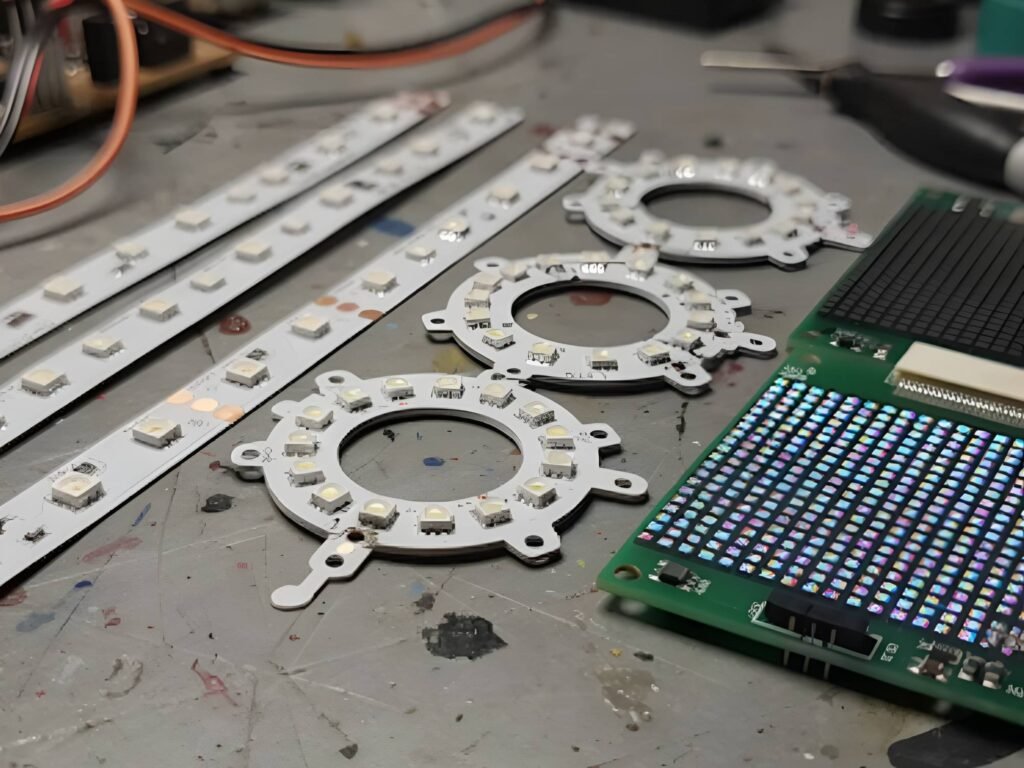
LED modules are individual units containing multiple light-emitting diodes, electronic components, and supporting circuitry. They are designed to work together to produce images, videos, text, and animations across a larger display surface.
In a typical LED display system, multiple modules are assembled into cabinets or panels, which are then connected to create a complete screen. Each module contributes a portion of the overall image, and the display control system coordinates the lighting of individual pixels to reproduce the intended content.
The exact module design varies depending on the display’s intended application. Indoor modules often prioritise fine image detail and close viewing distances, while outdoor modules generally require stronger environmental protection and higher brightness.
Because modules can be replaced individually on many display systems, they also support more targeted repairs than replacing an entire screen. However, compatibility, servicing access, and the manufacturer’s design determine how easily a module can be replaced.
How Do LED Modules Work?
An LED module receives electrical signals and image data from the display’s control system. These signals determine which pixels illuminate and how brightly they appear.
Each pixel typically contains red, green, and blue LEDs. By adjusting the intensity of these colours, the display can reproduce a wide range of colours and visual effects.
Multiple modules are arranged in a grid to create a larger display. The controller synchronises the modules so that images and videos appear continuous across the entire screen.
For example, a large advertising display in a shopping mall may contain dozens or hundreds of modules working together. If a module develops a fault, a qualified technician may be able to replace that individual unit, depending on the display’s construction and maintenance design.
This modular architecture makes LED technology suitable for projects requiring customised dimensions, large viewing areas, and flexible installation configurations.
Common Types of LED Modules
1. Indoor LED Modules
Indoor LED modules are designed for environments such as offices, retail stores, conference rooms, shopping malls, and exhibition halls.
They commonly feature smaller pixel pitches to provide sharper images when viewers stand relatively close to the display. Indoor modules generally do not require the same level of weather protection as outdoor products, although their operating environment and ventilation requirements must still be considered.
Common applications include corporate presentations, retail advertising, reception displays, and indoor event backdrops.
When selecting indoor modules, businesses should evaluate pixel pitch, brightness, colour consistency, viewing distance, and maintenance access.
2. Outdoor LED Modules
Outdoor LED modules are designed to withstand environmental conditions such as rain, sunlight, dust, and temperature variations, subject to their specified protection ratings.
They typically offer higher brightness than indoor modules to maintain visibility under daylight conditions. Their construction may also include protective coatings, sealed housings, and weather-resistant components.
Outdoor modules are commonly used for roadside billboards, building façades, stadium displays, transport advertising, and large commercial signs.
Before purchasing outdoor modules, check their IP rating, brightness specifications, temperature limits, and suitability for the intended installation. Weather resistance depends on the complete display assembly, not simply the module alone.
3. Fine-Pitch LED Modules
Fine-pitch LED modules feature small distances between adjacent pixels, allowing images to appear sharper at shorter viewing distances.
They are often used in control rooms, corporate boardrooms, broadcast studios, premium retail environments, and high-end presentation spaces.
Although smaller pixel pitches can improve image detail, they may also increase the overall project cost. Businesses should determine the expected viewing distance before choosing a fine-pitch solution.
4. Flexible LED Modules
Flexible LED modules are designed to bend within specified limits, enabling displays to follow certain curved surfaces and customised structures.
They are useful for creative installations around pillars, curved walls, exhibition booths, and architectural features. These modules allow designers to explore shapes that are difficult to achieve with conventional rigid modules.
However, flexible modules cannot be bent into every possible shape. The manufacturer’s minimum bending radius, mounting requirements, and structural recommendations must be followed to prevent damage.
Understanding Pixel Pitch and Module Resolution
Pixel pitch is one of the most important specifications when selecting LED modules. It refers to the distance between the centres of adjacent pixels, measured in millimetres.
A smaller pixel pitch generally provides greater image detail at closer viewing distances. For example, a fine-pitch display may be suitable for a meeting room where viewers sit near the screen, while a display with a wider pixel pitch may work well for a large billboard viewed from farther away.
Module resolution also affects the final image. It depends on the module’s physical dimensions and the spacing between its pixels.
Businesses should evaluate the relationship between pixel pitch, screen size, viewing distance, and content requirements. Selecting an unnecessarily fine pixel pitch can increase project costs without providing a meaningful improvement for the intended audience.
Key Factors to Consider When Buying LED Modules
Brightness and Colour Performance
Brightness determines how clearly a display can be seen under different lighting conditions. Indoor installations generally require less brightness than outdoor installations exposed to direct sunlight.
Colour accuracy and consistency are also important, especially for brands that need logos, product images, and promotional content to appear uniform.
Ask suppliers for brightness specifications, colour performance information, and demonstrations under conditions similar to your installation environment.
Build Quality and Reliability
Module quality influences the consistency and reliability of the finished display. Buyers should examine component quality, manufacturing standards, thermal management, and protection against dust or moisture where relevant.
Reliable construction can help reduce unexpected maintenance, but performance also depends on correct installation, suitable operating conditions, and regular servicing.
Compatibility and Control Systems
Not every LED module is compatible with every display cabinet or controller. Differences in dimensions, electrical characteristics, data interfaces, and firmware can affect whether components work together correctly.
When replacing existing modules, confirm compatibility with the original display system. Matching pixel pitch and physical size alone may not be sufficient.
Warranty and Technical Support
A supplier should provide clear information about warranty coverage, replacement parts, technical support, and repair procedures.
For commercial installations, the availability of compatible spare modules can help reduce downtime when a fault occurs. Businesses should also ask whether servicing can be performed from the front or rear of the display.
LED Module Maintenance and Troubleshooting
Regular maintenance helps preserve image quality and minimise unexpected interruptions. Inspection schedules should follow the manufacturer’s recommendations and reflect the operating environment.
Common issues include dead pixels, colour inconsistencies, flickering, loose connections, and damaged components. These problems can originate from the module itself or from power supplies, data cables, receiving cards, controllers, or other parts of the display system.
Before replacing a module, a qualified technician should identify the underlying cause. Otherwise, a replacement module may experience the same problem if the original electrical or control issue remains unresolved.
Businesses should also maintain records of repairs, module replacements, and recurring faults. This information can help identify patterns and support better maintenance planning.
Why LED Modules Matter for Long-Term Display Performance
The quality of individual modules affects the consistency, repairability, and overall performance of the finished display. Choosing suitable modules from the beginning can help businesses avoid unnecessary upgrades and compatibility problems.
A properly specified led screen also depends on other components, including cabinets, power supplies, control systems, cabling, and mounting structures. These elements must work together to produce reliable images and support safe operation.
For larger projects, businesses should evaluate the entire display system rather than choosing modules based solely on their purchase price. Installation quality, access for maintenance, energy consumption, spare-part availability, and supplier support all contribute to the total cost of ownership.
Conclusion
LED modules are the building blocks of modern LED displays, supporting applications ranging from indoor digital signage to large outdoor advertising installations. Understanding the differences between indoor, outdoor, fine-pitch, and flexible modules helps businesses select components that match their visual requirements and operating conditions.
Before purchasing, assess pixel pitch, brightness, build quality, compatibility, environmental protection, warranty coverage, and maintenance requirements. Working with an experienced supplier can help ensure that the selected components are suitable for the complete display system.
Whether you are planning a new commercial led screen or upgrading existing led modules, a well-informed selection process can improve display reliability, simplify maintenance, and deliver better long-term value.