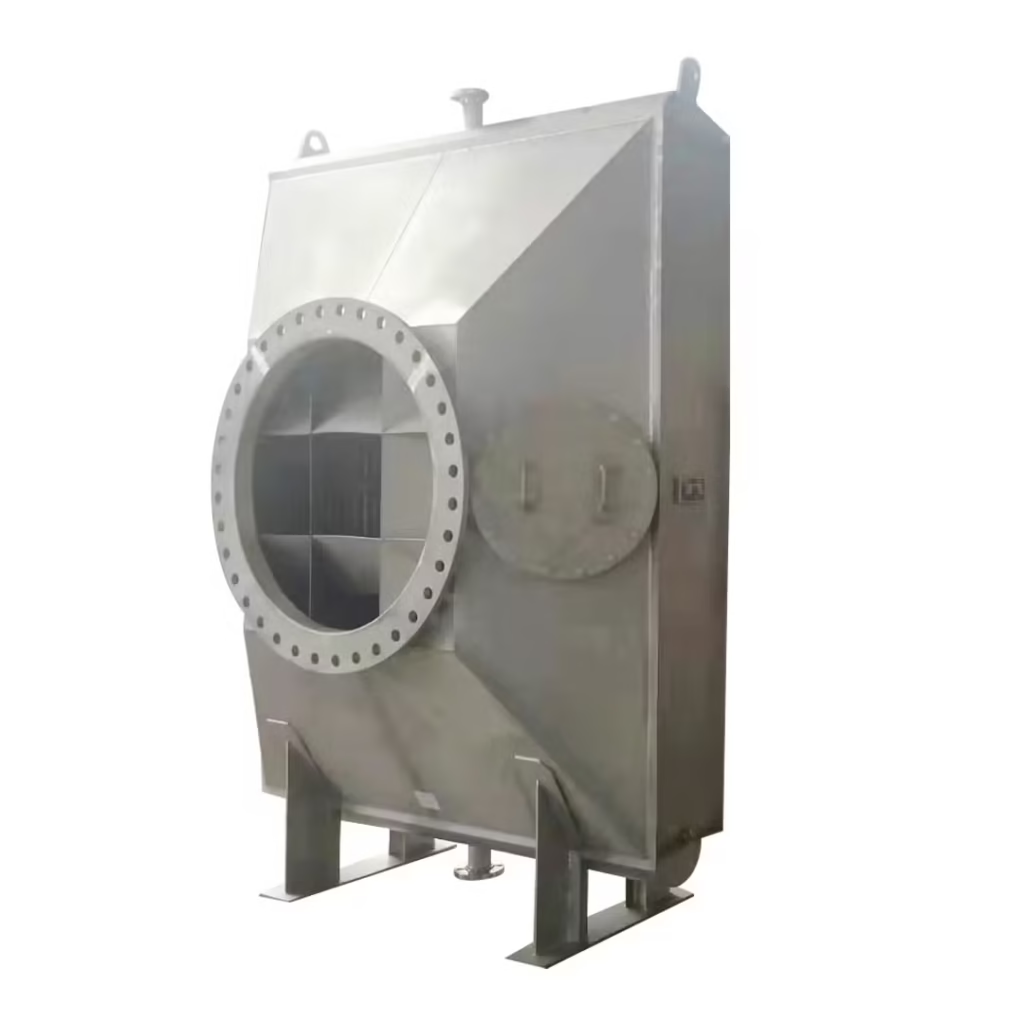
Keeping indoor air fresh while limiting energy waste is an important consideration in efficient building design. Heat recovery technology helps achieve both by capturing warmth from exhausted indoor air and transferring it to cooler incoming outdoor air. A heat recovery exchanger allows some of the thermal energy that would otherwise escape during ventilation to be reused within the property. This recovered heat can help maintain more stable indoor temperatures and reduce the demand placed on conventional heating equipment. By combining regular air renewal with energy recovery, the system offers a practical way to support indoor comfort, lower ventilation-related heat loss, and improve overall building efficiency.
Improving Residential Energy Efficiency
Heat-recovery exchangers allow households to reuse some of the thermal energy that would otherwise escape during ventilation. As warm indoor air leaves the living space, its heat is transferred to cooler outdoor air before the fresh supply enters the home. This exchange can narrow the temperature gap between incoming air and the indoor environment, potentially reducing the additional heating needed to maintain comfortable conditions.
Recovering heat can also help limit household energy waste. When paired with effective insulation, the system can contribute to more stable indoor temperatures and reduce the rate at which warmth escapes from the property. These benefits may be especially valuable during colder weather, when conventional heating systems often need to work harder to maintain comfort.
By recovering energy during routine air exchange, these systems connect ventilation with temperature management. For homes seeking to reduce heating demand and use energy more carefully, heat recovery offers a practical way to improve indoor efficiency while supporting more responsible household energy consumption.
Reducing Heat Loss during Everyday Ventilation
Replacing stale indoor air with fresh outdoor air does not have to mean losing all the warmth already generated inside a home. Heat-recovery exchangers capture some thermal energy from outgoing air and transfer it to the incoming supply. This allows ventilation to continue while preserving part of the heat that would otherwise be discharged outdoors.
Fresh-air circulation can help remove accumulated moisture, pollutants, and stale air, supporting a more comfortable indoor environment. Recovering heat during this process can also moderate temperature changes in colder weather, potentially reducing the need for additional heating to restore indoor warmth.
By making use of the energy contained in outgoing air, heat-recovery technology helps coordinate fresh-air supply with temperature control. Instead of allowing all residual warmth to escape, the system reuses part of that energy before the air leaves the building. This can help residential properties balance indoor comfort with more efficient energy use.
Combining Passive Airflow with Thermal Energy Recovery
Passive ventilation with heat recovery brings together natural air movement and heat exchange to support ventilation while potentially reducing reliance on powered fans. Differences in temperature and air pressure, along with wind conditions, can encourage airflow through a building, although the effectiveness of passive ventilation depends on the property’s design and surrounding conditions.
Heat recovery complements this movement by transferring some warmth from outgoing air to the fresh air entering the property. This can reduce the temperature adjustment needed after ventilation while allowing stale air and excess moisture to be removed. The resulting approach combines air renewal with more careful use of the thermal energy already available indoors.
For residential buildings, passive airflow paired with heat recovery can offer an option for managing ventilation and energy efficiency together. Where the design suits the property, reduced reliance on mechanical airflow may also simplify some aspects of operation. The overall performance, however, depends on factors such as climate, building layout, and ventilation requirements.
Balancing Indoor Warmth with Continuous Air Renewal
Heat-recovery exchangers help maintain indoor comfort by transferring thermal energy from outgoing air to the fresh air entering a home. This process supports regular ventilation while reducing the amount of heat lost through air exchange, potentially lowering the demand for supplementary heating during cooler periods.
A steady supply of outdoor air can help dilute indoor pollutants and manage moisture when the system is appropriately designed and operated. Heat-transfer technology allows some warmth to be retained during this process, helping balance fresh-air supply with indoor temperature requirements.
By coordinating air exchange and heat transfer, these systems can also help limit the sensation of cold air entering the living space. Their effectiveness depends on correct sizing, installation, and maintenance, but a suitable design can support comfortable indoor conditions while reducing ventilation-related heat loss in energy-conscious homes.
Fresh Indoor Air through an Air Recovery Ventilation System
An air recovery ventilation system helps homes exchange stale indoor air for fresh outdoor air while recovering some of the heat carried by the outgoing airflow. Transferring this energy to incoming air can reduce ventilation-related heat loss and help maintain more consistent indoor temperatures without relying entirely on conventional heating.
Regular air replacement can assist in removing excess moisture, allergens, and other airborne pollutants, depending on the system’s filtration and ventilation design. By combining fresh-air circulation with thermal recovery, the system supports indoor air management while helping limit unnecessary energy loss. This can be useful in homes where both ventilation quality and heating efficiency are priorities.
Recovering warmth during air exchange may also reduce the amount of supplementary heating needed in cooler conditions. With suitable design and installation, an air recovery ventilation system provides a practical way to coordinate indoor air renewal, thermal comfort, and more efficient household energy use.
Reusing Ventilation Heat to Cut Residential Heating Needs
Heat recovery can help households lower heating demand by reclaiming thermal energy from indoor air before it leaves the building. Rather than releasing all this warmth outdoors, the system transfers a portion of it to cooler incoming fresh air. This process can reduce the energy required to bring the incoming air closer to a comfortable indoor temperature.
The recovered heat can complement existing heating equipment, potentially easing its workload during colder weather. Meanwhile, stale indoor air can continue to be replaced, allowing ventilation to operate while some previously generated warmth is retained. This helps limit unnecessary thermal losses and supports more consistent indoor temperature control.
Making better use of heat during air exchange can contribute to more efficient household energy use. By linking ventilation with thermal recovery, these systems offer a practical way to maintain fresh indoor air while reducing the amount of useful warmth lost from residential properties.
Key Features to Compare in a Heat Recovery Ventilation System
Selecting the best heat recovery ventilation system involves assessing how effectively it can recover heat, circulate fresh air, and operate reliably within the home. Its capacity and layout should suit the property’s size and room arrangement, as well as work with the existing heating and ventilation setup where applicable. Effective heat exchange can preserve more warmth from outgoing air, while suitable filtration may help reduce the entry of dust, allergens, and other airborne particles.
Everyday usability also depends on several practical features. Low operating noise can make the system more suitable for bedrooms and living spaces, while adjustable airflow allows ventilation to accommodate changing occupancy and indoor conditions. Even air distribution can help maintain comfort across different rooms. Evaluating these factors helps households identify a system that balances dependable ventilation, useful heat recovery, and efficient energy use.
Features of Efficient Heat-Recovery Ventilation
Several components contribute to the overall performance of heat-recovery ventilation equipment. An efficient heat exchange core can transfer useful thermal energy between outgoing and incoming air while maintaining suitable airflow. Adjustable controls can provide greater flexibility by allowing ventilation rates to change according to occupancy, indoor conditions, and other requirements.
Filtration can provide additional air-quality benefits by capturing fine particles, allergens, and other contaminants as air passes through the system. Durable components can support dependable operation, while accessible parts can make routine inspection and cleaning easier to manage. Low-noise performance can also make ventilation more suitable for residential environments where excessive operating sound may cause disruption. Compact construction and flexible configurations can further assist with installation across different home layouts.
What to Look for When Buying a Heat Recovery Ventilator
Choosing the best heat recovery ventilator requires evaluating its ability to deliver fresh air while retaining useful indoor warmth. A suitable unit transfers thermal energy from exhausted air to incoming outdoor air, helping limit heat loss during regular ventilation. Filtration is another consideration, as appropriate filters can reduce certain airborne particles, including dust and allergens. Quiet operation can also make a difference in homes where ventilation runs throughout the day or overnight.
Compatibility with the property’s dimensions, room arrangement, and existing heating or ventilation equipment is equally important. Adjustable airflow can accommodate changing household needs, while robust components can contribute to dependable long-term performance. Systems with accessible filters and manageable servicing requirements may also be easier to maintain, helping preserve effective air exchange and heat recovery over time.
Conclusion
Heat recovery exchangers enable buildings to ventilate indoor spaces while recovering some of the thermal energy that would otherwise escape outside. Heat from extracted air can warm incoming fresh air, reducing the energy required to maintain suitable indoor temperatures. This exchange supports more controlled heating and potentially lower energy demand. In residential settings, the systems can also help maintain airflow balance and manage excess moisture. Integrating ventilation with thermal recovery offers a practical way to preserve indoor comfort while limiting unnecessary heat loss.
FAQs
How does a heat recovery exchanger transfer thermal energy?
A heat recovery exchanger moves heat from outgoing indoor air to incoming outdoor air through separate channels within the unit. Although the air streams remain separated, thermal energy passes between them. This process warms incoming fresh air and may reduce the additional heating required indoors.
What occurs inside a heat-recovery ventilation system?
A heat-recovery ventilation system extracts used indoor air and supplies fresh air from outside. Both streams travel through separate passages in the heat exchanger, where thermal energy moves between them without direct air mixing. As a result, incoming air can reach the property closer to its existing indoor temperature.
How can heat recovery support passive ventilation?
Heat recovery can work alongside passive ventilation by recovering warmth from outgoing air during the fresh-air exchange process. Retaining some of this energy may reduce heat loss and decrease the need for additional heating. This can help maintain comfortable indoor conditions while making ventilation more energy-conscious.
Do heat-recovery systems help maintain indoor air quality?
Heat-recovery systems can improve indoor air conditions by replacing stale air with fresh outdoor air and helping remove excess moisture and some airborne pollutants. Suitable ventilation rates are important for effective performance. Regular filter cleaning, correct airflow adjustment, and routine servicing also help maintain reliable operation.
| Related Business Listings |
| Contact Directory |
| Local Business Profiles |