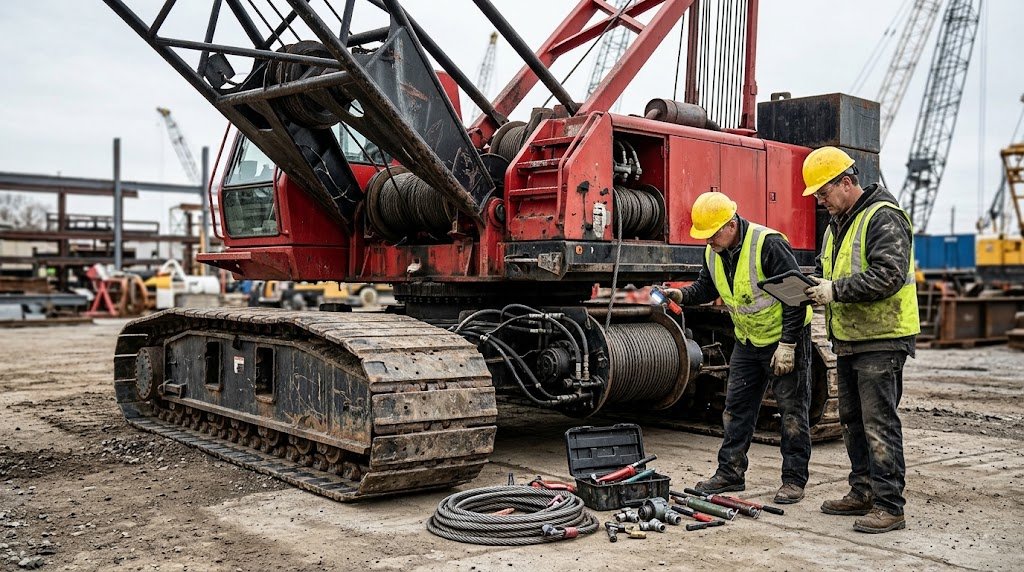
Owning a Manitowoc—whether it’s a 999, a 2250, or a 4100 that’s been earning its keep for decades—means an annual reckoning. Once a year, someone has to estimate twelve months of upkeep and defend that figure in a meeting. The conversation rarely goes well. The number in the spreadsheet tends to land too low, triggering a mid-year request for supplemental funds, or too high, and finance returns it with cuts already marked.
Budgeting for the coming year’s component needs doesn’t have to be guesswork, though. A structured process built on the machine’s real condition and spending history produces a figure you can stand behind. The steps below describe that process from walk-around to year-end reconciliation.
Begin With a Ground-Level Inspection
Before a single dollar figure belongs on paper, go look at the crane. Not from your office. Physically, with the operator, your mechanic, and the service log in tow. The three of you together see more than any one person alone.
You’re trying to answer one question: what could fail between now and next year? Start with the obvious wear points—hoist ropes, boom pendants, swing bearings, brake packs, hydraulic hoses, filter elements. Then move to the quieter items that get overlooked: pin and bushing clearances, gearcase oil condition, electrical contactors, and limit switches.
A thorough audit converts assumptions into a written list, and a list is the only thing that can be priced with confidence. Two people walking the same machine will still notice different flaws, so compare notes before you leave the yard.
Measurements only matter if you know the applicable limits. A knowledgeable crane parts supplier can benchmark your findings against published discard standards before anything gets written down. That check takes one phone call and prevents a month of regret.
Separate Scheduled Replacements From Watch Items
Once the audit is complete, divide the findings into two columns.
The first column covers scheduled replacements: swaps driven by operating hours, calendar age, or specification limits. Think hoist ropes at the manufacturer’s discard criteria, hydraulic filters at published intervals, and slewing-ring bolts serviced on documented cycles. Because the manufacturer already defines these intervals, the related Manitowoc parts budget cleanly at full estimated cost.
The second column is for watch items—the components your mechanic flagged but that haven’t failed yet. A brake pack showing glazing. A hose with surface cracking. A gearcase running louder than it should. Failure timing is genuinely uncertain; candidacy for replacement is not.
Apply a rough probability, somewhere near fifty percent, to each watch item and add the column. The blended result stays honest without inflating the total into something finance will challenge on sight.
Study What You Actually Spent
This is the step most teams skip, and it’s the one that prevents the most pain later.
Pull last year’s purchase orders and record real dollars by line item. You want actual spending, not the number that was originally approved. The gap between plan and reality tells you almost everything about your estimating accuracy.
A plan of forty thousand that came in at fifty-eight wasn’t a forecast; it was a wish. Treat last year’s actual Manitowoc parts spend as your floor, then layer on whatever the new inspection surfaced. Items that recurred three years running will probably recur again.
Secure Pricing Well Before the Deadline
Calling vendors the week the budget is due guarantees rushed, inflated, or placeholder numbers. Start weeks earlier and work the list calmly. An established crane parts supplier will quote current pricing ahead of time and may flag gaps you didn’t know you had.
Give them more than part numbers. Share the model, model year, configuration, and the environment where the machine works. The same rope specification can price differently depending on whether the crane runs in a standard crawler setup or with a fixed-jib package. Vendors who know this product line will ask those questions unprompted.
Lead times deserve the same attention as pricing. A component that costs thirty-two hundred dollars today but carries a fourteen-week wait can cost far more in idle days than on the invoice. If the schedule favors buying now, fold that purchase into the current year’s plan.
For anything substantial, collect at least two quotes. Real-world pricing varies with inventory position, sourcing origin, and freight lanes. One additional phone call often changes the number materially.
Build a Buffer You Can Defend
Even a careful audit and a clean comparison to prior spending will leave room for surprises. They always do. A pin shears. A pendant cracks. A control card fails on a Tuesday morning before a critical lift.
The old rule of thumb set the cushion at ten percent. That still works for a late-model machine in ordinary service. Older cranes and punishing duty cycles justify pushing it to twenty, and fifteen sits reasonably in between.
That line item is not discretionary slack. It’s what keeps you from returning to finance in October with an awkward supplement request. If the cushion goes unused, roll it into next year’s reserve or hand it back—either way, it did its job.
Remember Labor, Freight, and Idle Time
Parts dominate the budget conversation, but they don’t install themselves.
When you total everything, include installation labor, inbound freight, rigging for major component removals, and any downtime exposure around critical lift windows. Heavy components make freight a genuine line item rather than a rounding error. Scheduling the work also matters: a rope replacement planned around the lift calendar costs less than the same job performed under duress.
Budgeting parts alone and assuming the shop absorbs the rest works fine for filters and seals. It falls apart on a rope job, a bearing swap, or anything that pulls the machine out of service for days.
Track Actuals Against Plan All Year
Few teams bother with monthly reconciliation. Do it anyway; it’s the highest-return habit on this list.
Keep one simple sheet: line item, budgeted amount, actual, variance. Update it as invoices arrive. By the third month you’ll know whether the estimate is holding. By the sixth, you can flag a problem while it’s still a correction instead of a crisis.
That record also shortens next year’s exercise. You begin from validated history instead of a blank page and a memory of what you think you spent.
Final Thoughts
None of this requires sophistication. It requires showing up, writing things down, and resisting the urge to guess.
Inspect the machine in person. Split the findings into scheduled and conditional buckets. Anchor the math on last year’s real spending. Obtain early pricing from a crane parts supplier who understands the equipment. Fund a realistic cushion. Include labor and freight in the total. Reconcile the numbers every month.
Do the process once well and the figure will hold through December. Repeat it annually and the next round takes half the effort.