Protecting products during storage, handling, and transportation is an important part of effective packaging. Businesses that ship goods regularly need packaging materials that prevent damage, maintain product stability, and support safe handling. An L Shaped Paper Angle Board is a practical packaging solution designed to protect product edges, reinforce loads, and reduce the risk of damage during transportation.
Products can experience pressure, vibration, impact, and movement throughout the supply chain. Cartons may become compressed when stacked, palletised goods can shift during transportation, and exposed corners may suffer damage during handling.
Traditional packaging materials, such as stretch film and cardboard cartons, provide useful protection. However, they may not offer sufficient structural support for vulnerable edges and corners.
This is where paper angle boards become useful.
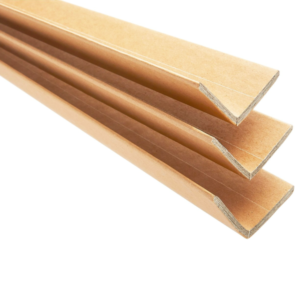
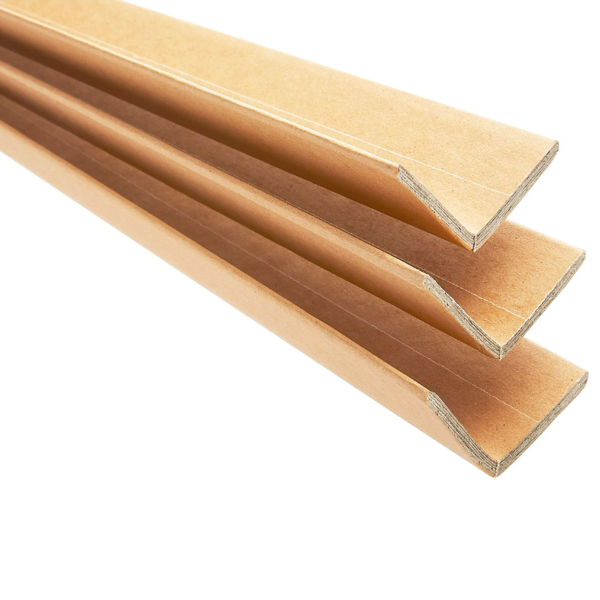
An L-shaped paper angle board is a rigid protective profile manufactured from multiple layers of compressed paperboard. Its angled structure provides support along two adjoining surfaces, making it suitable for protecting corners and reinforcing packaged products.
These boards are widely used in industries that require reliable packaging protection, including manufacturing, warehousing, logistics, construction materials, furniture, and food distribution.
This guide explains what L-shaped paper angle boards are, how they work, their benefits, applications, available sizes, and how to choose the right product for your packaging requirements.
What Is an L Shaped Paper Angle Board?
An L Shaped Paper Angle Board is a protective packaging component made from multiple layers of paperboard bonded and compressed into a rigid L-shaped profile.
It is designed to fit around the external corners and edges of packaged goods.
The two connected sides form a right-angle structure that provides protection along adjoining surfaces.
Paper angle boards are commonly used with cartons, palletised products, furniture, building materials, and other goods that require additional edge protection.
They are also known by several related names, including:
- L-shaped paper edge protectors.
- Paper corner boards.
- Cardboard angle protectors.
- Paperboard edge protectors.
- Packaging angle boards.
- Paper corner protection profiles.
Although these names are sometimes used interchangeably, products can differ in dimensions, thickness, strength, and intended application.
The main purpose is to distribute pressure, protect exposed edges, and improve packaging stability.
How Does an L Shaped Paper Angle Board Work?
The L-shaped profile provides support along two adjoining sides of a packaged product.
When positioned around a carton or pallet load, it creates a protective barrier between the product edges and external forces.
Its effectiveness comes from its construction and shape.
Protects Vulnerable Product Edges
Product corners are often more exposed to impact and compression than flat surfaces.
An angle board covers these vulnerable areas and helps distribute external pressure across a larger surface.
This can reduce direct contact between handling equipment, other packages, and the product itself.
Distributes Stacking Pressure
Warehouse goods are frequently stacked to maximise storage space.
However, excessive stacking pressure can damage cartons and the products inside them.
Paper angle boards help reinforce vertical edges, supporting the packaging structure and distributing pressure along the protected corners.
The actual load capacity depends on board thickness, dimensions, material quality, and application.
Improves Pallet Stability
Palletised products can move during loading, unloading, and transportation.
Vertical paper angle boards are commonly placed at pallet corners before stretch wrapping.
They help maintain the shape of the load and provide additional support when tension is applied through wrapping materials.
This creates a more organised packaging arrangement.
Reduces Handling Damage
Products may experience accidental knocks during warehouse handling.
Angle boards provide an additional protective layer around exposed edges.
They can help reduce damage caused by minor impacts, although they should be used alongside suitable cartons, cushioning, and other protective packaging where necessary.
Key Features of L Shaped Paper Angle Boards
Different packaging applications require different levels of protection.
Understanding the main features helps businesses select suitable products.
Rigid Multi-Layer Construction
Paper angle boards are generally manufactured using multiple layers of paperboard bonded together.
The layers are compressed to create a firm structure.
The number of layers, paper quality, adhesive, and manufacturing process influence the board’s strength.
L-Shaped Profile
The distinctive L-shaped design allows the protector to cover two adjoining surfaces.
This makes it suitable for external carton corners, pallet edges, and packaged products with right-angle profiles.
Customisable Dimensions
Angle boards are available in different lengths, widths, and thicknesses.
Manufacturers may also offer customised dimensions to match particular packaging requirements.
Lightweight Construction
Paper angle boards provide additional packaging support without adding substantial weight compared with many rigid protective materials.
This can be useful for businesses managing large shipping volumes.
Printable Surface
Some angle boards can be supplied with printed information, branding, or identification details.
Printing options depend on the manufacturer and product specifications.
Different Paper Grades
Manufacturers can use different paper grades depending on the required strength and application.
Businesses should discuss board specifications rather than assuming all paper angle protectors offer the same performance.
Benefits of Using L Shaped Paper Angle Boards
Using an L Shaped Paper Angle Board can improve packaging protection and support more organised shipping operations.
Here are some of its main benefits.
Better Edge and Corner Protection
The main advantage is protection for exposed product edges.
Carton corners can become crushed or damaged when packages come into contact with other goods.
Angle boards create a protective layer that helps distribute impact and pressure.
Improved Packaging Strength
Paper angle boards reinforce vulnerable sections of cartons and pallet loads.
They can help packaging maintain its shape during stacking and handling.
This is particularly useful for goods that require additional support around their edges.
Better Pallet Load Stability
Vertical angle boards can help keep palletised cartons aligned.
When combined with suitable stretch wrapping, they support a more stable packaging arrangement.
This can reduce the likelihood of individual cartons becoming displaced.
Support for Warehouse Storage
Warehouses often stack packaged goods to use available space efficiently.
Suitable angle boards can reinforce vertical edges and help protect cartons from compression.
However, the maximum safe stacking load should always be determined through appropriate packaging and load testing.
Lightweight Packaging Protection
Paper angle boards add relatively little weight to a package.
This can make them useful for businesses that want additional edge protection without significantly increasing shipment weight.
Flexible Packaging Applications
They can be manufactured in different sizes and thicknesses.
This makes them suitable for a wide range of products, from small cartons to large palletised loads.
Potentially Recyclable Packaging
Paper-based angle boards may be recyclable through suitable paper and cardboard recycling systems.
Actual recyclability depends on coatings, adhesives, contamination, and local recycling facilities.
Businesses should check the product specifications and local disposal requirements.
Common Applications of L Shaped Paper Angle Boards
L-shaped paper angle boards are used across many industries.
Their ability to protect edges and reinforce packaging makes them suitable for products with different dimensions and handling requirements.
Pallet Packaging and Shipping
Pallet packaging is one of the most common applications.
Angle boards are placed along the vertical corners of palletised goods.
They help reinforce the load and provide support during stretch wrapping.
This is useful for warehouses, distribution centres, and manufacturers shipping products in bulk.
Furniture Manufacturing
Furniture products often have exposed corners and edges that can be damaged during transportation.
Paper angle boards can protect:
- Table edges.
- Cabinet corners.
- Shelving panels.
- Wardrobe components.
- Wooden furniture panels.
- Flat-packed furniture cartons.
They are particularly useful when furniture is packed in large rectangular cartons.
Glass and Aluminium Products
Glass panels and aluminium profiles require careful packaging.
Angle boards can help protect the edges of suitable packaged products during handling and transportation.
However, fragile glass products may require additional cushioning, separators, and specialised protective packaging.
Construction Materials
Construction products such as tiles, panels, flooring materials, and building boards may require edge reinforcement.
Paper angle boards can help protect exposed corners when products are stacked or palletised.
The selected board must be appropriate for the product’s weight and handling conditions.
Electronics Packaging
Electronics packaging often requires protection against impact and movement.
Angle boards can reinforce external carton corners and support palletised shipments.
Additional cushioning and internal protective materials may still be necessary for sensitive electronic equipment.
Food and Beverage Distribution
Food and beverage products are often transported in stacked cartons.
Paper angle boards can help support pallet loads and protect outer carton edges.
For these applications, businesses should consider moisture exposure, packaging hygiene, and relevant food packaging requirements.
Textile and Paper Products
Large rolls of paper, fabric, and other materials may require edge protection during storage and transportation.
Suitable angle boards can help protect exposed edges and maintain packaging alignment.
L Shaped Paper Angle Board vs Other Edge Protection Materials
Choosing the right protective packaging depends on the product, shipment conditions, and required level of protection.
Paper angle boards are one of several available options.
Paper Angle Boards vs Plastic Edge Protectors
Paper angle boards are made from compressed paperboard.
Plastic edge protectors are manufactured using plastic materials.
Paper-based products may be suitable for businesses seeking recyclable packaging options where local recycling facilities accept them.
Plastic protectors may be preferred for certain applications requiring specific moisture resistance or repeated use.
The right choice depends on strength requirements, environmental conditions, cost, and disposal arrangements.
Paper Angle Boards vs Foam Edge Protectors
Foam protectors are generally designed to absorb impact and cushion vulnerable product surfaces.
Paper angle boards focus more on edge reinforcement and load support.
They serve different purposes, although they can be used together for products requiring both structural support and cushioning.
Paper Angle Boards vs Cardboard Corner Protectors
Cardboard corner protectors and paper angle boards may refer to similar products.
However, the terms can describe different profiles and constructions.
When purchasing, check the actual shape, dimensions, material thickness, and strength specifications.
How to Choose the Right L Shaped Paper Angle Board
Selecting the correct product is essential for effective packaging protection.
A board that is too small or weak may not provide sufficient support.
Consider these factors before purchasing.
Measure the Product Dimensions
Start by measuring the edges and corners that need protection.
The angle board should fit securely around the product without interfering with other packaging materials.
Accurate measurements help prevent gaps and unnecessary movement.
Select the Appropriate Leg Width
An L-shaped board has two sides, commonly called legs.
The leg width determines how much of each adjoining surface the protector covers.
Wider legs may provide greater surface coverage, depending on the application.
Choose dimensions that suit the product and packaging design.
Consider Board Thickness
Board thickness influences rigidity and resistance to compression.
Heavier products or demanding shipping conditions may require thicker angle boards.
The correct specification should be based on actual load requirements and testing.
Check Board Strength
Not all paper angle boards have the same strength.
Ask manufacturers about relevant performance specifications, including compression resistance and construction details.
The appropriate strength depends on pallet weight, stacking height, and transportation conditions.
Choose the Correct Length
Angle board length should match the protected section.
For vertical pallet protection, boards are commonly selected to cover the height of the pallet load.
For individual cartons, shorter sections may be sufficient.
Consider Moisture Exposure
Paperboard can be affected by moisture.
If products will be stored or transported in humid environments, discuss suitable moisture-resistant options with the manufacturer.
Protective packaging should also be stored in appropriate conditions before use.
Ask About Custom Manufacturing
Businesses with specialised packaging requirements may benefit from customised angle boards.
Manufacturers may offer different:
- Lengths.
- Leg widths.
- Thicknesses.
- Paper grades.
- Colours.
- Printing options.
Custom dimensions can help improve packaging compatibility and reduce unnecessary material use.
How to Use L Shaped Paper Angle Boards Correctly
Correct installation helps angle boards perform effectively.
The process depends on the product and packaging arrangement.
Prepare the Product or Pallet
Make sure cartons or products are arranged securely before installing the protectors.
Pallet loads should be positioned evenly and should not extend beyond the intended support area unless the packaging design allows it.
Position the Angle Boards
Place the L-shaped protectors around the exposed corners or edges.
For pallet loads, vertical boards are generally positioned at the external corners.
Make sure each board sits properly against the packaging.
Check Alignment
Ensure the boards are straight and cover the intended areas.
Misaligned protectors may not distribute pressure evenly.
Apply Stretch Film or Strapping
Use suitable stretch wrapping or strapping to secure the packaging.
Angle boards can help distribute the pressure from these materials across the protected edges.
The wrapping tension should be appropriate for the load.
Inspect the Finished Package
Check that the pallet is stable and that the angle boards remain in position.
Look for loose cartons, damaged corners, and uneven wrapping before moving the load.
Are L Shaped Paper Angle Boards Environmentally Friendly?
Environmental considerations are becoming increasingly important in packaging decisions.
Paper angle boards can offer advantages over certain non-paper protective materials.
However, their environmental performance depends on manufacturing and disposal conditions.
Paper-Based Construction
Paper angle boards are manufactured primarily from paperboard.
This makes them suitable for some packaging operations seeking paper-based alternatives.
Recyclability
Many uncoated paper angle boards can be recycled through suitable paper and cardboard recycling systems.
However, adhesives, coatings, moisture, and contamination can affect recycling suitability.
Check local recycling requirements.
Reduced Reliance on Plastic Packaging
Using paper angle boards may help businesses reduce their reliance on plastic edge protection in suitable applications.
However, paper protectors do not replace every type of plastic packaging.
Responsible Material Selection
Businesses should consider recycled paper content, manufacturing practices, material efficiency, and end-of-life disposal.
Selecting the correct board dimensions can also help avoid unnecessary packaging waste.
Common Mistakes to Avoid When Buying Paper Angle Boards
Choosing unsuitable packaging materials can lead to product damage and unnecessary expenses.
Avoid these common mistakes.
Choosing Based Only on Price
A cheaper board may not provide sufficient strength for heavier products.
Compare dimensions, thickness, material quality, and performance specifications.
Ignoring Product Measurements
Incorrect leg widths or lengths may leave vulnerable areas exposed.
Measure the product carefully before ordering.
Overlooking Stacking Requirements
Palletised products may experience significant pressure during storage.
Consider the total load weight and stacking arrangement when selecting board strength.
Not Considering Moisture
Paperboard products can lose performance when exposed to excessive moisture.
Select appropriate products for the storage and transportation environment.
Using Angle Boards Without Proper Wrapping
Angle boards are not always sufficient on their own.
Use suitable stretch film, strapping, cartons, and cushioning according to the packaging requirements.
Frequently Asked Questions About L Shaped Paper Angle Board
What Is an L Shaped Paper Angle Board?
An L Shaped Paper Angle Board is a protective packaging profile made from compressed layers of paperboard. It has two connected sides that form a right angle and protect exposed product edges and corners.
What Is an L Shaped Paper Angle Board Used For?
It is used to protect product edges, reinforce cartons, distribute stacking pressure, and improve pallet load stability during storage and transportation.
Are Paper Angle Boards Strong?
Yes. Paper angle boards can provide substantial edge reinforcement depending on their thickness, leg dimensions, paper quality, and construction. Their suitability should be assessed against the actual load requirements.
Are L Shaped Paper Angle Boards Recyclable?
Many uncoated paper angle boards can be recycled through appropriate paper and cardboard recycling systems. Recyclability depends on adhesives, coatings, contamination, and local facilities.
What Sizes Are Available for Paper Angle Boards?
Paper angle boards are available in different lengths, leg widths, and thicknesses. Some manufacturers also offer customised dimensions for specific packaging applications.
Can Paper Angle Boards Be Used for Pallet Packaging?
Yes. They are commonly positioned along the vertical corners of palletised cartons. They help reinforce the load and support stretch wrapping.
Do Paper Angle Boards Protect Furniture During Shipping?
Yes. They can protect exposed furniture edges and corners during storage and transportation. Additional cushioning may be needed for delicate surfaces and fragile components.
What Is the Difference Between a Paper Angle Board and a Corner Protector?
The terms are sometimes used interchangeably. However, different manufacturers may use them to describe different profiles and constructions. Always check product dimensions and specifications.
Can L Shaped Paper Angle Boards Be Customised?
Yes. Manufacturers may offer customised lengths, leg widths, thicknesses, paper grades, and printing options depending on production capabilities and order quantities.
Are Paper Angle Boards Suitable for Heavy Products?
They can be suitable for many heavy packaging applications when correctly specified. Board strength, pallet weight, stacking height, and transportation conditions should be considered.
How Are Paper Angle Boards Attached to Pallets?
They are generally positioned around pallet corners and secured using stretch film, strapping, or other suitable packaging methods.
Can Paper Angle Boards Be Used With Stretch Film?
Yes. They are frequently used together. The boards provide edge reinforcement and help distribute wrapping pressure across the protected corners.
Are Paper Angle Boards Waterproof?
Standard paper angle boards are not waterproof. Some manufacturers may offer moisture-resistant options, but product specifications should be checked before use in damp environments.
Which Industries Use Paper Angle Boards?
Common users include manufacturing, furniture, logistics, warehousing, construction materials, electronics, food distribution, and paper product industries.
How Do I Choose the Right Paper Angle Board?
Consider product dimensions, leg width, thickness, length, load weight, stacking requirements, moisture exposure, and transportation conditions. A packaging supplier can help identify a suitable specification.
Final Thoughts on L Shaped Paper Angle Board
An L Shaped Paper Angle Board is a practical packaging solution for businesses that need additional protection for product edges and palletised loads.
Its rigid paperboard construction and distinctive profile help protect corners, distribute pressure, reinforce cartons, and support packaging stability during storage and transportation.
From furniture manufacturing and construction materials to warehouse distribution and industrial shipping, these protective boards serve a wide range of packaging applications.
Choosing the right product requires careful consideration of dimensions, thickness, material quality, load requirements, and environmental conditions.
Businesses should also evaluate how angle boards will work with existing cartons, stretch film, strapping, and other protective materials.
Before purchasing, compare product specifications and discuss your packaging requirements with a suitable manufacturer or supplier.
With the right dimensions and proper application, paper angle boards can improve packaging protection, support safer handling, and help businesses maintain product condition throughout the supply chain.