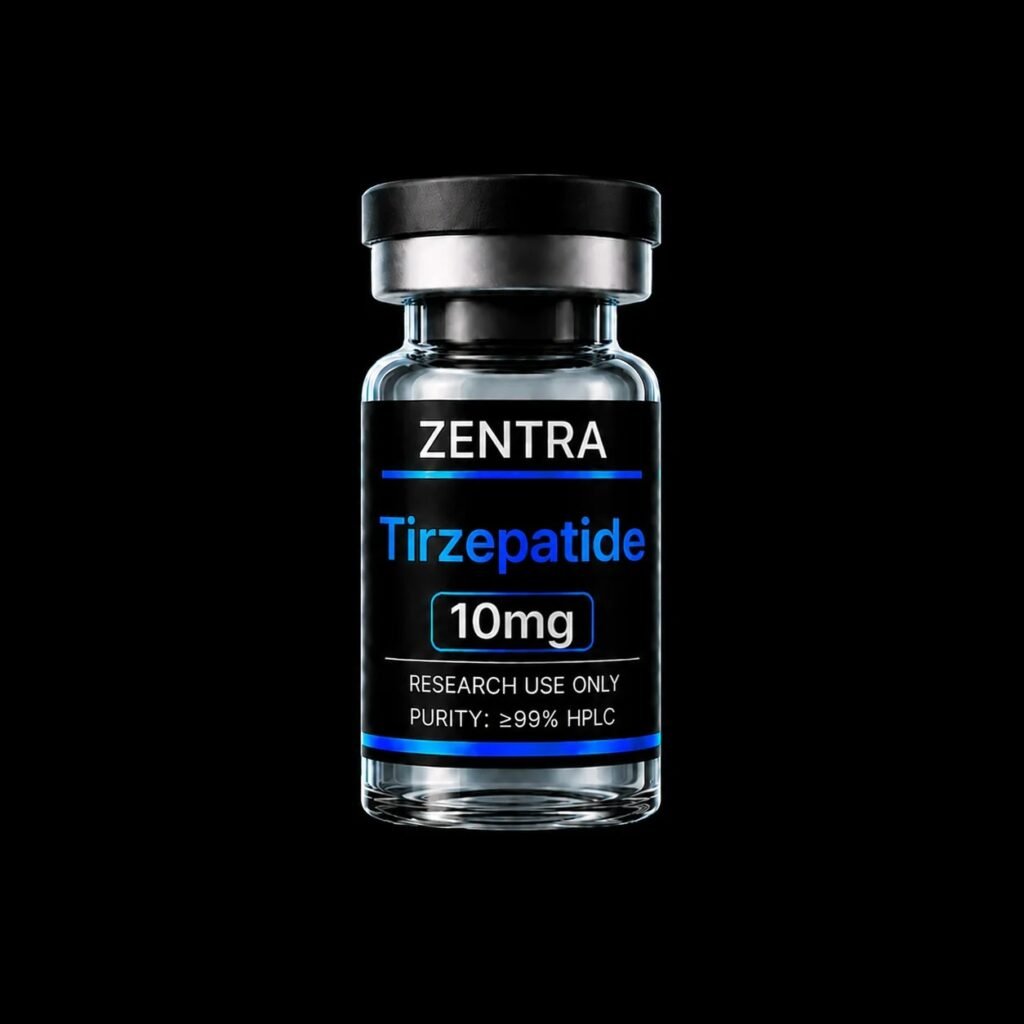
Tirzepatide is a single-molecule peptide designed to activate both glucose-dependent insulinotropic polypeptide (GIP) and glucagon-like peptide-1 (GLP-1) receptors. Its ability to act on two different receptors made it a valuable topic for metabolic research in the field of glucose metabolism, appetite signalling, and energy metabolism.
In contrast to the majority of incretin-based substances targeting just one mechanism, Tirzepatide 20mg acts on two similar mechanisms of signalling, giving researchers a chance to understand the role of combined action on receptors in physiologic processes. Research continues to understand how each pathway affects its pharmacological profile.
Understanding GIP and GLP-1 Receptor Signalling
Both GIP and GLP-1 are naturally occurring incretin hormones that are secreted when nutrients reach the digestive tract. Their receptors are localised in the cells of the pancreas and other organs taking part in the metabolism regulation process. The pathways are both involved in glucose-dependent insulin secretion but have distinct biological properties.
Activation of the GLP-1 receptors involves some physiological processes associated with metabolic research such as:
- Insulin secretion in a glucose-dependent manner
- Glucagon secretion regulation
- Gastric emptying changes
- Appetite signaling
How Tirzepatide Engages Both Receptors
Structurally, tirzepatide is a modification of GIP and designed for interaction with the two GIP and GLP-1 receptors. It is evident from studies that it has significant activity at the GIP receptor and also activates the GLP-1 receptor, even though it may not necessarily exhibit the same pharmacological properties at both target receptors.
It is essential to understand this property when discussing the research that involves Tirzepatide 20mg. A dose does not define receptor activation on its own. The researcher should take into account such factors as the molecular structure, affinity of the molecule to the receptor, signalling pathway, the conditions of the experiment, and the biological model used.
Why Dual Receptor Activity Matters in Research
The scientific importance of the research on tirzepatide does not consist only in the identification of two receptors that are targeted by the drug. Scientists are exploring how dual activity of GIPR and GLP-1R affects the pathways of metabolism.
An important aspect is glucose homeostasis. Incretin receptors play a role in insulin release dependent on the blood glucose concentration; the activity of GLP-1 receptors affects glucagon and gastrointestinal activities, whereas the GIP pathways are researched concerning their impact on metabolic and adipose signalling.
Studying the pathways of appetite and energy regulation, scientists have found that the activation of GLP-1 and GIP receptors located in appetite-regulating centres of the brain may affect food intake and metabolism.
Current Research Questions
While the evidence for the clinical and pharmacological potential of Tirzepatide 20mg is well-established, there are ongoing research questions that still need to be explored regarding this drug. Researchers are still interested in knowing how long-term GIP receptor activation works in humans, how it modulates receptor signalling, and which mechanisms are mostly responsible for particular physiological results.
Recent reviews also highlight interest in the connection between incretin signalling and cardiovascular, renal, lipid, and cardiometabolic mechanisms. These mechanisms may help scientists to better understand the biological effects of dual GIP and GLP-1 receptor activation.
Research-Grade Evaluation Requires Careful Characterisation
When conducting lab research, it is essential to take care to characterise the material used for experiments accurately. It is possible to take into account different aspects such as molecular identity, analytical characterisation, purity profile, batch information, storage conditions, and adequate controls.
It is also essential to differentiate research findings from clinical facts about the substance. Mechanistic observations of cellular or animal models cannot be automatically applied to human physiology. Thus, an evidence-based approach includes all mentioned elements.
Conclusion
Tirzepatide’s role in both GIP and GLP-1 receptors makes it significant to be studied for future metabolic studies. Future research will shed more light on the way this drug influences pathways associated with glucose, appetite, and energy by its unique receptor signalling. Researchers looking into the effects of Tirzepatide 20mg should ensure proper characterisation and evidence-based interpretation.
Zentra Labs provides research-focused materials for investigators seeking clearly characterised compounds and relevant analytical information.