Clear water isn’t necessarily safe water. Some contaminants can affect the taste, smell, or appearance of your drinking water, while others may be present without any noticeable warning signs.
For homeowners in Springfield, Manitoba, choosing a water treatment system starts with understanding what’s actually in the water.
A household using a private well may need protection against bacteria or other microorganisms. Another home might have concerns about dissolved minerals, unwanted tastes, or specific chemical contaminants.
Reverse osmosis and ultraviolet (UV) purification are two common water treatment technologies, but they solve different problems.
Understanding how each works can help you decide whether your home needs filtration, disinfection, or a combination of both.
Why Water Quality Testing Should Come First
Before investing in water treatment equipment, it’s important to identify the contaminants you want to address.
Water quality can vary depending on whether a home receives municipal water or uses a private well.
Private wells require particular attention because homeowners are responsible for monitoring their water quality.
Bacteria, nitrates, dissolved minerals, iron, and other substances may be present depending on local groundwater conditions.
Some contaminants create obvious symptoms, such as staining or unpleasant odors. Others cannot be detected by sight, smell, or taste.
A laboratory water test can identify concerns that require treatment.
For private wells, microbiological testing is especially important. Chemical testing should also reflect local risks and the property’s water history.
Professional water treatment providers can use these results to recommend suitable equipment rather than relying on assumptions.
What Is a Reverse Osmosis Water System?
Reverse osmosis, commonly called RO, is a filtration process that uses pressure to move water through a semipermeable membrane.
The membrane allows water to pass while rejecting many dissolved substances.
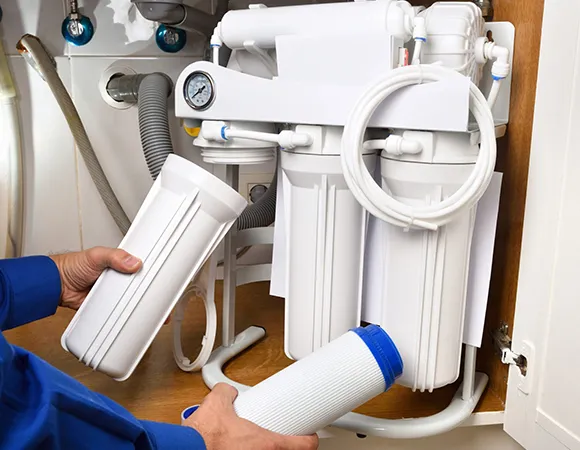
Residential RO systems typically include additional filtration stages that protect the membrane and improve treated water quality.
Many homeowners install these systems beneath the kitchen sink to supply drinking and cooking water.
Professional Reverse Osmosis Systems in Springfield MB can be selected according to household water quality, plumbing conditions, and daily drinking water requirements.
However, not every RO system removes the same contaminants. Performance depends on the membrane, additional filters, system design, and product certifications.
How Reverse Osmosis Filtration Works
Most residential reverse osmosis systems use several treatment stages.
Sediment Pre-Filtration
The first stage commonly removes suspended particles such as sand, rust, and sediment.
This helps protect downstream components from premature clogging.
Carbon Filtration
Carbon filters can reduce chlorine and certain compounds that affect taste and odor.
Removing chlorine is particularly important for protecting many RO membranes.
Reverse Osmosis Membrane
Water passes through the membrane under pressure.
The membrane rejects a portion of dissolved salts and other contaminants, while treated water continues through the system.
The rejected contaminants leave with a separate wastewater stream.
Final Filtration
Some systems include a post-carbon filter to improve taste before water reaches the drinking faucet.
Additional stages may be included depending on the product.
The exact filtration arrangement varies by manufacturer.
What Can Reverse Osmosis Remove From Water?
Properly selected and certified RO systems can reduce a wide range of dissolved contaminants.
Depending on the product, these may include:
- Dissolved salts and total dissolved solids
- Lead and certain other metals
- Nitrates and nitrites
- Arsenic
- Fluoride
- Certain additional contaminants identified by the manufacturer’s certification
It’s important to check the specific system’s tested reduction claims.
A general statement that a system uses reverse osmosis doesn’t guarantee removal of every harmful substance.
RO systems also shouldn’t automatically be considered a substitute for microbiological disinfection, particularly when treating water with an uncertain or contaminated source.
For households with bacterial contamination concerns, additional treatment may be necessary.
What Is UV Water Purification?
Ultraviolet water purification uses UV light to inactivate susceptible microorganisms.
As water flows through a treatment chamber, a specialized lamp exposes microorganisms to a controlled dose of ultraviolet radiation.
This can prevent bacteria, viruses, and certain other pathogens from reproducing or causing infection when the system is properly designed and operated.
Unlike conventional filtration, UV treatment doesn’t physically remove dissolved minerals or chemicals.
It also doesn’t soften hard water or remove iron staining.
Professional UV Water Purification Solutions in Springfield MB are particularly relevant for homeowners concerned about microbiological contamination in private wells or other water supplies.
The system must be properly sized for the water flow rate and the water quality entering the treatment chamber.
How UV Water Purification Works
UV systems usually contain a lamp positioned inside a protective sleeve within a treatment chamber.
Water passes through the chamber and receives UV exposure.
For effective disinfection, several conditions must be met.
Adequate UV Dose
The system must deliver enough UV energy to achieve its intended microbial reduction.
Flow rate, lamp output, and system design all influence the delivered dose.
Clear Incoming Water
Particles and cloudiness can interfere with UV treatment by shielding microorganisms from the light.
Pretreatment may be necessary when water contains sediment, iron, or other substances that reduce UV transmission.
Proper Equipment Sizing
A system must match the household’s peak water demand.
Excessive flow can reduce exposure time and compromise treatment performance.
Ongoing Lamp Maintenance
UV lamps lose effective output over time.
Many residential systems require lamp replacement approximately once a year, although the manufacturer’s schedule should always take priority.
The protective sleeve may also require cleaning to remove deposits that interfere with light transmission.
Reverse Osmosis vs. UV Purification: Key Differences
Although both technologies improve water quality, they serve different purposes.
| Feature | Reverse Osmosis | UV Purification |
| Primary function | Reduces dissolved contaminants | Inactivates microorganisms |
| Treatment method | Membrane filtration | Ultraviolet light exposure |
| Reduces dissolved salts | Yes | No |
| Treats bacteria and viruses | Not a reliable standalone disinfection strategy | Yes, with proper system design |
| Changes water taste | May improve taste | Generally does not |
| Typical residential setup | Under-sink drinking water | Often installed on the main water supply |
| Main maintenance | Filter and membrane replacement | Lamp and sleeve maintenance |
| Produces reject water | Yes | No |
Neither technology is universally better.
The appropriate choice depends on the contaminants identified through testing and the water quality goals of the household.
Can Reverse Osmosis and UV Purification Work Together?
Yes. Some homes benefit from using both technologies.
For example, a private well may contain dissolved contaminants that require RO filtration and microorganisms that require UV disinfection.
In this situation, the systems address different water quality concerns.
A whole-home UV system may treat water entering the property, while an under-sink RO unit provides additional filtration for drinking and cooking.
However, the treatment arrangement must be designed around actual test results.
Depending on water conditions, sediment filtration, iron removal, or softening may also be necessary.
The order of treatment matters because excessive sediment, hardness deposits, or iron can interfere with certain components.
A qualified water treatment professional should evaluate the entire system rather than recommending equipment separately.
Choosing the Right Water Treatment System for Your Home
Several practical considerations influence equipment selection.
Your Water Source
Municipal and private well water have different treatment considerations.
Municipal supplies generally receive regulated treatment before distribution.
Private wells require homeowner-managed testing and treatment.
Your Water Test Results
Choose equipment based on identified contaminants.
If bacteria are present, an appropriate disinfection strategy is needed.
If dissolved contaminants exceed recommended or regulated levels, a certified filtration system may be suitable.
Household Water Consumption
RO systems must produce enough treated water for their intended use.
UV systems must handle the required flow rate without reducing the delivered disinfection dose.
Available Installation Space
Under-sink RO systems require room for filters, connections, and sometimes a storage tank.
Whole-home UV systems need an appropriate location in the plumbing system and access for maintenance.
Maintenance Requirements
Every treatment system requires ongoing attention.
Consider replacement filter costs, lamp availability, monitoring requirements, and the time needed for servicing.
What Happens During Professional Installation?
A water treatment installation should begin with a review of the property’s water quality and plumbing arrangement.
Initial Water Assessment
The installer reviews test results and identifies the contaminants that require treatment.
Additional laboratory testing may be recommended when existing results are incomplete.
System Selection
Equipment is selected according to the water source, treatment objectives, flow requirements, and available installation space.
Plumbing Installation
The technician installs the equipment at an appropriate location and connects the necessary plumbing.
RO systems typically require a drinking water connection and a drain for reject water.
UV systems require suitable plumbing connections and electrical power.
System Testing
After installation, the technician checks for leaks, verifies operating conditions, and confirms that the system functions according to manufacturer requirements.
Follow-up water testing may be necessary to confirm that treatment objectives are being met.
Maintenance Guidance
The homeowner should receive instructions covering filter replacement, lamp maintenance, warning indicators, and other operating requirements.
Affordable Water Treatments of Manitoba provides water testing, reverse osmosis installation, UV purification, and water filter maintenance for homeowners in Springfield and surrounding communities.
Common Water Treatment Mistakes to Avoid
Installing a water treatment system without understanding the water supply can lead to unnecessary costs or inadequate treatment.
Skipping water testing: Different contaminants require different treatment methods.
Assuming one filter removes everything: No single residential system is appropriate for every water quality problem.
Ignoring pretreatment: Sediment, iron, and hardness may interfere with equipment performance.
Choosing equipment based only on price: System certification, capacity, and maintenance requirements also matter.
Delaying filter or lamp replacement: Treatment performance can decline when components exceed their recommended service life.
Assuming clear water is safe: Harmful microorganisms and dissolved contaminants may be present without visible signs.
A treatment plan should address the actual water quality problem and include a practical maintenance schedule.
How Much Do Reverse Osmosis and UV Systems Cost?
Installation costs vary depending on the equipment and property requirements.
For RO systems, pricing depends on filtration stages, membrane capacity, storage arrangements, plumbing modifications, and optional features.
UV system costs depend on treatment capacity, lamp specifications, monitoring features, and required pretreatment.
Whole-home installations may involve more plumbing work than under-sink systems.
Ongoing expenses also differ.
RO systems require periodic filter replacement and eventual membrane replacement.
UV systems generally require scheduled lamp replacement, sleeve maintenance, and electricity.
When comparing quotes, ask about both the installation price and expected maintenance costs.
How to Choose a Water Treatment Company in Springfield
A reliable water treatment provider should explain what the equipment can and cannot accomplish.
Before purchasing Reverse Osmosis Systems in Springfield MB, ask which contaminants the proposed unit is certified to reduce, how much water it produces, and what maintenance it requires.
When evaluating UV Water Purification Solutions in Springfield MB, ask about flow capacity, pretreatment requirements, UV performance certification, monitoring, and lamp replacement.
Other useful questions include:
- Will the recommendation be based on water test results?
- Are installation and testing included in the quote?
- What maintenance is required each year?
- Are replacement components readily available?
- What warranty coverage applies?
- Can the company service the equipment after installation?
Affordable Water Treatments of Manitoba advertises 15 years of experience and offers water softener repair, iron filtration, reverse osmosis systems, UV purification, and water filter maintenance.
The company serves Springfield, Winnipeg, Saint Andrews, East Saint Paul, and West Saint Paul.
Frequently Asked Questions
Does reverse osmosis remove healthy minerals from drinking water?
Reverse osmosis reduces many dissolved minerals, including calcium and magnesium. Most people obtain essential minerals primarily through food, although drinking water can contribute. Some RO systems include remineralization stages. Whether these are useful depends on personal preferences, dietary considerations, and water quality.
Can UV purification protect water during a power outage?
Most conventional UV systems require electricity to operate. If power is interrupted, disinfection may stop. Some systems include automatic shutoff valves or alarms to reduce the risk of untreated water passing through. Homeowners should follow the manufacturer’s instructions and have a safe backup water plan.
How often should private well water be tested in Manitoba?
Manitoba recommends regular private well testing, including bacterial testing at least annually and more frequently when circumstances warrant. Chemical testing should follow provincial guidance and local risk factors. Test after flooding, well repairs, or noticeable changes in water quality, and follow public health advice if contamination is suspected.
Does UV purification make hard water softer?
No. UV treatment inactivates susceptible microorganisms but doesn’t remove calcium or magnesium, the minerals responsible for water hardness. A water softener may be appropriate when hardness causes scale buildup or interferes with household equipment.
What certifications should I look for in a water treatment system?
For RO systems, look for applicable NSF/ANSI 58 certification and verify the specific contaminant reduction claims. For UV systems, NSF/ANSI 55 certification is relevant, with different classifications for different treatment purposes. Certification details should match the intended water source and treatment needs.
Conclusion
Choosing a water treatment system starts with understanding the water entering your home.
Reverse osmosis can reduce many dissolved contaminants and improve drinking water quality. UV purification addresses microbiological concerns through disinfection.
Some Springfield households may benefit from one technology, while others need a combination of treatment methods.
The right decision depends on water testing, equipment capacity, installation requirements, and ongoing maintenance.
Affordable Water Treatments of Manitoba provides reverse osmosis filtration, UV purification, iron removal, water softener repair, and water filter maintenance for residential and commercial customers.
With 15 years of experience and service throughout Springfield and surrounding Manitoba communities, the company helps property owners choose treatment equipment suited to their water quality concerns.
If you’re unsure what your water needs, start with an evaluation rather than guessing which system to purchase.