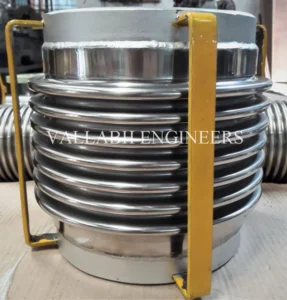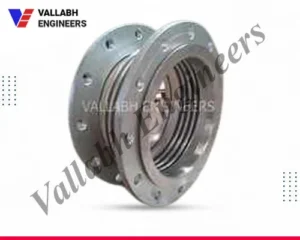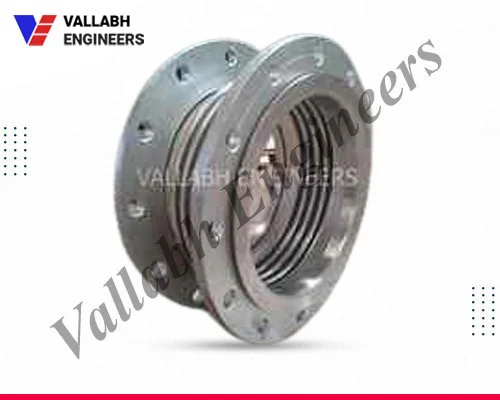
If you want to safely absorb the temperature-induced expansion or contraction of construction materials, these expansion joints are exactly what you need. Vallabh Engineers is considered one of the most reliable Expansion Joint Manufacturers in Vadodara.
Expansion Joint: Types, Benefits, Applications and Selection Guide
Explore Expansion Joint types, benefits, industrial applications and selection factors. Find suitable solutions from Vallabh Engineers.
An Expansion Joint is a flexible component installed in piping systems, ductwork and industrial structures to accommodate movement caused by temperature changes, pressure variations, vibration and mechanical forces. It helps manage expansion and contraction while reducing excessive stress on connected components.
Industrial equipment and pipelines operate under different environmental and operating conditions. Temperature fluctuations, continuous machinery operation and structural movement can create additional loads on connected systems. A properly designed Expansion Joint provides controlled flexibility and supports the reliability of the complete installation.
Vallabh Engineers provides industrial bellows solutions for different engineering and manufacturing requirements.
What Is an Expansion Joint?
An Expansion Joint is a specially designed component that allows controlled movement between two connected sections of a system. It accommodates displacement caused by thermal expansion, contraction, vibration and other operating conditions.
In industrial piping, metallic joints commonly use flexible corrugated bellows manufactured from stainless steel or suitable alloys. Other designs use rubber, fabric or different materials depending on the application.
The construction, material, dimensions and movement capacity are selected according to operating pressure, temperature, process medium and installation requirements.
Common Types of Expansion Joints
Different joint configurations are designed to accommodate specific types of movement. Selection depends on the system layout and engineering requirements.
1. Metallic Expansion Joints
Metallic joints generally use corrugated metal bellows to accommodate movement in industrial piping and ducting systems. Stainless steel is commonly considered because of its mechanical strength and corrosion resistance.
They are suitable for selected high-temperature and demanding industrial applications, subject to design limitations.
2. Rubber Expansion Joints
Rubber joints are manufactured using flexible elastomeric materials. They are commonly used in water pipelines, HVAC systems, pumping stations and compatible fluid applications.
Their flexibility can help accommodate movement and vibration, but material compatibility and temperature limitations must be checked.
3. Fabric Expansion Joints
Fabric expansion use flexible fabric-based materials, often with insulation or protective layers. They are commonly installed in industrial ducting systems, boilers and flue-gas applications.
They can accommodate movement in large ducts where metallic constructions may not be suitable.
Key Benefits of Expansion Joints
A properly selected Joint provides several advantages when integrated into a complete engineering design.
1. Accommodates Thermal Expansion
Pipes and ductwork expand when heated and contract when cooled. Expansion joints accommodate specified movement and help reduce excessive stress on connected components.
2. Helps Manage Vibration
Pumps, compressors, turbines and other industrial machinery generate vibration during operation. A suitably designed flexible joint can reduce vibration transmission through connected systems.
3. Reduces Mechanical Stress
Equipment movement, temperature fluctuations and installation tolerances can create additional loads. Expansion joints accommodate defined displacement and help manage these forces.
Industrial Applications of Expansion Joints
Expansion joints are used in industries where pipelines, ducts and connected equipment experience movement, vibration or temperature changes.
Power Generation Industry
Power plants use joints in steam pipelines, boiler connections, turbine systems and flue-gas ducting. High operating temperatures and repeated thermal cycles make movement accommodation important.
Oil and Gas Industry
Oil and gas facilities use suitable joints in selected pipeline and equipment connections. Pressure, temperature, corrosion exposure and process medium influence material and design selection.
Chemical and Petrochemical Industry
Chemical processing plants require expansion joints that are compatible with specific process fluids and gases. Material selection depends on chemical concentration, temperature and corrosion risks.
Water Treatment Plants
Water treatment facilities use suitable rubber and metallic expansion joints in pumping systems, water pipelines and treatment equipment connections. Selection depends on pressure, fluid compatibility and movement requirements.
HVAC and Building Services
Heating, ventilation and air-conditioning systems use expansion joints in selected water pipelines, cooling systems and duct connections. Flexible joints can also help manage vibration around pumps and air-handling equipment.
Manufacturing and Industrial Machinery
Manufacturing facilities use expansion joints around pumps, compressors, generators and other equipment. They accommodate movement and help reduce excessive loads on connected systems.
Marine and Shipbuilding Industry
Marine installations experience vibration, thermal movement and equipment displacement. Suitable expansion joints are used in selected engine, exhaust and piping connections.
Metallic vs Rubber vs Fabric Expansion Joints
Different expansion joint materials serve different operating requirements.
Metallic Joints
- Generally manufactured from corrugated stainless steel or suitable alloys.
- Considered for demanding pressure and temperature applications.
- Accommodate specified axial, lateral and angular movement.
- Require proper anchoring, guiding and pressure thrust calculations.
Rubber Joints
- Manufactured using flexible elastomeric materials.
- Commonly used in water, HVAC and compatible fluid systems.
- Can provide flexibility and vibration isolation.
- Have material-specific temperature, pressure and chemical compatibility limits.
Fabric Joints
- Manufactured using flexible fabric-based materials.
- Commonly used in industrial ducts and flue-gas systems.
- Can accommodate movement in large ducting arrangements.
- Require suitable fabric, insulation and protective construction for operating conditions.
The correct configuration depends on temperature, pressure, movement, process medium and installation conditions.
How to Select the Right Expansion Joint
Choosing the correct Joint requires accurate information about the system and its operating conditions.
Consider these important factors:
- Operating Pressure: Confirm design pressure, normal operating pressure and any vacuum conditions.
- Temperature Range: Provide minimum, maximum, normal and start-up temperatures.
- Movement Requirements: Identify axial, lateral and angular displacement, including combined movement.
- Material Compatibility: Select a suitable material according to corrosion exposure and process medium.
- Dimensions: Confirm pipe diameter, duct size, face-to-face length and connection details.
- Operating Cycles: Consider how frequently the system heats, cools, starts or stops.
- Installation Conditions: Review available space, alignment, supports, anchors and guides.
Engineering calculations should also assess pressure thrust, fatigue life, flow conditions and the need for liners, covers or reinforcement. Proper installation and periodic inspection are essential for reliable performance.
Why Choose Vallabh Engineers?
Selecting an expansion joint manufacturer involves more than matching dimensions. Material specifications, fabrication capabilities, inspection procedures and project requirements all influence product suitability.
Vallabh Engineers provides industrial bellows solutions for different engineering and manufacturing applications. Sharing technical drawings, operating pressure, temperature, movement requirements, dimensions and process information helps assess a suitable configuration for the project.
Frequently Asked Questions (FAQs)
1. What is the main purpose of an Joint?
An Expansion Joint accommodates movement caused by temperature changes, vibration, pressure conditions and mechanical displacement in connected systems.
2. What are the common types of joints?
Common types include metallic, rubber, fabric, axial, hinged, gimbal, universal and pressure-balanced expansion joints.
3. Which material is commonly used in joints?
Stainless steel, suitable alloys, rubber and flexible fabric materials are used depending on the application and operating conditions.
4. Do expansion require maintenance?
Yes. Regular inspections should check for corrosion, cracks, leakage, deformation and signs of abnormal movement. Inspection frequency depends on operating conditions and manufacturer recommendations.
5. What information is required for an joint quotation?
Provide drawings, dimensions, operating pressure, temperature, movement requirements, process medium, connection details and installation conditions.
Conclusion
An Expansion Joint is an important component in industrial piping, ducting and equipment connections that experience thermal expansion, contraction, vibration and mechanical movement. Its performance depends on suitable material selection, correct configuration, engineering calculations and proper installation.
Vallabh Engineers offers industrial bellows solutions for varied project requirements. Contact us today to discuss your application, request a quotation and place your order.