LipoBliss supplement: understanding its ingredients and safety information in 2026.
Dietary supplements are widely discussed in the health and wellness industry. From botanical extracts to vitamins and minerals, consumers encounter many products that claim to support different aspects of general wellness. However, understanding what a supplement contains, what research says about its ingredients, and what limitations exist is essential before drawing conclusions.
LipoBliss is a dietary supplement that has appeared in online discussions about metabolism, appetite, and weight management. Its marketing materials describe a botanical-based formula containing several plant-derived ingredients. However, advertised benefits should always be distinguished from independently established scientific evidence.
The goal is to help readers understand how to evaluate supplement-related information responsibly rather than accepting marketing statements as proven medical facts.
What Is LipoBliss?
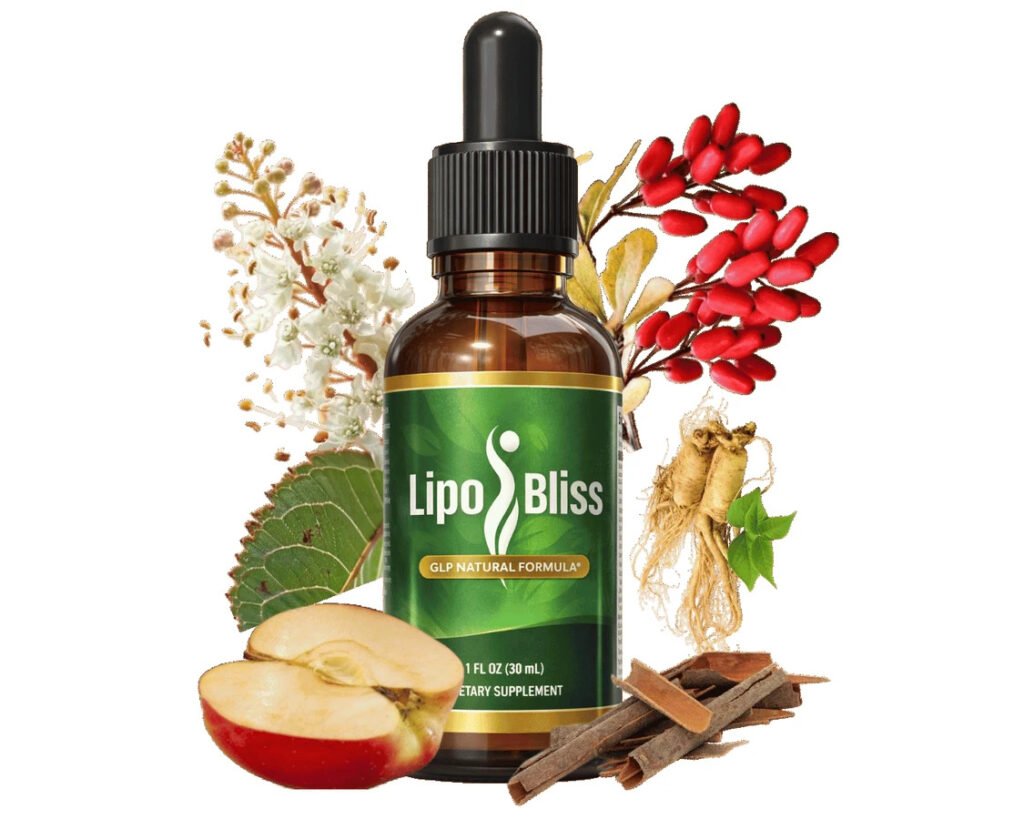
LipoBliss is marketed online as a liquid dietary supplement associated with metabolic wellness and weight management. Its promotional descriptions highlight botanical ingredients and suggest that the formula may support several biological processes.
Some marketing materials describe the product using the phrase “GLP natural formula.” This wording should not be confused with prescription GLP-1 medications.
Prescription GLP-1 medicines are regulated pharmaceutical products with specific clinical evidence, approved uses, and medical supervision requirements. A botanical dietary supplement is not equivalent to these medications.
LipoBliss should therefore be understood as a dietary supplement rather than a prescription treatment.
An important distinction exists between a product’s advertised purpose and its demonstrated effectiveness. A manufacturer may describe the intended function of an ingredient, but that does not establish that the complete finished formula produces the same effects.
Understanding the Advertised Ingredients
Different online LipoBliss pages describe different formulations. Some list eight botanical ingredients, while other pages describe a different combination.
This makes it particularly important to consult the actual packaging and current Supplement Facts label rather than relying entirely on promotional descriptions.
One advertised ingredient list includes:
- Green tea extract
- Apple cider vinegar
- Berberine HCL
- Banaba leaf
- Cinnamon bark
- Ginger root
- Korean ginseng
- Resveratrol
These ingredients have different histories of traditional use and scientific investigation.
Research involving an individual ingredient should not automatically be interpreted as evidence supporting a finished supplement containing that ingredient.
Green Tea Extract
Green tea contains naturally occurring plant compounds called catechins. One widely researched catechin is epigallocatechin gallate, commonly known as EGCG.
Researchers have investigated green tea compounds for their antioxidant properties and possible effects on different metabolic processes.
However, findings from individual studies vary. Research involving concentrated extracts may also differ significantly from studies involving ordinary green tea beverages.
The presence of green tea extract on an ingredient list does not establish that a finished supplement produces meaningful health outcomes.
Apple Cider Vinegar
Apple cider vinegar is produced through the fermentation of apple-derived sugars.
It contains acetic acid, which has been investigated in relation to digestion and certain metabolic measurements.
Although apple cider vinegar is frequently discussed in wellness content, research findings should be interpreted carefully. Small studies do not establish that every vinegar-containing supplement produces the same effects.
The amount, formulation, and method of preparation also matter when interpreting research.
Berberine HCL
Berberine is a naturally occurring compound found in several plants. It has received scientific attention because researchers have investigated its relationship with glucose metabolism and other biological pathways.
However, berberine is not automatically safe simply because it is plant-derived.
It can interact with certain prescription medications and may influence blood glucose levels. People taking medication for diabetes, blood pressure, or other conditions should obtain professional medical advice before considering products containing this ingredient.
The actual quantity of berberine in a supplement is also important when evaluating its formulation.
Banaba Leaf
Banaba is a tropical plant traditionally used in certain herbal wellness practices.
Its leaves contain compounds such as corosolic acid, which researchers have examined in laboratory and other scientific settings.
However, laboratory findings do not necessarily translate into proven clinical benefits in humans.
The presence of banaba in a supplement is not sufficient evidence that the complete product improves metabolic health.
Cinnamon Bark
Cinnamon is a familiar spice used in cooking and traditional wellness practices.
Scientific researchers have investigated cinnamon compounds for their potential relationship with blood glucose regulation and antioxidant activity.
Different cinnamon varieties have different chemical compositions. Concentrated extracts may also differ from the quantities commonly consumed in food.
Consequently, research findings should not be generalized to every cinnamon-containing dietary supplement.
Ginger Root
Ginger is widely used as a culinary ingredient and has a long history in traditional food and wellness practices.
Its naturally occurring compounds have been investigated for their relationship with digestion and inflammatory processes.
Nevertheless, the evidence supporting a particular health effect depends on the formulation, amount, study design, and population examined.
Ginger in a supplement should not be treated as proof of a specific medical outcome.
Korean Ginseng
Korean ginseng, also known as Panax ginseng, is a botanical ingredient studied for several possible biological effects.
Its active compounds include substances called ginsenosides.
Research has explored different aspects of ginseng, including energy-related outcomes and general wellness. However, findings vary, and individual preparations may have different concentrations.
A supplement’s ingredient list alone cannot establish the effectiveness of its ginseng content.
Resveratrol
Resveratrol is a naturally occurring plant compound found in foods such as grapes.
It has attracted research interest because of its antioxidant properties and potential biological activity.
Much of the research involves laboratory studies, and findings from these experiments cannot automatically be applied to everyday supplement use.
Its inclusion in a product does not demonstrate that the finished formulation delivers a clinically meaningful benefit.
Why Ingredient Transparency Matters
Ingredient transparency is an important consideration when evaluating any dietary supplement.
Consumers should be able to identify what a product contains and understand the quantities of its individual ingredients.
A proprietary blend can make this more difficult because the label may disclose the combined weight of several ingredients without specifying the amount of each one.
Without individual quantities, it becomes harder to compare the formula with published research.
For LipoBliss, publicly available product descriptions should be checked against the actual bottle label because different promotional pages describe different ingredient combinations.
A careful review should consider:
- The complete ingredient list.
- The quantity of each ingredient.
- The serving size.
- Additional ingredients and inactive components.
- Manufacturing and quality information.
- Appropriate warnings and precautions.
- The identity of the manufacturer and seller.
Clear labeling makes it easier for consumers and healthcare professionals to assess a product accurately.
Visit us – LipoBliss Official Website
What Does Scientific Research Actually Tell Us?
Scientific research is essential when evaluating health-related products.
However, there is a major difference between research on an ingredient and research on a complete commercial supplement.
An ingredient may have been examined in several scientific studies without the finished product ever having undergone a clinical trial.
For example, researchers may investigate green tea extract, berberine, or resveratrol separately. Those studies do not establish that combining these substances in a particular liquid formulation produces the same results.
Several factors influence how research findings should be interpreted:
- The amount of the ingredient used.
- The quality and purity of the extract.
- The duration of the study.
- The number of participants.
- The characteristics of the study population.
- The presence of other ingredients.
- Whether the findings have been independently replicated.
It is also important to distinguish laboratory experiments, animal studies, observational studies, and randomized controlled clinical trials.
Each type of research provides different levels of evidence.
A responsible supplement review should identify these distinctions instead of describing every scientific reference as proof of effectiveness.
Understanding Marketing Claims
Dietary supplement advertising frequently uses phrases such as natural formula, metabolic support, appetite balance, and scientifically inspired ingredients.
These phrases may sound convincing, but they do not necessarily establish a clinically proven outcome.
Consumers should pay attention to the exact language used in promotional materials.
For example, describing a botanical ingredient as being studied for metabolic pathways is different from claiming that a finished product has been clinically demonstrated to improve metabolic health.
Similarly, using the term GLP in marketing does not make a supplement equivalent to a prescription GLP-1 medication.
Readers should look for reliable evidence supporting specific claims rather than relying on promotional wording.
Is LipoBliss FDA Approved?
Dietary supplements and prescription medicines are regulated differently in the United States.
The FDA does not approve dietary supplements for safety and effectiveness before they are marketed in the same way it approves prescription drugs.
Manufacturers and distributors remain responsible for ensuring that their products comply with applicable laws and requirements.
An FDA-registered manufacturing facility should not be confused with FDA approval of the supplement itself.
This distinction is important because marketing statements can sometimes create the impression that a product has received a level of regulatory approval that it has not actually received.
Consumers should verify regulatory statements carefully and avoid treating facility registration, manufacturing certifications, or marketing badges as proof of clinical effectiveness.
Important Safety Considerations
Plant-derived ingredients can still have biological effects and potential interactions.
The word natural should never be interpreted as meaning completely harmless.
Certain ingredients found in online LipoBliss descriptions deserve particular attention.
Berberine, for example, may interact with prescription medications and affect blood glucose regulation. Green tea extracts may have different safety considerations from ordinary brewed tea, particularly when concentrated.
Other botanical extracts may also interact with medications or be unsuitable for certain individuals.
Anyone considering a dietary supplement should discuss its full ingredient list with a qualified healthcare professional, particularly when taking medication or managing a medical condition.
Dietary supplements should not replace prescribed treatment or professional medical advice.
Importantly, weight-management supplements are not appropriate for children or adolescents. LipoBliss marketing information also identifies the product as unsuitable for people under 18.
How to Evaluate Supplement Information Responsibly
A sensible approach to supplement research involves looking beyond advertisements.
Consider the following questions when reviewing any dietary supplement.
1. Is the complete ingredient list available?
The packaging should clearly identify the ingredients and their quantities wherever applicable.
2. Are the claims supported by human research?
Research involving humans is particularly important when evaluating claims about real-world health outcomes.
3. Has the finished product been studied?
Research on individual ingredients is not equivalent to clinical testing of the complete formula.
4. Are safety warnings clearly provided?
A trustworthy product description should explain relevant precautions and potential interactions.
5. Is the manufacturer identifiable?
Consumers should be able to find information about the responsible company and its contact details.
6. Are promotional statements realistic?
Promises of guaranteed results, rapid transformations, or disease treatment should be approached with caution.
7. Does the product label match the website?
Differences between online descriptions and physical packaging should be investigated rather than ignored.
Frequently Asked Questions
What is LipoBliss?
LipoBliss is marketed as a liquid dietary supplement associated with metabolic wellness and weight management. Its advertised formulation varies across online product pages.
Is LipoBliss a prescription GLP-1 medication?
No. A dietary supplement marketed using GLP-related terminology is not equivalent to prescription GLP-1 medicines.
What ingredients are advertised in LipoBliss?
Some product pages list green tea extract, apple cider vinegar, berberine HCL, banaba leaf, cinnamon bark, ginger root, Korean ginseng, and resveratrol. Other pages describe different formulations.
Has the complete LipoBliss formula been clinically proven?
The publicly available marketing information does not establish that the finished formula has been validated through independent clinical trials.
Research involving individual ingredients should not be presented as proof of the finished product’s effectiveness.
Is natural supplementation always safe?
No. Natural ingredients can have side effects, interact with medicines, and be unsuitable for particular individuals.
Why should consumers check the product label?
The physical label provides important information about the actual formulation, serving size, ingredient quantities, and warnings.
Is LipoBliss suitable for adolescents?
No. The product’s marketing information identifies it as unsuitable for people under 18. Adolescents should not use weight-management supplements.
Conclusion
LipoBliss is one example of the many dietary supplements discussed in the modern wellness marketplace.
Its advertised ingredients have attracted varying levels of scientific interest, but ingredient research should not be confused with proof that the complete commercial formula is effective.
Consumers should pay close attention to formulation differences, ingredient quantities, regulatory statements, and potential safety concerns.
A transparent product label, realistic advertising, and reliable scientific information are more useful than exaggerated promises.
Ultimately, informed decisions about health products should be based on credible evidence and qualified professional guidance rather than promotional claims alone.