A homeowner pulls up an online estimate one evening and sees a number that seems too good to be true. A week later, a neighbor’s similar house sells for much less. Moments like this explain why so many people turn to home valuation services in Ocala, FL before making big real estate decisions.
Knowing what a property is truly worth can shape everything from a listing price to a refinancing plan. Yet many homeowners aren’t sure how valuations work or which type fits their situation.
What a Home Valuation Actually Measures
A home valuation estimates a property’s current market value. In simple terms, it’s the price a willing buyer would likely pay a willing seller under normal conditions.
That number depends on more than square footage. Location, lot size, age, condition, upgrades, and recent nearby sales all play a part. Even small details, like an updated roof or a dated kitchen, can shift the final figure.
The local market matters just as much as the house itself. Marion County has seen steady interest from retirees, remote workers, and families drawn by its lower cost of living compared to many Florida coastal cities. That demand can move values in ways national data doesn’t always capture.
The Different Types of Valuations
Not every valuation serves the same purpose. Most homeowners will come across three main approaches.
Automated valuation models (AVMs) are the instant estimates found on real estate websites. They use public records and algorithms to produce a quick number. They’re handy for curiosity, but they can’t see inside a home or judge its condition.
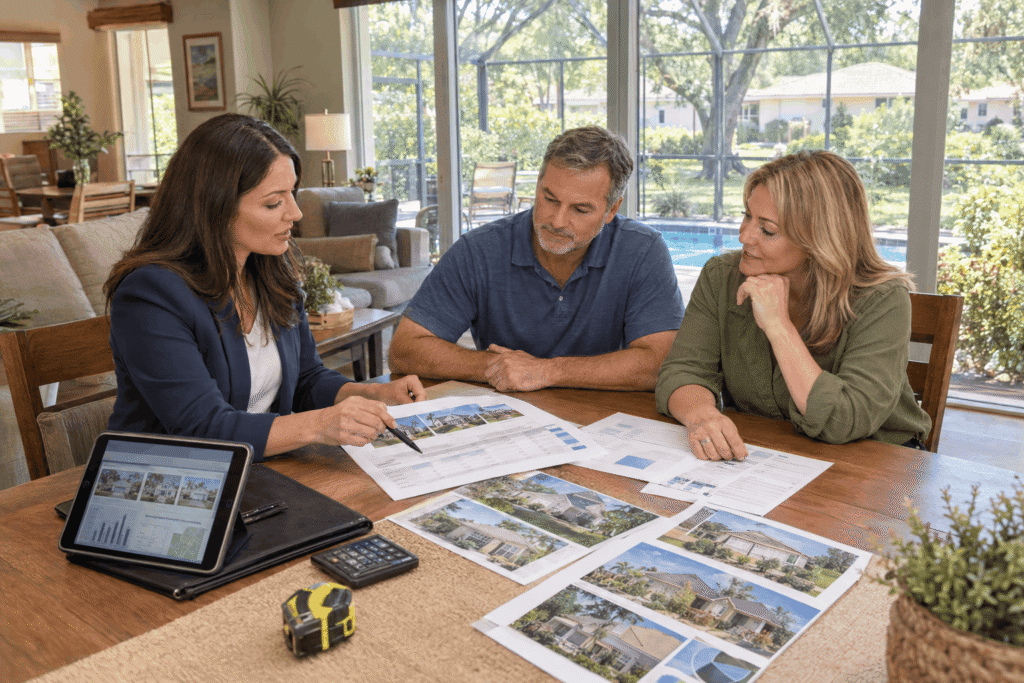
Comparative market analyses (CMAs) are usually prepared by real estate agents. An agent reviews recent sales, active listings, and expired listings for similar homes nearby. The result is a practical price range for selling.
Professional appraisals are completed by licensed appraisers. These involve an in-person inspection and a detailed written report. Lenders typically require appraisals for mortgages and refinancing, and they’re often used in legal matters like divorce or estate settlement.
Why Accurate Values Matter So Much
Pricing a home too high is one of the most common mistakes sellers make. An overpriced listing often sits on the market, and buyers start to wonder what’s wrong with it. Eventually, the seller may need to cut the price anyway, sometimes below what a well-priced listing would have brought.
Pricing too low creates a different problem. The home may sell fast, but the owner could leave thousands of dollars on the table.
A reliable valuation helps strike the right balance. It gives sellers a realistic starting point and a clearer sense of how buyers will respond.
Accurate values also help outside of selling. Homeowners use them to challenge property tax assessments, decide whether a renovation makes financial sense, or plan for retirement. For many families, a home is their largest asset, so knowing its worth supports smarter long-term choices.
What Makes Local Expertise Valuable
Central Florida neighborhoods can vary widely, even within a few miles. A home in a gated golf community may follow very different pricing trends than a rural property with acreage, or a house near the historic downtown district.
Horse farms, 55-plus communities, and newer subdivisions each have their own market patterns. An algorithm might group them together, but someone who works in the area every day knows the difference.
Local professionals also notice factors that don’t show up in records. They know which streets flood after heavy rain, which school zones buyers prefer, and which developments are adding new competition. These details often explain why two similar-looking homes sell for very different prices.
Common Situations Where Homeowners Seek Valuations
Many people first think about a valuation when they type “Sell My House in Ocala, FL” into a search bar. Selling is the most common reason, but it’s far from the only one.
Consider a couple who bought their home a decade ago. Their kids have moved out, and they’re thinking about downsizing. Before they look at smaller homes, they want to know how much equity they have to work with.
Or picture an adult child handling a parent’s estate. A professional appraisal can help divide assets fairly among siblings and meet tax reporting needs.
Other common scenarios include:
- Refinancing to get a lower interest rate or tap home equity
- Removing private mortgage insurance once enough equity builds up
- Settling property matters during a divorce
- Appealing a property tax assessment that seems too high
- Deciding between renting out a home or selling it
A Real-World Example
Take a homeowner who relocated for work and needed to move quickly. An online estimate suggested the home was worth about $40,000 more than nearby sales supported. Trusting that number, the owner listed high.
After two months with few showings, the owner requested a comparative market analysis. The report showed that recent sales of similar homes nearby had been lower than expected, partly due to several new builds in the area. The owner adjusted the price, and the home went under contract within weeks.
Stories like this are common. Searches for terms like “Sell My House in Ocala, FL” often lead homeowners to online tools first, but many find that a personalized review gives a clearer picture.
Choosing the Right Valuation Approach
The best option depends on the goal. A quick online estimate may be enough for someone simply curious about market trends. A seller preparing to list will usually benefit from a detailed CMA. Anyone dealing with a loan, legal issue, or estate will likely need a formal appraisal.
It’s also wise to ask how a valuation was prepared. A good report should explain which comparable homes were used and why. Clear reasoning builds trust in the final number.
Local brokerages such as Buckner Homes Realty INC are among the many sources homeowners can turn to for market insights when weighing their options. Talking with more than one professional can also help homeowners compare viewpoints before making a decision.
Final Thoughts
A home’s value isn’t just a number on a website. It reflects the property’s condition, its neighborhood, and the current pulse of the local market.
Taking time to get an accurate valuation can prevent costly pricing mistakes and support better financial planning. Whether selling, refinancing, or simply planning ahead, homeowners benefit from understanding what their property is truly worth.
Frequently Asked Questions
How much do home valuation services in Ocala, FL cost?
Comparative market analyses from real estate agents are often free. Professional appraisals usually cost a few hundred dollars, depending on the home’s size and complexity.
How accurate are online home value estimates?
Online estimates give a general idea, but they can be off by a wide margin. They can’t account for a home’s interior condition, recent upgrades, or neighborhood details.
What’s the difference between an appraisal and a CMA?
A CMA is an agent’s pricing opinion based on recent sales. An appraisal is a formal, detailed report from a licensed appraiser, often required by lenders.
How long does a home appraisal take?
The on-site inspection typically takes less than an hour. The full written report is usually ready within several days to about a week.
What can increase a home’s appraised value?
Good maintenance, updated kitchens and bathrooms, curb appeal, and energy-efficient features can all help. Fixing visible repairs before an appraisal can also make a positive difference.