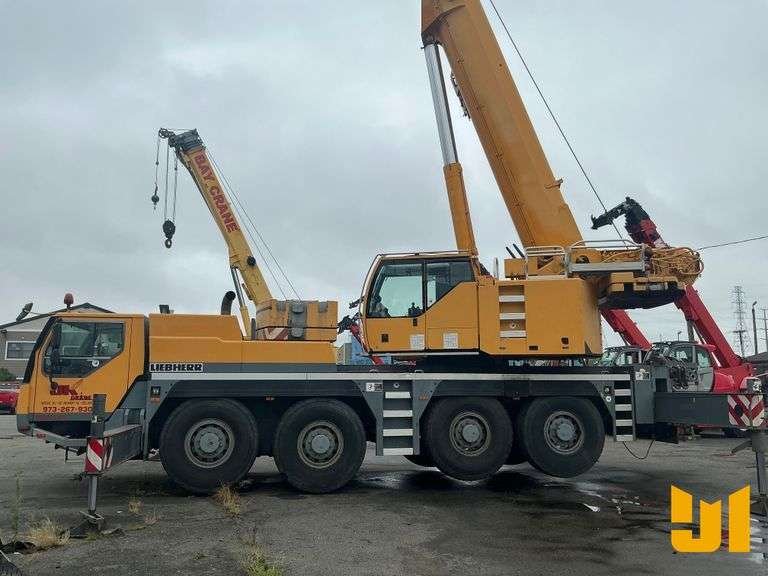
Buying a used all terrain crane at auction starts with one important question: What is the equipment worth to your operation?
Contractors, fleet managers, rental companies, and other commercial buyers should answer that question before bidding begins. The lowest-priced crane is not necessarily the best value, and the winning bid is only one part of the total purchase cost.
When reviewing all terrain cranes for sale, buyers should combine equipment condition, history, specifications, expected repairs, and transportation costs to establish a realistic bidding limit.
Start With the Crane’s Current Condition
Condition has a major influence on how a buyer should value used equipment.
Review the information provided with the auction listing and, where possible, inspect the crane before bidding. Depending on the equipment and available inspection information, buyers may want to review areas such as the boom, hydraulic system, outriggers, carrier, tires, cab, controls, and visible structural condition.
Signs of leaks, excessive wear, damage, or previous repairs should not automatically rule out a crane, but they may affect what a buyer is prepared to pay.
Review Hours, Maintenance and Equipment History
Age alone does not provide a complete picture of a used crane.
Operating hours, previous applications, maintenance history, service records, and repairs can provide more context about the equipment’s working life.
Buyers should also review available ownership documentation and auction terms. Knowing what records and documents accompany the crane can help avoid uncertainty after the sale.
Look Beyond the Winning Bid
A common mistake when evaluating auction equipment is focusing only on the bid price.
Commercial buyers should estimate the total acquisition cost, which may include:
- Winning bid
- Buyer fees
- Applicable taxes
- Transportation
- Permits or route requirements
- Inspection costs
- Immediate servicing
- Expected repairs
A crane purchased for a lower bid may not represent better value if it requires substantial repairs or expensive transportation.
Consider Where Auction Inventory Comes From
Used cranes enter the auction marketplace for different business reasons.
A construction contractor may be replacing equipment with newer units. A rental company may rotate part of its fleet. Another company may be reducing its equipment inventory or completing a larger fleet liquidation.
For commercial buyers, these situations can create opportunities to source used equipment outside traditional dealer inventory.
Establish a Maximum Bid
Once the crane has been evaluated, buyers can establish a maximum bid based on the equipment’s value to their business.
That limit should account for condition, anticipated operating requirements and the additional costs required to take possession of the equipment.
Having a maximum bid before the auction can also help buyers avoid increasing their budget simply because bidding becomes competitive.
Using the Crane Auction Marketplace
A crane auction brings sellers and commercial equipment buyers together in a competitive marketplace. For sellers, auctions can support fleet replacement, equipment disposal, and liquidation strategies. For buyers, they provide another source for used commercial equipment.
Jeff Martin Auctioneers provides an auction marketplace for cranes and other heavy equipment, connecting sellers with contractors, fleet managers, heavy equipment operators, and other commercial buyers.
The strongest auction decisions are made before bidding starts. Inspect the crane, review the available history and ownership information, estimate the complete acquisition cost, determine its value to your operation, and bid within that limit.