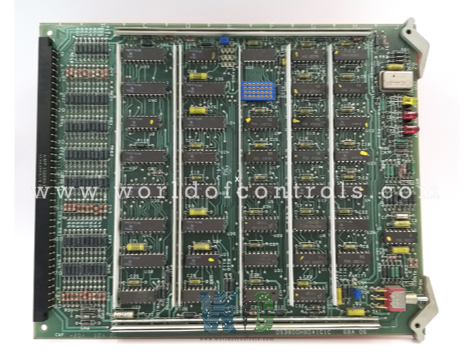
ds3800hbda1g
Introduction
In the turbine industry, precision and reliability are fundamental to safe and efficient operation. Turbine control systems must process large volumes of signals from sensors, controllers, and field devices, often in harsh industrial environments. One critical component that supports this process is the GE Buffer Decoder Card. Designed as part of GE turbine control platforms, this card plays a key role in signal conditioning, logic interpretation, and controlled signal distribution within gas and steam turbine systems.
Role of Buffer Decoder Cards in Turbine Control Systems
Turbine control systems depend on accurate communication between the central controller and peripheral hardware such as actuators, relays, and protection circuits. However, control signals generated by the processor are not always suitable for direct transmission due to electrical noise, voltage level differences, or timing constraints.
The buffer decoder card acts as an intermediate interface, receiving control signals, stabilizing them, and directing them to the correct output channels. In turbine environments—where electromagnetic interference, temperature variations, and continuous operation are common—this function is essential for maintaining signal integrity and system reliability.
Core Architectural Design
The architecture of a GE buffer decoder card is typically organized into three functional layers: input buffering, logic decoding, and output driving. Each layer is designed to enhance reliability and simplify system integration.
- Input Buffering: Incoming digital signals from the turbine controller are electrically conditioned and isolated. This protects upstream control electronics from voltage transients and electrical noise present in industrial power systems.
- Logic Decoding: Buffered signals are processed through logic circuits that interpret control commands and determine how they should be distributed. This decoding function ensures that only the correct outputs are activated based on controller instructions.
- Output Driving: The decoded signals are strengthened and transmitted to downstream devices such as relay boards, solenoid drivers, or auxiliary control modules.
This modular architecture allows the card to perform deterministic signal handling, which is crucial for turbine sequencing and protection logic.
Functionality in GE Turbine Applications
Within GE gas and steam turbine control systems, buffer decoder cards support a wide range of operational and protective functions. These include coordinating start-up and shutdown sequences, managing permissive and interlock logic, and supporting alarm and trip signaling.
By serving as a controlled distribution point for logic-level commands, the buffer decoder card ensures that turbine actions—such as valve movements or auxiliary equipment activation—occur in the correct order and at the correct time. This precise coordination helps prevent operational faults and enhances overall turbine safety.
Importance in Legacy Turbine Control Systems
Many power generation facilities continue to operate legacy GE turbines due to their durability and long service life. Buffer decoder cards remain especially important in these systems because they were designed to integrate seamlessly with earlier control architectures.
Their rugged construction, predictable behavior, and compatibility with existing control cabinets make them well suited for long-term turbine operation. As a result, these cards are often a focal point during control system refurbishment, life-extension projects, and preventive maintenance programs.
Reliability and Maintenance Considerations
Although buffer decoder cards are engineered for continuous industrial use, factors such as aging components, thermal stress, and environmental conditions can impact performance over time. Routine inspection, proper cabinet cooling, and timely replacement of degraded hardware are critical to maintaining reliable turbine operation.
A clear understanding of the card’s architecture and functionality enables maintenance teams to diagnose signal-related issues more efficiently, reducing downtime and minimizing the risk of unplanned turbine outages.
Conclusion
The GE buffer decoder card is a vital component within turbine control systems, ensuring accurate signal buffering, decoding, and distribution. Its structured architecture and reliable functionality support the precise control required in gas and steam turbine applications. By maintaining signal integrity and supporting safe operational logic, the buffer decoder card continues to play an essential role in the long-term performance and reliability of GE turbine systems.