Your car tyres play a vital role in keeping you safe on the road. They affect braking, steering, handling and overall driving performance. However, many drivers only think about replacing their tyres after experiencing a puncture or sudden loss of pressure. By then, the damage may already have become a serious safety concern.
For drivers in Manchester, regular tyre checks are particularly important. Daily commuting, busy city roads, potholes and changing weather conditions can all contribute to tyre wear and damage. Recognising the warning signs early can help prevent unexpected breakdowns and keep your vehicle roadworthy.
But how do you know when a tyre needs replacing? Here are five important signs every driver should watch for.
1. Your Tyre Tread Depth Is Too Low
One of the clearest signs that your car needs a tyre replacement is worn tread. Tyre tread provides the grip needed to maintain control, particularly when driving on wet or slippery roads.
As tyres wear down, their ability to move water away from the contact area decreases. This can increase the risk of losing grip and experiencing aquaplaning during heavy rainfall.
In the UK, the legal minimum tread depth for cars and light vans is 1.6mm across the central three-quarters of the tyre’s width and around its entire circumference.
However, it is better not to wait until your tyres reach this limit. Replacing them earlier can help maintain reliable grip and braking performance.
How to Check Your Tyre Tread
You can check your tyres using a few simple methods:
- 20p coin test: Insert a 20p coin into the main tread grooves. If the outer border remains visible, have the tread depth checked professionally.
- Tread wear indicators: Look for small raised bars inside the tread grooves. If the surrounding tread becomes level with these indicators, the tyre has reached the legal limit.
- Visual inspection: Check different sections of each tyre because wear may not be consistent across the surface.
If your tyres are approaching the legal limit, arrange a professional inspection and consider replacement before they become unsafe.
2. Cracks, Cuts or Bulges Appear on the Sidewall
The sidewall is the outer section of a tyre that connects the tread to the wheel. It helps support the vehicle’s weight and absorbs impacts from the road.
Unfortunately, sidewall damage is not always easy to notice. Potholes, kerbs, sharp objects and repeated impacts can weaken the tyre structure.
Watch for these warning signs:
- Small or deep cracks along the rubber.
- Bulges or bubbles on the sidewall.
- Cuts exposing internal tyre material.
- Visible cords or reinforcing layers.
- Sections of rubber that appear damaged or separated.
A bulge is particularly concerning because it can indicate internal structural damage. It increases the risk of sudden tyre failure, especially at higher speeds.
Never ignore a sidewall bulge or exposed tyre cords. Do not continue driving on a tyre with suspected structural damage. Arrange professional assistance and have the tyre inspected or replaced.
3. Your Car Vibrates or Pulls to One Side
Have you noticed your steering wheel vibrating or your car pulling towards one side while driving? These symptoms may indicate a problem with your tyres or wheels.
Uneven tyre wear, incorrect inflation, wheel imbalance and alignment problems can all affect driving comfort and handling.
For example, if one front tyre has significantly more wear than the other, your vehicle may feel less stable when cornering or braking.
However, vibration does not automatically mean you need new tyres. Other issues, such as damaged wheels, suspension faults or wheel balancing problems, can produce similar symptoms.
What Should You Do?
Start by checking the tyre pressures against the manufacturer’s recommended settings. Then arrange an inspection to identify the cause.
A professional technician can check:
- Uneven tread wear.
- Wheel balance.
- Tyre pressure.
- Wheel alignment.
- Visible tyre or wheel damage.
If the tyre has developed serious damage or cannot provide safe performance, replacement may be necessary. Addressing the underlying problem can also help prevent similar wear on your new tyres.
4. You Experience Repeated Punctures or Air Pressure Loss
A slow puncture can be frustrating, especially when you regularly drive around Manchester for work or everyday activities.
If you find yourself inflating the same tyre repeatedly, there may be an underlying problem that needs attention.
Common causes include:
- Nails, screws or sharp objects embedded in the tread.
- Damaged tyre valves.
- Cracks or splits in the rubber.
- Damage around the wheel rim.
- Previous repairs that have failed.
Not every puncture requires a complete tyre replacement. Some small punctures in the central tread area can be repaired safely, provided the tyre meets the relevant repair requirements and has no additional structural damage.
However, punctures near the shoulder or sidewall generally cannot be repaired safely. Multiple repairs, extensive internal damage or significant tread wear may also make replacement necessary.
If your tyre continues losing pressure, avoid repeatedly topping it up without investigating the cause. A professional inspection can determine whether a repair is suitable or a new tyre is required.
5. Your Tyres Are Old or Show Signs of Ageing
Tyres do not last forever, even when a vehicle is driven occasionally. Over time, exposure to sunlight, temperature changes and environmental conditions can affect the rubber compound.
An ageing tyre may develop:
- Fine cracks across the tread or sidewall.
- Hardened or brittle rubber.
- Reduced flexibility.
- Visible deterioration around the tyre surface.
- Changes in driving performance.
These signs can appear even when sufficient tread remains.
There is no single replacement age that applies to every car tyre. Actual condition, storage, mileage, driving habits and manufacturer recommendations all matter.
Check the tyre’s manufacturing date using the four-digit DOT date code on its sidewall. The first two digits indicate the production week, while the final two indicate the year.
If your tyres are several years old, arrange a professional inspection, particularly before long journeys or regular motorway driving.
Why Manchester Drivers Should Not Ignore Tyre Problems
Manchester drivers experience a mixture of urban traffic, motorway journeys, residential roads and changing weather conditions. These different driving environments place varying demands on tyres.
Wet roads can reduce available grip, while potholes and kerbs may cause cuts, punctures or internal damage.
Ignoring early warning signs can lead to unexpected breakdowns, expensive repairs and dangerous driving situations.
Regular tyre inspections are a simple way to identify problems before they become serious. Check your tread depth, monitor tyre pressure and look for visible damage at least once a month and before longer journeys.
If replacement is necessary, choosing the correct tyre size, load rating and speed rating is equally important. Always follow your vehicle manufacturer’s specifications.
When Should You Choose Professional Tyre Replacement?
If your tyre has reached the legal tread limit, developed structural damage or cannot be repaired safely, replacement is the appropriate solution.
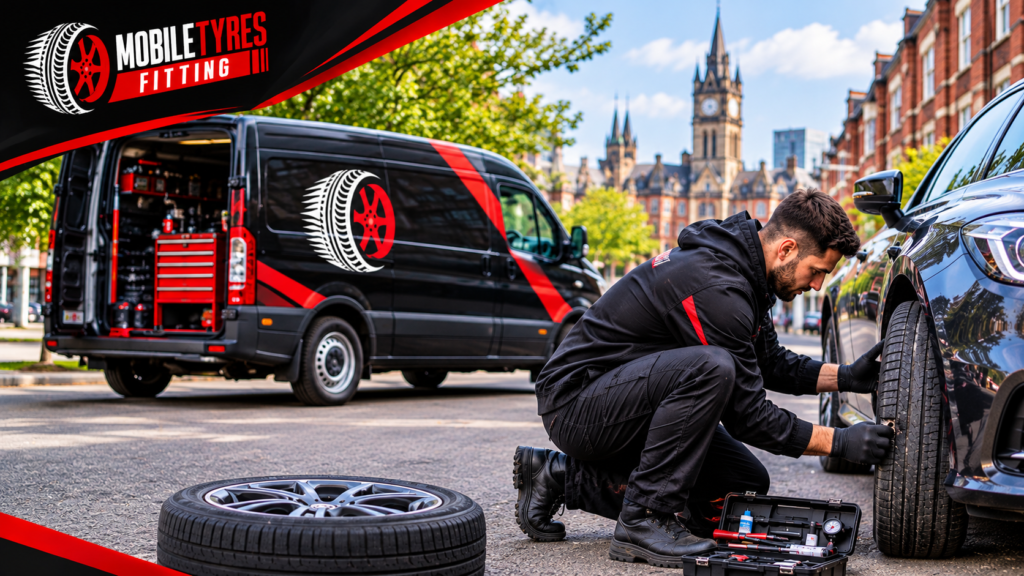
You do not always need to drive to a traditional garage to get the problem sorted. Mobile tyre fitting services allow technicians to replace damaged tyres at your home, workplace or a suitable roadside location.
For drivers who need a convenient solution, 24hrs Mobile Tyres Fitting provides mobile tyre assistance across Greater Manchester.
A professional tyre replacement service can help ensure the correct tyre is selected, fitted and balanced properly. You can also explore the available professional tyre replacement service to understand the options available.
If you experience a sudden tyre failure, prioritise your safety. Move to a safe location if possible, switch on your hazard lights and avoid changing a tyre in a dangerous roadside position. Arrange professional assistance instead.
Final Thoughts
Your tyres are the only parts of your vehicle that maintain direct contact with the road. Keeping them in good condition is essential for safe braking, reliable handling and comfortable driving.
Low tread depth, sidewall damage, unusual vibrations, repeated pressure loss and ageing rubber are five important warning signs that should never be ignored.
Regular inspections can help you identify problems early and avoid unexpected tyre emergencies. If you notice any of these signs, arrange a professional assessment to determine whether repair or replacement is needed.
A little attention today can make a significant difference to your safety on tomorrow’s journey.