Before our son was born I spent a ridiculous number of evenings on the couch reading stroller reviews, and it took me a while to notice that most of them were written by people living somewhere with flat footpaths, enormous car boots and nice weather. That isn’t really Auckland, or Hamilton, or Dunedin for that matter. We’ve got steep driveways, gravel tracks down to the beach, little hatchbacks and the kind of weather that changes three times before lunch.
Two years and a lot of kilometres later, here’s roughly what I tell friends when they ask. No brand recommendations, sorry, just the stuff you only figure out once you’re pushing the thing round every day.
Have a think about your normal week first
I know it’s tempting to go straight to the shop and start pushing prams around, but I’d honestly sit down for five minutes beforehand and think about where you go in a usual week. My sister lives in a Ponsonby apartment with a lift and walks pretty much everywhere, while we’re out past the motorway and drive to nearly everything, so the stroller that suits her would have driven me mad and the other way round. If you jot down your three most common outings (supermarket, daycare run, the walk to the park, whatever they are) you’ll find a lot of options rule themselves out before you’ve even started.
The weight thing caught me out
In the shop, a couple of extra kilos feels like nothing. Five o’clock on a wet Tuesday, grizzly baby on your hip, trying to heave the stroller into the boot one-armed? Yeah, you feel every gram then. If you drive a lot, I’d pay real attention to the listed weight. Ours was about 9 kg and I could manage it one-handed without too much swearing, but a friend had a lovely heavy pram that pushed like a dream and she ended up dreading every car trip.
Please try folding it with one hand
This is the test I skipped and I’m still a bit annoyed with myself about it. You almost never get to fold a stroller with both hands free, because you’re usually holding the baby, or the shopping, or the arm of a toddler who’s making a run for it. So when you’re trying one out, fold it with one hand and see what happens. Does it lock itself shut or is there some little clip you have to find? Does it stand up once it’s folded, or does it flop over onto the wet car park? And, this one is boring, but measure your boot before you buy. It takes about two minutes, and it saves you finding out the hard way that you can fit the stroller or the groceries but not both.
Wheels, and where you really walk
Small plastic wheels are fine on the mall floor and on smooth footpaths, and pretty miserable on the beach track, on cracked old pavement or on the grass at Saturday morning rugby. Bigger wheels with a bit of suspension make a huge difference if you’re off the concrete a lot. That said, be honest with yourself here. We’d imagined ourselves doing all these bush walks, and in reality ninety percent of our trips were to the supermarket and the café down the road, so an all-terrain beast would have been a waste of boot space for us.
Age range, recline and the canopy
It’s worth reading the age range properly, because some strollers lie flat enough for a newborn and others are really meant for babies who are already sitting up, or for toddlers. One that goes from birth to around three saves you buying a second one later, though I’d still check the seat really does recline flat if you’re planning to use it from the start. And get a decent canopy. The sun here is no joke, even on a cool spring day, and you’ll be pulling that canopy down a lot more than you’d expect.
Little things you end up caring about
There are a few small details I didn’t think twice about before and now notice every day. A foot brake you can flick on and off in jandals is one of them. A harness that’s easy to tighten without a wrestling match is another. And the basket, which seems minor until it’s stuffed with nappies, wipes, a drink bottle, someone’s jacket and whatever you grabbed from the dairy on the way home.
Buying online or trying one at home
Plenty of Kiwi parents buy online these days, particularly if you’re out of the main centres, and it’s worked fine for lots of people I know. Just read the listing carefully for weight, folded size, age range and wheel type, have a look at what other parents say in the reviews, and check the returns policy before you pay. Some local shops will also bring a stroller round so you can try it at home first. NV Kids, which is based in Auckland, offers a home demo like that, and it’s a nice way to see whether it actually fits in your car and down your hallway. Or if you’d just like to have a browse, you can buy baby strollers online in NZ from them too, and they deliver free within Auckland.
One real example to compare with
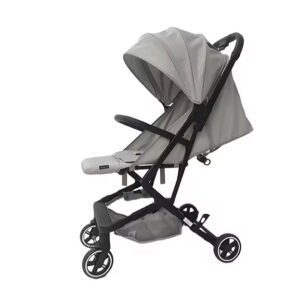
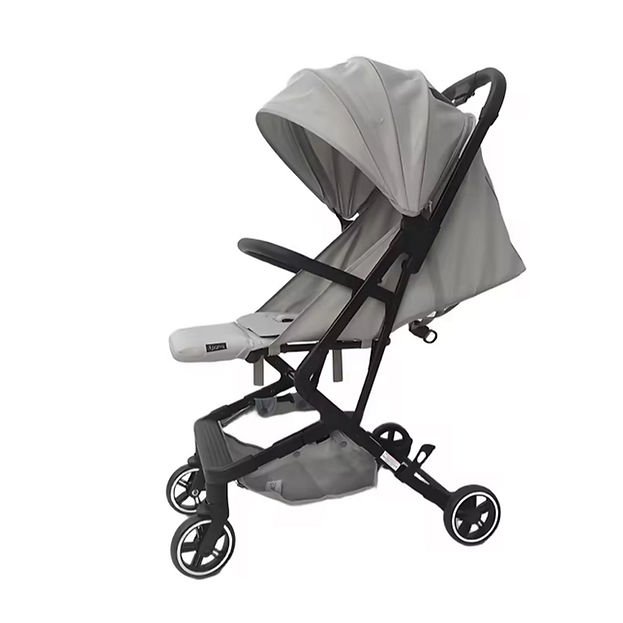
Just so you’ve got something concrete to measure others against, NV Kids sell a lightweight foldable baby stroller for $220. According to their listing it weighs 9 kg, has a steel frame, folds with one hand and is suitable for kids from 0 to 3 years, in either black or grey. That’s the sort of everyday stroller that suits families who drive more than they walk. If you’re a runner or you spend your weekends on gravel, you’d probably want something with bigger wheels, but it gives you an idea of the numbers to look for.
What nobody mentioned to me
A lot of families end up with two strollers in the end, a solid one for long walks and a light one that lives in the car or comes on holiday, and that’s completely fine. I wasted a fair bit of energy hunting for one perfect stroller that did everything. In hindsight I’d just have picked the one that suited the trips we made most often. Oh, and when you test one out, try pushing it with one hand while you hold your phone in the other, because let’s be honest, that’s how it’ll go most days.